

Khaleda Zia dies at 80: How Bangladesh’s first female Prime Minister shaped, and shattered, a Nation’s Politics

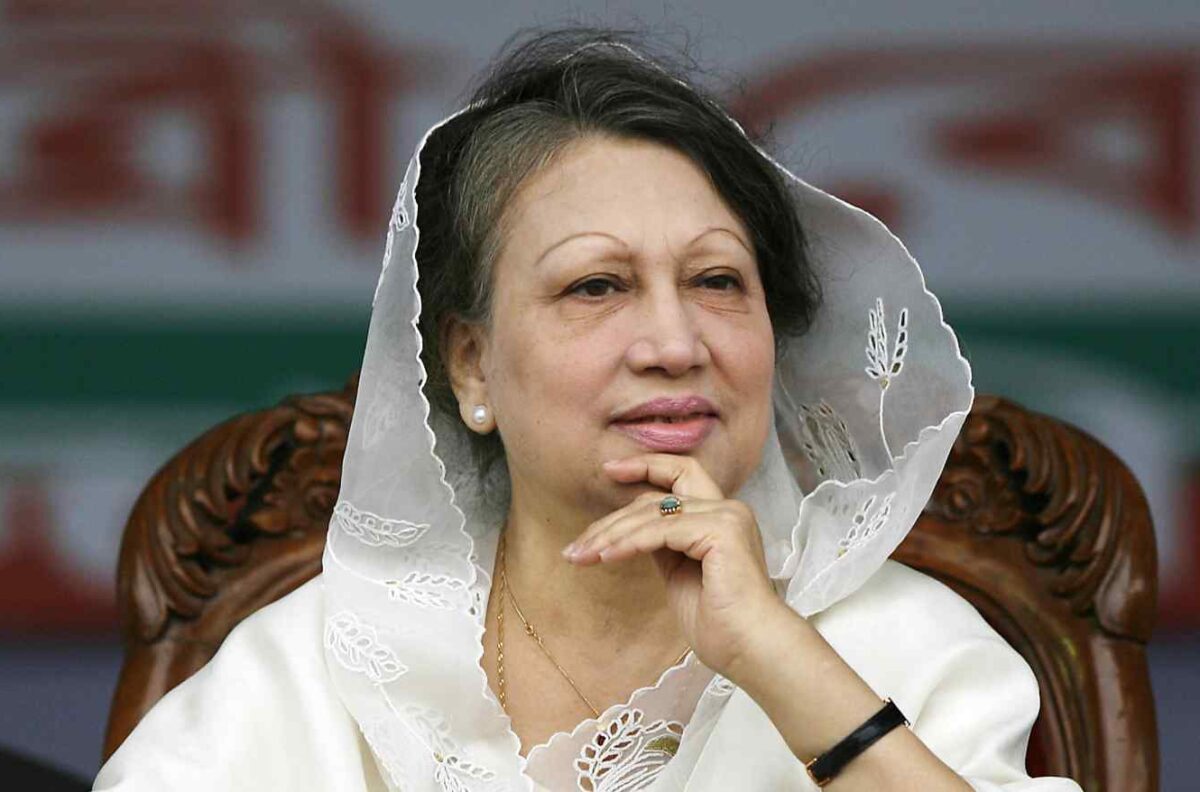
Bangladesh Nationalist Party Chairperson Khaleda Zia during a rally in Dhaka in May 2009. Image Source: Reuters
Khaleda Zia, Bangladesh’s first female prime minister and one of the most polarizing figures in South Asian politics, has died at the age of 80, her party confirmed on Tuesday. Her death closes the chapter on a decades-long rivalry that shaped Bangladesh’s political destiny and deeply divided the nation.
Zia, who led the Bangladesh Nationalist Party (BNP), was a towering presence in national politics for more than 30 years, locked in a bitter power struggle with her longtime archrival Sheikh Hasina, the former prime minister who dominated Bangladesh’s politics until her ouster in 2024.
First Woman Prime Minister and Political Trailblazer
Khaleda Zia made history in 1991 when she became the first woman elected prime minister of Bangladesh, at a time when female leadership in South Asia was still rare. Her rise to power followed years of political turmoil after Bangladesh’s independence in 1971, a period marked by assassinations, coups and military rule.
She returned to office again in 1996 for a brief term and later won a decisive victory in 2001, governing until 2006. Throughout her career, Zia positioned herself as a champion of nationalism, conservative values and parliamentary democracy.
Marriage, Assassination and the Birth of a Political Dynasty
Zia entered politics after the assassination of her husband, President Ziaur Rahman, a former military ruler who founded the BNP after seizing power in 1977. He was killed during a failed military coup in 1981, thrusting Khaleda Zia into the political spotlight.
Her uncompromising opposition to military dictatorship helped mobilize mass protests that led to the overthrow of General H.M. Ershad in 1990, restoring democratic rule and paving the way for her first electoral victory.
Rivalry With Sheikh Hasina That Defined a Generation
No account of Khaleda Zia’s legacy is complete without her rivalry with Sheikh Hasina, daughter of Bangladesh’s founding leader Sheikh Mujibur Rahman. Their personal animosity evolved into a toxic political duel that defined Bangladesh’s governance for decades.
The rivalry produced election boycotts, violent protests, deep institutional paralysis and frequent accusations of authoritarianism on both sides. Critics say the Zia–Hasina feud weakened democratic norms and entrenched political intolerance across the country.
Controversies, Corruption Cases and Imprisonment
Zia’s later years were overshadowed by corruption convictions, including a 17-year prison sentence over the alleged misuse of charitable funds. Zia consistently denied wrongdoing, insisting the charges were politically motivated attempts by Hasina’s government to eliminate opposition.
In January 2025, Bangladesh’s Supreme Court acquitted her in the final corruption case, theoretically reopening the door to electoral participation. However, years of declining health had already taken their toll.
READ ALSO
Health Struggles and Medical Exile
Zia was released from prison in 2020 on medical grounds and placed under house arrest. Her family repeatedly sought permission for her to receive treatment abroad, requests that were denied under Hasina’s administration.
After Hasina was ousted in 2024 during a mass uprising, an interim government led by Nobel Peace Prize laureate Muhammad Yunus finally allowed Zia to travel abroad. She sought treatment in London in January and returned to Bangladesh in May, largely retreating from public life.
Death Amid a Shifting Political Landscape
Zia’s death comes at a moment of profound political upheaval in Bangladesh. Hasina, her lifelong rival, was recently sentenced to death in absentia by a tribunal for crimes against humanity related to a deadly crackdown on protests, a historic reversal of fortunes.
Zia remained BNP chairperson until her death, though her elder son Tarique Rahman has served as acting leader since 2018. Her younger son, Arafat Rahman, died in 2015.
A Legacy That Will Divide Opinion
Supporters remember Khaleda Zia as a symbol of resistance to authoritarianism and a defender of Bangladesh’s sovereignty. Critics argue her alliances, governance failures and confrontational politics contributed to decades of instability.
Her death marks the end of an era, and leaves Bangladesh grappling with how to move beyond the shadows of its most dominant political figures.
FAQ
Who was Khaleda Zia?
Khaleda Zia was Bangladesh’s first elected female prime minister and leader of the Bangladesh Nationalist Party. She served multiple terms and was one of the country’s most influential political figures.
How old was Khaleda Zia when she died?
She was 80 years old at the time of her death.
What caused Khaleda Zia’s death?
No official cause has been disclosed, but she had suffered from prolonged illness and received medical treatment abroad in recent years.
Why was Khaleda Zia imprisoned?
She was convicted in corruption cases related to charitable funds, which she and her party claimed were politically motivated. She was later acquitted in 2025.
What was Khaleda Zia’s relationship with Sheikh Hasina?
The two were archrivals for decades, leading opposing parties and dominating Bangladesh’s political landscape through bitter competition.
Did Khaleda Zia return to politics before her death?
No. Although legally cleared, she remained largely inactive due to poor health and did not attend political rallies.
Who will lead the BNP after Khaleda Zia?
Her elder son Tarique Rahman is expected to remain the party’s central figure.