

Kaitlan Collins fires back after Trump’s ‘smile’ jab: Her Stephen Colbert response is going viral

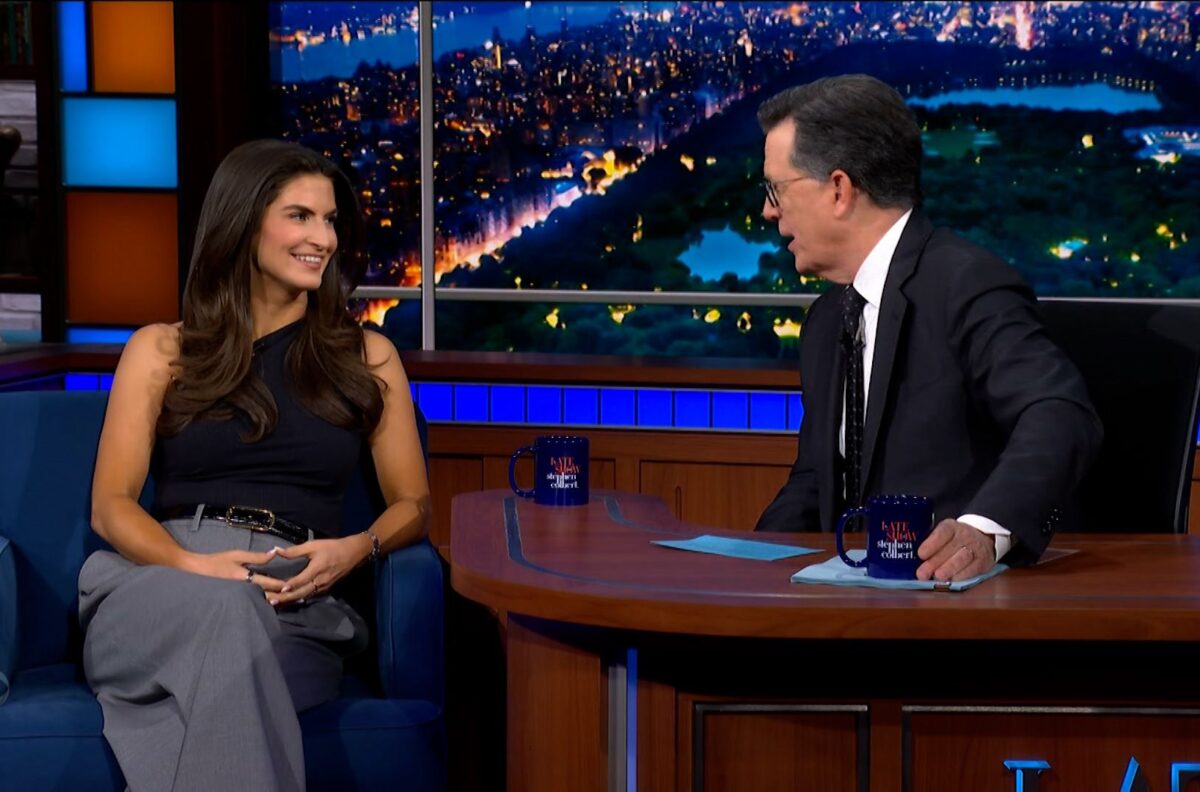
Kaitlan Collins reacts to Trump’s smile remark on The Late Show. Image Credit: CNN
CNN anchor Kaitlan Collins is speaking out after a pointed exchange with President Donald Trump at the White House sparked national headlines and ignited debate across social media.
During a recent appearance on The Late Show with Stephen Colbert, Collins addressed Trump’s remark that he had “never seen [her] smile” while she questioned him about justice for victims connected to convicted offender Jeffrey Epstein. While Collins said she was not surprised by the personal jab, she revealed that one aspect of the moment stood out, and may explain why the exchange resonated so widely.
The incident has fueled conversations about media scrutiny, gender dynamics in political journalism, and the tone of modern press briefings.
What Happened Between Kaitlan Collins and Donald Trump?
The exchange occurred during a White House questioning session, where Collins pressed Trump on issues related to accountability and victims tied to Jeffrey Epstein, a former associate of the president.
In response, Trump criticised Collins, telling her he had never seen her smile. The comment quickly went viral, drawing sharp reactions from political observers and media watchdogs.
Appearing on The Late Show, Collins explained that the president has criticised her before and often attempts to deflect from difficult questions. However, she emphasised that this moment felt different because of the context of the question she was asking.
According to Collins, the remark came while she was discussing sensitive issues involving assault survivors, not engaging in political attacks. That context, she suggested, contributed to the intense public reaction.
Kaitlan Collins on ‘The Late Show’: Why Context Mattered
During her interview with Stephen Colbert, Collins said she was not caught off guard in the moment.
“The president has called me a lot of names,” she noted, adding that she has grown accustomed to sharp exchanges while covering the White House.
But she stressed that the substance of her question, focused on victims, made the comment about smiling particularly striking.
“I don’t think it’s a controversial opinion that you shouldn’t smile when you’re asking questions about a trafficker and assault victims,” Collins said during the segment, drawing applause from the audience.
She added that many women identified with the moment, describing it as a familiar experience in professional settings.
READ ALSO
Gender, Media and Political Messaging
The exchange has reignited broader discussions about gender expectations in journalism and politics. Media analysts noted that female reporters frequently face commentary on demeanor, tone, or appearance in ways male counterparts often do not.
Collins suggested that Trump, known for his political instincts and awareness of his base, may not have anticipated the reaction to the remark in that specific context.
Since the exchange aired, Collins said she has received numerous messages, including photos from family members, humorously pointing out that she does, in fact, smile when appropriate.
The viral moment underscores how quickly White House press interactions can dominate news cycles, especially when they intersect with cultural conversations about workplace expectations and media freedom.
Kaitlan Collins’ Role at CNN
As a prominent White House correspondent and anchor at CNN, Kaitlan Collins has become one of the most visible journalists covering Trump’s administration.
She has frequently engaged the president in direct exchanges during press conferences and official events. Her questioning style is often described as persistent and policy-focused, which has led to several high-profile confrontations.
Clips of her response on CNN and her late-night appearance have circulated widely, amplifying the story across digital platforms and further elevating public interest.
Why This Moment Went Viral
The widespread attention stems from a combination of factors:
- The involvement of a sitting president
- The sensitive topic of assault survivors
- The gendered nature of the comment
- The amplification through late-night television and social media
In today’s fast-moving media landscape, such exchanges often transcend the original setting and evolve into broader cultural discussions.
While the White House has not issued additional clarification regarding the remark, Collins’ televised response has become a defining media moment of the week.
FAQ
What did Donald Trump say to Kaitlan Collins?
During a White House exchange, Trump told Kaitlan Collins he did not think he had ever seen her smile while she questioned him about issues related to Jeffrey Epstein.
How did Kaitlan Collins respond?
Collins addressed the remark on The Late Show with Stephen Colbert, explaining that while she was not surprised, the context of her question about assault survivors made the comment stand out.
Why did the exchange go viral?
The exchange involved a sitting president, a prominent CNN journalist, and sensitive subject matter. The gender-related nature of the remark also sparked widespread debate online.
What was Kaitlan Collins asking about?
She was questioning the president regarding justice and accountability issues tied to Jeffrey Epstein and victims connected to the case.
Is Kaitlan Collins still with CNN?
Yes, Kaitlan Collins remains a prominent anchor and journalist at CNN, regularly covering White House and political developments.
Did the White House issue a statement?
As of now, no additional clarification has been issued regarding the specific remark.
Why are people discussing gender in relation to the comment?
Some observers argue that remarks about a female journalist’s demeanor reflect broader societal expectations placed on women in professional environments.