

Why did Josh Hawley break with Trump on Venezuela, and could it cost him politically?

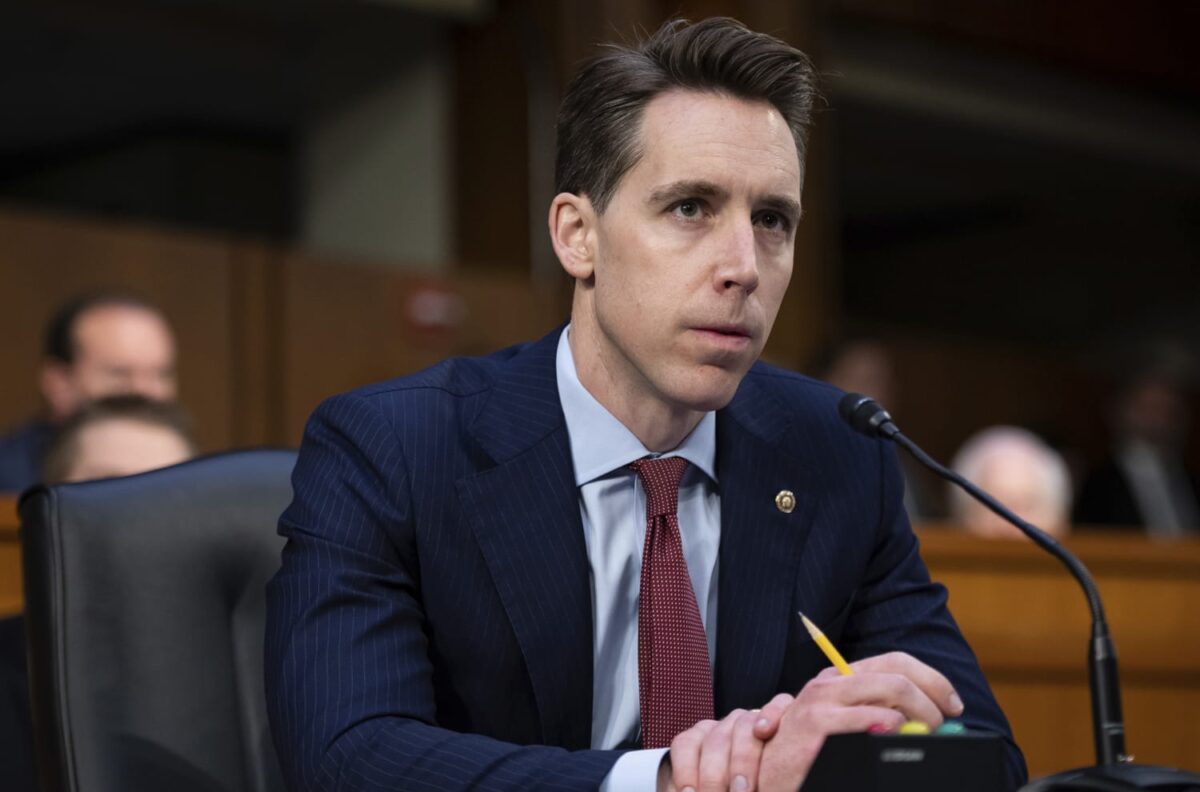
Josh Hawley during a Senate Judiciary Committee Business Meeting, at the U.S. Capitol, on Feb. 10, 2022. Image Credit: Graeme Sloan/Sipa USA via AP file
Sen. Josh Hawley of Missouri found himself at the heart of a political firestorm after breaking ranks with President Donald Trump to advance a Senate resolution that would limit future U.S. military action in Venezuela without congressional approval. The procedural vote marked one of the most significant Republican challenges to Trump’s foreign policy authority since his return to the White House.
The move stunned many observers, given Hawley’s long record as a vocal conservative ally of the president. But as tensions escalate over U.S. involvement in Venezuela following the capture of former President Nicolás Maduro, Hawley joined four other Republicans in asserting that Congress must reclaim its constitutional role in authorizing war.
What the War Powers Vote Was Really About
The Senate vote was triggered under the 1973 War Powers Act, allowing lawmakers to force a debate after U.S. military operations in Venezuela. While the resolution does not immediately halt U.S. actions, it sets up a future vote that could legally restrict Trump’s ability to deploy troops or expand operations without Congress’ consent.
Hawley and his Republican colleagues, Rand Paul, Lisa Murkowski, Susan Collins, and Todd Young, voted with all Democrats to advance the measure, pushing it past what many had dismissed as symbolic opposition.
Hawley’s Reason: Fear of ‘Boots on the Ground’
Unlike some Republicans who framed the vote as a technical or procedural issue, Hawley made his reasoning explicit: Trump’s public comments about the possibility of U.S. ground troops in Venezuela raised alarms.
Hawley argued that any move toward a prolonged military presence must go through Congress, warning against mission creep and unchecked executive authority. His position aligned with long-standing concerns among constitutional conservatives who fear the normalization of military action without legislative approval.
READ ALSO
Who is Barry Pollack? Meet the Power Lawyer defending Nicolás Maduro after his U.S. capture
Trump’s Furious Response
President Trump responded swiftly and forcefully, blasting Hawley and the other GOP senators on Truth Social, declaring they should “NEVER be elected to office again.” Trump accused the lawmakers of weakening national security and undermining his authority as commander in chief.
By publicly naming Hawley, Trump transformed what might have been a quiet procedural vote into a high-stakes loyalty test within the Republican Party.
Why Hawley’s Vote Matters More Than the Others
Hawley’s decision carries unique weight because of his reputation as a Trump-aligned populist conservative. Unlike Murkowski or Collins, who frequently break with party leadership, Hawley’s vote signals that Trump’s grip on the GOP is not absolute, especially on constitutional and war-powers issues.
Political analysts note that Hawley has carefully framed his stance as pro-America, not anti-Trump, emphasizing support for the initial operation while opposing an open-ended military commitment.
Political Risks Ahead
While Hawley is not up for reelection this year, his vote places him in a delicate position with Trump’s base. The president’s public condemnation could energize future primary challengers or complicate Hawley’s national ambitions.
At the same time, the move may bolster Hawley’s image among voters wary of endless foreign interventions, particularly as uncertainty grows over how long the U.S. intends to remain involved in Venezuela.
What Comes Next
The resolution now heads toward a full Senate vote, where its ultimate passage remains uncertain. Still, the procedural victory alone represents a symbolic rebuke to Trump and a reminder that Congress is willing, at least in moments, to challenge presidential war powers.
For Josh Hawley, the vote may mark a defining moment: a calculated risk that could either broaden his appeal or deepen divisions within the Republican Party.
FAQ
Why did Josh Hawley vote against Trump on Venezuela?
Josh Hawley voted to advance a war powers resolution because he was concerned about the possibility of U.S. “boots on the ground” in Venezuela without congressional approval.
Did Josh Hawley oppose the U.S. operation in Venezuela?
No. Hawley supported the initial operation but opposed any prolonged or expanded military action without Congress authorizing it.
What is the War Powers Act?
The War Powers Act of 1973 limits the president’s ability to deploy U.S. forces abroad without congressional consent beyond a specific timeframe.
How did Trump respond to Hawley’s vote?
Trump publicly criticized Hawley, saying he should never be reelected and accusing him of undermining national security.
Which Republicans voted with Josh Hawley?
Rand Paul, Lisa Murkowski, Susan Collins, and Todd Young joined Hawley in voting to advance the resolution.
Will the war powers resolution pass?
It advanced procedurally, but final passage is not guaranteed and will depend on future Senate votes and amendments.
Does this mean Trump’s authority is limited now?
Not yet. The vote sets up a future showdown but does not immediately restrict Trump’s powers.
Could this affect Josh Hawley’s political future?
Yes. The vote could strain his relationship with Trump’s base while strengthening his appeal among constitutional conservatives.