

John Steenhuisen set to step down as DA Leader, raising Coalition fears and market jitters

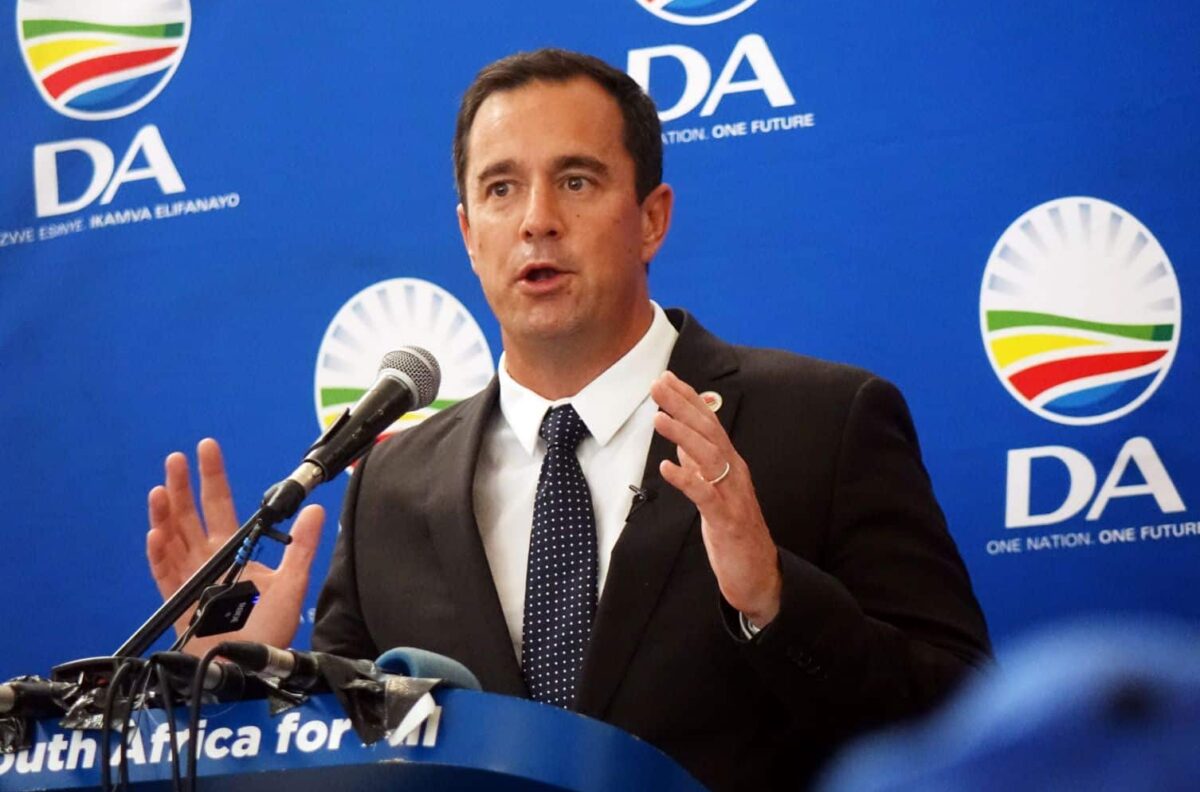
John Steenhuisen set to step down as DA leader. Image Source: Cape Town PC
South Africa’s political landscape is bracing for fresh uncertainty after Democratic Alliance (DA) leader John Steenhuisen signaled he will not seek re-election at the party’s upcoming federal congress. The expected decision, set to be formally announced this week, comes amid mounting internal pressure within the DA and renewed concerns about the stability of the country’s fragile government of national unity (GNU).
Steenhuisen’s planned exit has already rippled through financial markets, with the South African rand reacting nervously as investors assess what a leadership change inside a key coalition partner could mean for governance, reform momentum, and political cohesion.
John Steenhuisen Won’t Seek Another Term as DA Leader
According to people familiar with the matter, John Steenhuisen, who has led the DA since 2019, will not stand for another term when the party holds its elective conference in April. A formal announcement is expected as early as Wednesday.
Steenhuisen, 49, is currently both the leader of the Democratic Alliance and South Africa’s Minister of Agriculture, making his potential departure significant not just for party politics but also for national governance. He declined to confirm his intentions publicly, stating he could not comment before nominations officially open on February 24.
Coalition Stability Comes Under the Spotlight
Steenhuisen’s departure would inject new uncertainty into South Africa’s coalition government, which was formed 18 months ago and has already faced internal strain. The coalition, led by the African National Congress (ANC) with the DA as a key partner, experienced a major standoff last year that delayed the approval of the national budget.
Political analysts warn that leadership turbulence within the DA could weaken the reform-focused image of the GNU, at least in the short term. Markets remain sensitive to anything perceived as undermining coalition stability.
READ ALSO
Fuel prices drop in South Africa: Here’s what you’ll pay from February 4, 2026
Rand Reacts as Markets Price in Political Risk
The news briefly rattled currency markets. The rand, which initially strengthened by as much as 1.1%, pared gains to trade about 0.5% stronger at 16.01 per dollar in Johannesburg trading.
Henrik Gullberg, a macro strategist at Coex Partners, noted that markets tend to react negatively to political uncertainty but added that investors appeared somewhat reassured that the issue stems from internal DA dynamics, rather than a breakdown in relations with the ANC.
Why Steenhuisen Has Faced Growing Internal Pressure
Steenhuisen has come under increasing pressure from within his party over policy disagreements inside the coalition government. He has also faced criticism from core DA supporters, including farmers, over his handling of a deadly foot-and-mouth disease outbreak that contributed to rising meat prices.
Additionally, his role in implementing a policy that gives preference to businesses with Black Economic Empowerment (BEE) credentials when securing export permits to the European Union has proven controversial among some DA constituencies.
Geordin Hill-Lewis Emerges as Leading Successor
Steenhuisen’s expected exit has opened the door for Cape Town Mayor Geordin Hill-Lewis, widely viewed as a rising star within the DA. Hill-Lewis, 39, confirmed he would “very seriously” consider running if Steenhuisen steps aside, although he has ruled out joining the national cabinet.
The DA has governed Cape Town since 2006, and Hill-Lewis became the city’s youngest-ever mayor in 2021. Cape Town is often regarded as the best-run metropolitan municipality in South Africa, bolstering his credentials among party members and donors.
Past Controversies and Internal Party Tensions
Momentum for a leadership change intensified after Steenhuisen became embroiled in a public dispute with the DA’s finance chief and was accused of misusing a party credit card. While an internal investigation later cleared him of wrongdoing, the episode deepened divisions within the party.
More recently, a high-profile rift between Steenhuisen and former DA Federal Chair Dion George added to internal tensions, fueling speculation about his political future.
What Comes Next for the Democratic Alliance
The DA’s Federal Congress in April will determine the party’s next leader, a decision that could reshape its role within the GNU. With South Africa facing economic reform pressures, fragile investor confidence, and coalition politics, the leadership transition is being closely watched both domestically and internationally.
FAQ
Who is John Steenhuisen?
John Steenhuisen is the leader of South Africa’s Democratic Alliance and the country’s Minister of Agriculture. He has led the DA since 2019.
Is John Steenhuisen resigning as DA leader?
Steenhuisen is widely expected not to seek re-election at the DA’s federal congress in April, effectively stepping aside from the leadership role.
When will John Steenhuisen make his decision official?
Sources say a formal announcement is expected as early as Wednesday, ahead of leadership nominations opening on February 24.
Why is John Steenhuisen stepping down?
He has faced mounting internal pressure over coalition policy decisions, criticism from key supporters, and internal party tensions.
Who is likely to replace John Steenhuisen?
Cape Town Mayor Geordin Hill-Lewis is considered a leading contender and has said he would seriously consider running.
How does this affect South Africa’s coalition government?
The DA is a key member of the GNU, and leadership uncertainty could temporarily unsettle coalition stability and reform momentum.
Why did the rand react to the news?
Markets tend to react negatively to political uncertainty, especially when it involves coalition dynamics and governance stability.
Will the DA remain in the government of national unity?
Senior figures, including Hill-Lewis, have indicated continued support for remaining in the GNU, though terms may be renegotiated.