

How did Jo Ann Allen Boyce die? Inside details of historic “Clinton 12” member’s death

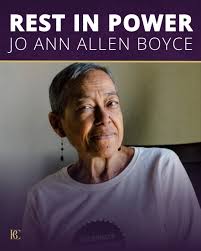
Jo Ann Allen Boyce
Jo Ann Allen Boyce — one of the courageous Black students who helped desegregate Clinton High School in Tennessee in 1956 — has died at her home in Los Angeles. She was 84.
Her daughter, Kamlyn Young, confirmed that Boyce passed away after a decade-long battle with pancreatic cancer, a fight she endured quietly and with remarkable strength.
Boyce’s legacy is inseparable from one of the earliest and most consequential civil rights moments in the American South. In 1954, the U.S. Supreme Court banned racial segregation in public schools through its landmark Brown v. Board of Education ruling. Two years later, a group of twelve Black teenagers from Anderson County unknowingly found themselves at the center of a national turning point. They would later be known as the “Clinton 12.”
Unlike the widely documented desegregation of Little Rock Central High School, the Clinton 12 were not hand-picked for their courage or academic standing. They were simply the Black students who lived within the school district and were legally entitled to attend their local high school — a place they once had to walk past on their way to a bus that transported them to a segregated school nearly 20 miles away in Knoxville.
At just 14, Boyce saw the opportunity differently from the political storm brewing around her. According to her daughter-in-law, Libby Boyce, she approached the historic moment with the thoughts of a typical teenager: What would she wear? How should she style her hair? Would she make new friends? She carried hope in her heart before she fully understood the weight of what she was stepping into.
The first morning at Clinton High School was calm. A handful of onlookers stood by, most simply observing. But by Tuesday, more people gathered. And on Wednesday, the atmosphere shifted sharply. In a televised interview years later, Boyce recalled wanting to run home after seeing an angry crowd filling the streets — many of them outsiders, including white supremacists and Ku Klux Klan members who had come to oppose integration. The National Guard was eventually deployed to restore order as violent protests escalated.
Inside the school, Boyce’s experience was a mixture of kindness, indifference, and open hostility. Some classmates welcomed her quietly, and she was elected vice president of her homeroom. But others hurled insults, threw objects, and plastered derogatory signs on the lockers of Black students. The tension and fear made it nearly impossible to focus on academics.
Despite those early challenges, Boyce built a fulfilling life after graduation. She pursued a brief career in a female vocal group before dedicating decades to pediatric nursing — a profession that embodied her nurturing and resilient spirit.
Beyond her career, Boyce committed herself to retelling the story of the Clinton 12. She spoke in schools, participated in community events, and became a living bridge connecting young people to the early struggles of desegregation. Her message was always centered on compassion: “Do not hate — bring love instead,” Libby Boyce said.
In 2019, she co-authored This Promise of Change, an autobiographical children’s book that introduced new generations to her journey and the promise of equality that she never stopped believing in.
Jo Ann Allen Boyce leaves behind not just a civil rights legacy, but a testimony of courage, grace, and the quiet determination that helped reshape American education.
FAQ: Jo Ann Allen Boyce and the Clinton 12
1. Who was Jo Ann Allen Boyce?
Jo Ann Allen Boyce was one of the “Clinton 12,” the first group of Black students to integrate a public high school in the American South after the Brown v. Board of Education ruling. She later became a pediatric nurse, author, and civil rights speaker.
2. What were the “Clinton 12”?
The Clinton 12 were twelve Black students who attended Clinton High School in Tennessee in 1956, making it one of the first desegregated public schools in the South. Their enrollment triggered national attention, protests, and violent backlash.
3. Why is Jo Ann Allen Boyce historically significant?
She was among the first African American students to break racial barriers in Southern public schools. Her courage, along with the Clinton 12, helped pave the way for future desegregation efforts, including the more widely known Little Rock Nine.
4. How old was Jo Ann Allen Boyce when she integrated Clinton High School?
She was just 14 years old when she walked into Clinton High School as part of the historic integration effort.
5. What challenges did she face during school integration?
Boyce and her classmates faced angry mobs, Ku Klux Klan involvement, harassment from students, racist signs, and constant fear for their safety. The situation escalated so much that the Tennessee National Guard was deployed.
6. What did Jo Ann do after high school?
After graduating, Jo Ann pursued a short career in music with a female singing group. She later became a pediatric nurse and spent decades caring for children.
7. Did Jo Ann Allen Boyce write any books?
Yes. In 2019, she co-wrote This Promise of Change, an autobiographical children’s book that shares her experience integrating Clinton High School. The book received wide praise for its historical insight and accessibility for young readers.
8. How did Jo Ann Allen Boyce die?
She died from pancreatic cancer at her home in Los Angeles, after living with the illness for about ten years.
9. Did she continue speaking about her experiences?
Yes. Boyce frequently visited schools and community programs to share her story. Her message emphasized love over hate and the importance of understanding history.
10. How is she remembered today?
Jo Ann Allen Boyce is remembered as a quiet but powerful civil rights icon, a member of one of the earliest school-integration groups, and a lifelong advocate for compassion, justice, and equality.