

James Watson dead at 97: How the DNA pioneer’s genius changed science — and destroyed his legacy

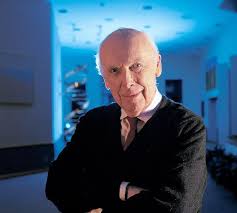
James Watson dead at 97: How the DNA pioneer’s genius changed science — and destroyed his legacy
James Watson, one of the most influential and polarizing scientists of the 20th century, has died at the age of 97. His name will forever be tied to one of humanity’s greatest scientific breakthroughs — the discovery of the DNA double helix — yet also to a legacy tainted by unscientific and racially offensive views that cost him his standing in the scientific world.
Watson’s pioneering work, conducted alongside Francis Crick and Maurice Wilkins, unlocked the molecular structure of DNA in 1953. The discovery reshaped biology, revolutionized genetics, and set the stage for medical innovations such as gene therapy, DNA sequencing, and the Human Genome Project. The trio later received the 1962 Nobel Prize in Physiology or Medicine, marking one of the most celebrated moments in modern science.
However, the man once hailed as a genius would later become a cautionary tale about brilliance clouded by prejudice.
From Scientific Glory to Global Recognition
Born in Chicago in 1928, Watson was an exceptionally curious child who entered the University of Chicago at just 15. Initially drawn to zoology, his fascination soon turned to the mysteries of heredity. His collaboration with Crick at Cambridge University produced a model of DNA that revealed how life’s genetic code replicates — a moment Watson later described as “the discovery of the century.”
The now-iconic image of the double helix — a twisting ladder of genetic information — remains one of science’s most recognized symbols. It captured the imagination of generations, transforming the molecule into a cultural and scientific icon.
Watson’s later career included directing Cold Spring Harbor Laboratory (CSHL) in New York, where he helped establish it as a global hub for molecular biology research. He also served as the first head of the Human Genome Project, which mapped the entirety of human DNA — another monumental leap in understanding life’s blueprint.
The Fall from Scientific Grace
Despite his extraordinary achievements, Watson’s legacy was marred by a pattern of inflammatory remarks. In 2007, he claimed that intelligence was genetically linked to race — comments that were swiftly condemned as racist and scientifically baseless. The backlash was immediate and severe; Cold Spring Harbor suspended him, and his positions were rescinded.
Even after public outrage and institutional rebuke, Watson refused to retract his statements. In a 2019 documentary, he reiterated his discredited views, prompting CSHL to strip him of all remaining honorary titles. The institution described his comments as “reprehensible and unsupported by science.”
For many, Watson’s downfall represented a profound tragedy — a man who revealed the very code of life but failed to understand the humanity it encompassed.
A Complex Legacy
Watson’s life remains a study in contrasts: a scientist who helped humanity peer into its genetic foundations, yet whose personal convictions betrayed the principles of evidence and equality that science upholds.
He was, as one colleague put it, both “the maker and the unmaker of his own legacy.”
His death closes a remarkable yet uneasy chapter in the history of science — a reminder that even the brightest intellects are not immune to moral blindness.
Frequently Asked Questions (FAQ)
1. Who was James Watson?
James Watson was an American molecular biologist best known for co-discovering the structure of DNA, a breakthrough that earned him the 1962 Nobel Prize in Physiology or Medicine.
2. What did James Watson discover?
He, along with Francis Crick, identified the double helix structure of DNA, revealing how genetic information is stored and transmitted.
3. Why was James Watson controversial?
Watson made racist and scientifically unsubstantiated remarks linking intelligence to race, leading to his dismissal and public condemnation.
4. What is the double helix?
The double helix is the spiral-shaped structure of DNA, resembling a twisted ladder, that encodes genetic information in all living organisms.
5. What is James Watson’s legacy?
Watson’s contributions to genetics are monumental, but his reputation suffered greatly due to his offensive and unscientific beliefs.