

Why is Judge James Boasberg at the center of a high-stakes court clash with Trump’s DOJ?

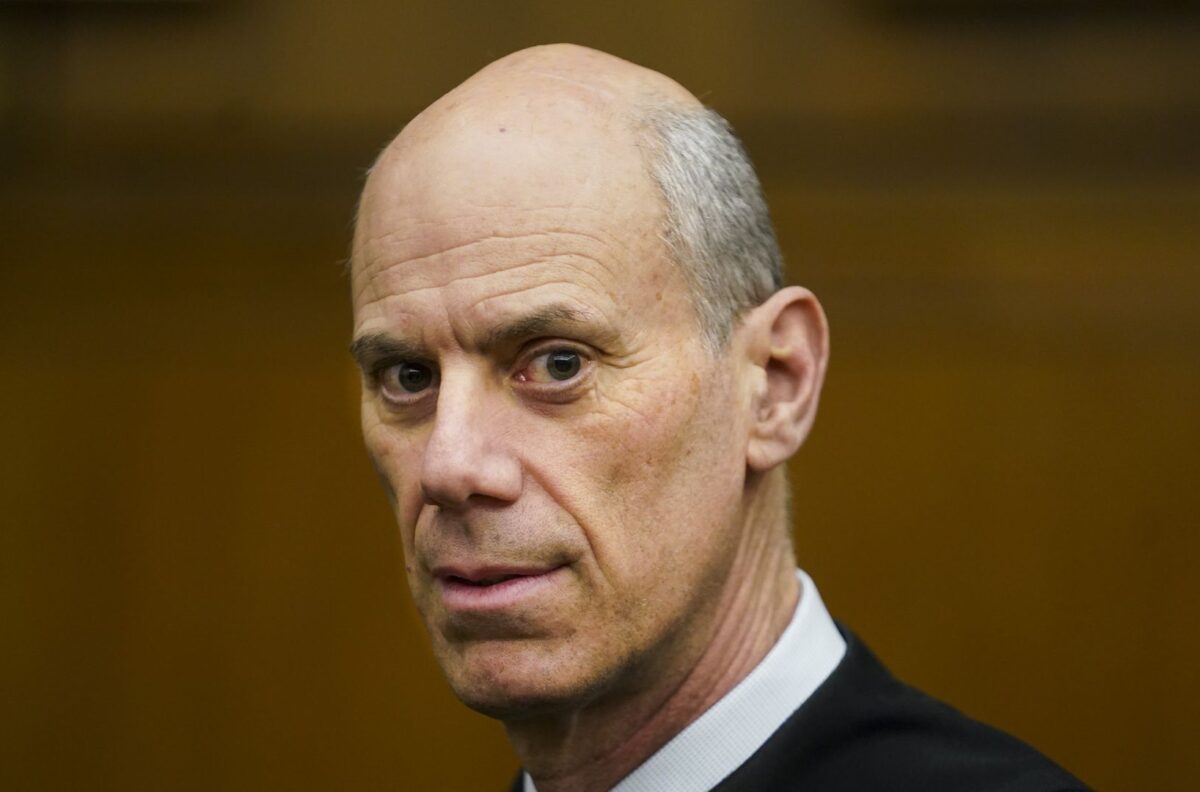
Judge James Boasberg stands for a portrait in Washington, D.C. on March 16, 2023. Image Credit: Carolyn Van Houten/The Washington Post via Getty Images
A dramatic legal standoff between the Trump administration and the federal judiciary intensified Friday after a U.S. appeals court temporarily halted Judge James E. Boasberg contempt investigation into deportation flights that sent Venezuelan immigrants to a high-security prison in El Salvador earlier this year.
The decision by a three-judge panel of the U.S. Court of Appeals for the D.C. Circuit offers the Justice Department a temporary reprieve while it seeks to shut down, and reassign, a probe that has become one of the most contentious flashpoints in the administration’s aggressive immigration agenda.
Why Judge James Boasberg’s Ruling Sparked a Legal Firestorm
Judge Boasberg, a federal district judge in Washington, ordered the administration in March to halt deportation flights carrying Venezuelan men accused of gang ties under the rarely invoked Alien Enemies Act of 1798. He also instructed that any planes already in the air be turned around.
Despite that order, approximately 137 Venezuelan men were flown to El Salvador, where they were incarcerated in a notorious prison. Boasberg later determined there was enough evidence to explore whether the administration willfully violated a court order, triggering contempt proceedings.
The Justice Department fiercely objected, calling the investigation “idiosyncratic and misguided” and accusing Boasberg of bias, an extraordinary move that underscores the depth of the conflict.
READ ALSO
Is Trump’s DOJ losing its grip after another failed indictment of Letitia James?
Appeals Court Steps In, For Now
On Friday, the D.C. Circuit issued a brief administrative stay, temporarily blocking Boasberg from proceeding with scheduled testimony from Drew Ensign, a senior DOJ immigration lawyer, and Erez Reuveni, a former DOJ attorney turned whistleblower.
While the ruling does not resolve the case’s merits, it delays what could have been a politically explosive courtroom moment, sparing senior administration officials from immediate scrutiny under oath.
The appeals court previously allowed Boasberg to move forward after months of deliberation, signaling that the pause may be temporary rather than permanent.
DOJ Accuses Boasberg of Bias, Seeks His Removal
In sharply worded filings, the Justice Department argued that Judge Boasberg has developed “too strong a bias” to preside impartially and accused him of fostering an “unseemly interbranch conflict.”
Boasberg forcefully rejected that characterization, writing that the inquiry is far from academic.
“Approximately 137 men were spirited out of this country without a hearing… despite this court’s order,” Boasberg wrote, citing reports of abuse and possible torture in El Salvador.
The clash has turned Boasberg into a lightning rod for Republican lawmakers, with former President Donald Trump publicly calling for his impeachment and GOP members introducing impeachment articles.
The Whistleblower and the ‘Ignore the Courts’ Allegation
Central to the controversy is Erez Reuveni’s whistleblower complaint, which alleges that senior DOJ official Emil Bove III suggested ignoring court orders altogether, an accusation Bove denies.
Reuveni’s documents include frantic internal communications from the night Boasberg’s order was issued, raising questions about whether DOJ officials knowingly allowed flights to proceed.
The administration maintains it complied with the written order, arguing that Boasberg’s oral instructions to turn planes around were never formally memorialized.
What This Means for Immigration Policy and the Courts
The dispute highlights a broader struggle over executive power, judicial authority, and immigration enforcement under President Trump. While a separate court in Texas is reviewing whether the Alien Enemies Act was lawfully applied, Boasberg’s case zeroes in on a narrower but explosive question:
Can a presidential administration disregard a federal judge’s order without consequences?
The answer could shape the limits of executive authority, and potentially land before the U.S. Supreme Court.
FAQ
Who is Judge James Boasberg?
James E. Boasberg is a federal district judge in Washington, D.C., appointed during the Obama administration, currently overseeing high-profile immigration litigation.
Why is Judge Boasberg in conflict with the DOJ?
He ordered deportation flights halted in March, later initiating a contempt inquiry after flights continued despite his directive.
What did the appeals court decide?
The D.C. Circuit temporarily paused Boasberg’s contempt hearings while it considers the Justice Department’s objections.
What is the Alien Enemies Act?
A 1798 wartime law granting the president broad powers to detain or deport nationals of hostile foreign nations during war or invasion.
Did the Trump administration violate Boasberg’s order?
That is the central question. The administration says it followed the written order; Boasberg argues his instructions were ignored.
Why is this case important?
It could define limits on executive authority, judicial enforcement, and immigration policy enforcement nationwide.