

Oil hits $115 as Israel-Iran war targets energy facilities, sparks global crisis

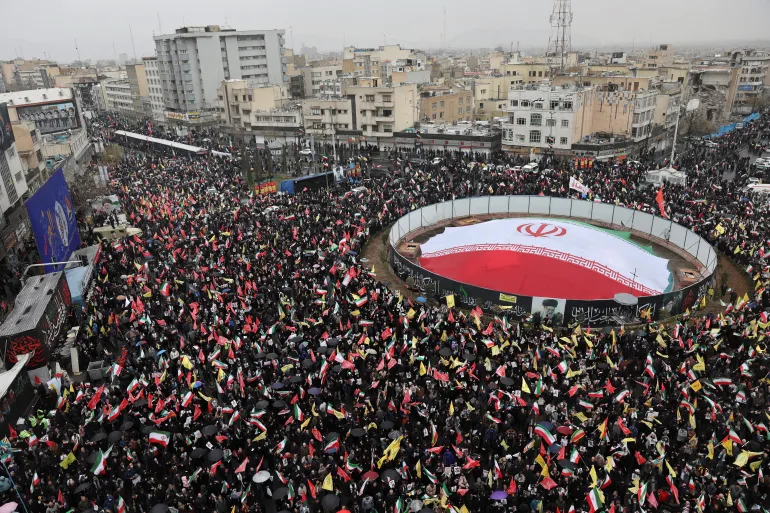
Iranians take part in a protest marking the annual al-Quds Day (Jerusalem Day) on the last Friday of the holy month of Ramadan, amid the US-Israel war on Iran, in Tehran, Iran, on March 13, 2026. Image Credit: Majid Asgaripour/WANA via Reuters
Global markets are on edge as the escalating conflict between Israel and Iran begins to hit energy infrastructure directly—sending oil and gas prices soaring and raising fears of a prolonged global crisis.
On Day 20 of the war, the situation has taken a dramatic turn following a strike on Iran’s South Pars gas field, one of the largest natural gas reserves in the world. The fallout has triggered retaliatory attacks, diplomatic tensions, and economic shockwaves far beyond the Middle East.
Oil Prices Surge as Key Energy Facilities Come Under Fire
The global oil benchmark, Brent crude, spiked to $115 per barrel, reflecting immediate concerns over supply disruptions.
The escalation began when Israel targeted production infrastructure linked to Iran’s South Pars field, which it shares with Qatar. The strike marked a major shift, as previous attacks had avoided direct hits on core energy production sites.
Iran responded swiftly, launching strikes on energy targets across the region. Among the key developments:
-
An Israeli refinery in Haifa was hit
-
Saudi Arabia reported attacks on facilities in Riyadh
-
Qatar confirmed heavy damage at Ras Laffan, its main gas hub
Qatar has since expelled Iranian military attachés, signalling rising diplomatic tensions.
Trump Distances US — But Questions Remain
US President Donald Trump has insisted that Washington had no prior knowledge of Israel’s strike.
However, that claim is being challenged. Sources familiar with the operation say the US was aware—and possibly coordinated with Israel—raising fresh questions about America’s role in the conflict.
Trump has also issued a stark warning, threatening massive retaliation if Iran continues to attack regional energy infrastructure.
Meanwhile, Israeli Prime Minister Benjamin Netanyahu signalled that Israel may scale back further strikes on oil and gas facilities following discussions with the US.
Gulf States on Edge as Attacks Spread
The conflict is no longer confined to Israel and Iran. Several Gulf nations are now directly affected.
Saudi Arabia has warned it could take military action, while missile and drone interceptions have been reported in multiple countries. Qatar’s liquefied natural gas operations have been significantly disrupted, with estimates suggesting a 17% drop in output.
This has serious implications, as Qatar accounts for roughly one-fifth of global LNG supply.
Shipping Routes Under Threat
The crisis is also unfolding at sea, with rising risks in the Persian Gulf, Strait of Hormuz, and surrounding waters.
More than 20 vessels—including oil tankers—have reported incidents since the war began. Two ships were recently struck by unidentified projectiles, heightening fears about the safety of one of the world’s most critical energy corridors.
Any prolonged disruption here could push oil prices even higher.
Rising Death Toll and Humanitarian Crisis
Beyond the economic impact, the human cost is mounting.
Iran has reported over 18,000 injuries and more than 1,400 deaths since the conflict began, with children among the victims. In Lebanon, fatalities have crossed 1,000, as fighting spreads across borders.
Civilian infrastructure has also suffered extensive damage, deepening the humanitarian crisis.
Conflicting Narratives and War Uncertainty
The war is also being shaped by conflicting narratives.
Iran’s Supreme Leader Ali Khamenei has claimed that his country is prevailing, while Israeli officials insist they are gaining the upper hand.
At the same time, US officials appear divided, with some intelligence figures disputing claims about Iran’s military intentions or nuclear ambitions.
No End in Sight as Global Pressure Mounts
US Defense Secretary Pete Hegseth has made it clear there is no timeline for ending the conflict, adding to uncertainty.
Despite calls from international bodies to halt attacks on energy infrastructure, hostilities continue—and may escalate further.
Global Ripple Effects Already Visible
The economic consequences are spreading quickly:
-
Gas prices are rising across Europe
-
Developing nations are facing higher fuel costs
-
Global supply chains are under pressure
There are also discussions in Washington about releasing oil reserves or easing restrictions on Iranian crude exports to stabilise prices.
A Defining Moment for Global Energy Markets
What began as a regional military confrontation is now evolving into a global energy crisis.
With critical infrastructure under attack, shipping routes at risk, and no clear diplomatic breakthrough, the world is watching closely.
The coming days could determine whether this remains a contained conflict—or spirals into a prolonged crisis with far-reaching economic consequences.
FAQ
Why are oil prices rising so fast?
Prices surged after attacks on major energy infrastructure, especially Iran’s South Pars gas field.
What is the South Pars gas field?
It is one of the world’s largest natural gas reserves, shared by Iran and Qatar.
Which countries have been affected?
Israel, Iran, Saudi Arabia, and Qatar have all reported attacks on energy facilities.
Is the US involved in the conflict?
The US denies direct involvement, but reports suggest it may have been aware of Israel’s actions.
Could this disrupt global energy supply?
Yes, especially if attacks continue in key regions like the Persian Gulf and Strait of Hormuz.