

Israel-Iran war live: New casualties in Northern Israel as Tehran erupts during Al Quds day rally

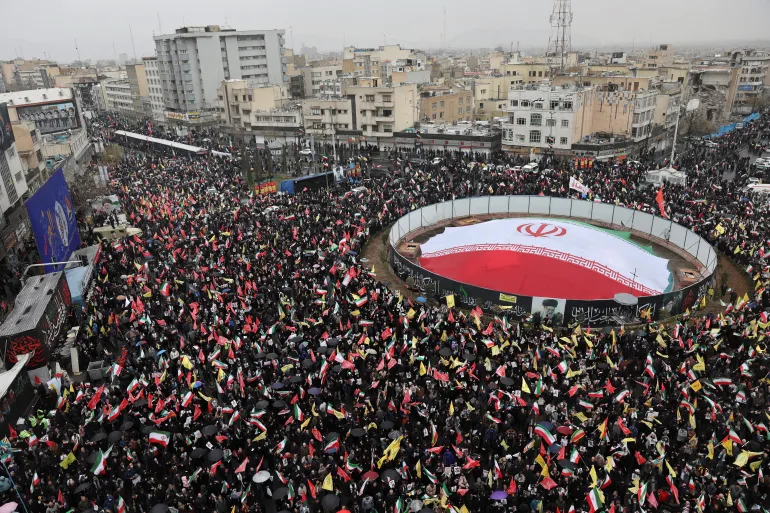
Iranians take part in a protest marking the annual al-Quds Day (Jerusalem Day) on the last Friday of the holy month of Ramadan, amid the US-Israel war on Iran, in Tehran, Iran, on March 13, 2026. Image Credit: Majid Asgaripour/WANA via Reuters
The Israel-Iran war intensified again Friday as new strikes in northern Israel left casualties, while explosions rocked Tehran during mass Al Quds Day rallies, underscoring how quickly the conflict is spreading across the region. Israeli officials said buildings were damaged in northern Israel and two people were wounded in one of the latest attacks, even as Israel announced a new wave of strikes on more than 200 targets inside Iran. The rapidly widening confrontation is now being measured not only in military exchanges, but also in rising Israeli casualties, deepening regional instability, and a growing global economic shock.
For readers tracking Israel casualties in the Iran war, the latest developments highlight a dangerous new phase: retaliatory attacks are continuing on Israeli territory, Tehran remains under pressure from repeated strikes, and the broader region, from Lebanon to Iraq to the Gulf, is increasingly entangled. As the war approaches the two-week mark, there is still no visible path to de-escalation.
Israel Casualties in Iran War: What Happened in Northern Israel?
The latest update on Israel casualties in the Iran war centers on a fresh strike in northern Israel, where two people were wounded and buildings were damaged, according to the live conflict reporting provided in the source material. While the full scale of casualties on the Israeli side was not comprehensively updated in the provided excerpts, the new incident confirms that Israeli territory remains under active attack as Iran and allied groups continue retaliatory fire.
This matters because public search interest around the conflict is increasingly focused on “how many Israelis have been killed or wounded” and “where attacks are landing inside Israel.” Based on the source material supplied, the clearest verified casualty update from Friday is that at least two people were injured in the northern Israel strike. No higher Israeli fatality figure was explicitly confirmed in the provided links, so any broader death toll should be treated cautiously unless updated by official Israeli authorities.
For accuracy and credibility, it is important not to overstate what has been verified. The available reporting confirms new Israeli casualties in the form of injuries, not a newly confirmed nationwide fatality total in the excerpts provided.
Israel Strikes 200 Targets in Iran as Tehran Explosions Shake Al Quds Day Rally
As Israel absorbed new attacks at home, it also expanded its offensive inside Iran. According to the supplied reporting, Israel said its fighter jets struck more than 200 targets across western and central Iran, while explosions were reported in Tehran near a major Al Quds Day rally attended by large crowds.
The timing is especially significant. Al Quds Day, observed on the last Friday of Ramadan, is a politically charged annual show of solidarity with Palestinians and often features strong anti-Israel messaging in Iran. This year’s event unfolded under extraordinary wartime conditions, with thousands gathering in Tehran and other cities even as blasts were heard nearby.
Iranian state-affiliated media reported explosions near the rally site in central Tehran, while footage showed marchers continuing despite visible smoke in the area. The Israeli military had earlier issued evacuation warnings for areas near the gathering, signaling that strikes in or near the capital were expected. That combination, large public rallies, warnings from Israel, and explosions near central Tehran — marks one of the most dramatic flashpoints of the war so far.
Why the Search for ‘Israel Casualties Iran War’ Is Surging
Search demand for Israel casualties Iran war is climbing because people want immediate answers to three core questions:
- How many Israelis have been killed or wounded?
- Is Iran directly hitting Israeli cities?
- Could the conflict spread further through Hezbollah, Iraq, or Gulf states?
The latest source material strongly suggests the answer to the second and third questions is yes. Israeli territory has sustained new strikes, Hezbollah has intensified attacks, and Gulf states including Oman and the UAE are reportedly dealing with incidents linked to the broader conflict. Reuters also reported that Iran’s regional allies have stepped up attacks, including a major barrage of rockets and drones toward Israel in coordination with Tehran’s broader strategy.
That means casualty counts are no longer confined to a single front. The war is now multi-theater, and that makes casualty tracking, especially for Israel, much more fluid and much harder to summarize in one static number.
Trump, Iran and the 13th Day of War: No Relief in Sight
By the 13th day of the war, both President Donald Trump and Iran’s new supreme leader were striking defiant tones, signaling that neither side is preparing the public for a quick off-ramp. Bloomberg reported that both leaders maintained hardline messaging even as the conflict continued to rattle energy markets and fuel fears of a wider regional war.
Reuters similarly reported that Trump publicly escalated his rhetoric toward Iran’s leadership as the war neared the two-week mark, reflecting how politically and militarily entrenched the confrontation has become. That matters for Israeli casualty tracking because the longer the war lasts, the more likely missile, drone, and proxy attacks continue against Israeli targets.
READ ALSO
Regional Fallout: Lebanon, Iraq, Gulf Strikes and Rising Civilian Risk
The Israel-Iran conflict is no longer limited to direct exchanges between the two countries. Lebanon, Iraq, Oman, the UAE, and the Strait of Hormuz have all become part of the crisis narrative.
Reuters reported that Hezbollah’s attacks on Israel intensified, including a heavy barrage of over 200 rockets and 20 drones in a synchronized move with Iranian strikes. In Iraq, a separate but related security crisis continues to unfold, with U.S. forces suffering losses in a KC-135 refuelling aircraft crash that the military said was not caused by hostile fire or friendly fire. Meanwhile, Oman reported that two foreigners were killed in a drone-related incident, underscoring the regional spillover risk.
For Israel, this wider battlefield means casualty risks are no longer limited to direct Iranian launches. They now also include Hezbollah attacks from Lebanon and potentially other Iran-aligned groups operating across the region.
Oil Prices, Strait of Hormuz and Why the Iran War Is Becoming a Global Economic Crisis
Beyond the human toll, the war is rapidly becoming an energy and inflation story. With the Strait of Hormuz effectively constrained, Bloomberg and other reporting cited in the source material show markets remain on edge. Goldman Sachs has raised its oil price outlook, with Brent crude expected to average above $100 a barrel in March, a forecast roughly 20% higher than earlier 2026 expectations.
The conflict is also threatening natural gas flows, fertilizer supplies, and helium availability, the latter a crucial material for semiconductor manufacturing. In short, the war is not just producing Israeli casualties and Iranian destruction; it is also triggering a global supply shock that could affect everything from fuel costs to food prices to electronics manufacturing.
Bottom Line: Israel Casualties Are Rising, but the Full Toll Is Still Evolving
The most accurate takeaway right now is this: Israel is continuing to sustain casualties in the Iran war, with the latest confirmed update in the provided reporting showing two people wounded in northern Israel after a fresh strike. At the same time, Israel is escalating its own campaign with hundreds of targets hit inside Iran, including operations near Tehran during a politically sensitive mass rally.
Because this is a fast-moving war, casualty numbers can change by the hour. But the trend is unmistakable: the conflict is widening, the danger to Israeli civilians remains real, and the region is moving deeper into a prolonged and volatile confrontation.
FAQ: Israel Casualties Iran War
1) How many Israelis were killed in the Iran war today?
Based on the provided source material, the latest clearly verified update is that two people were wounded in northern Israel in a fresh strike. The excerpts you shared do not explicitly confirm a new nationwide Israeli death toll for Friday, so it is more accurate to say new Israeli casualties were reported in the form of injuries rather than newly confirmed deaths.
2) How many people were wounded in northern Israel?
The latest update in the supplied reporting says two people were wounded and buildings were damaged in a strike in northern Israel.
3) What caused the latest casualties in Israel?
The injuries were linked to a fresh strike in northern Israel during the ongoing Israel-Iran war, amid continuing retaliatory missile and drone exchanges and broader regional attacks involving Iran-aligned groups.
4) Is Iran directly attacking Israel right now?
The available reporting indicates that Israeli territory is still being hit by fresh attacks, including the strike in northern Israel. In addition, Reuters reported coordinated attacks by Iran-backed allies, including Hezbollah, which increases the threat to Israel.
5) Did Israel strike Tehran today?
Yes. According to the provided source material, explosions were reported in Tehran, and Israel said it struck more than 200 targets across western and central Iran. The Israeli military had also issued warnings for areas near the Al Quds Day rally in Tehran.
6) Why are explosions happening near the Al Quds Day rally in Tehran?
The reporting says Israel warned it would conduct operations in parts of Tehran and later explosions were reported near the rally site. The Al Quds Day event drew large crowds, making the timing especially sensitive and globally visible.
7) What is Al Quds Day and why is it important in this war?
Al Quds Day is an annual rally held on the last Friday of Ramadan in support of Palestinians. In Iran, it often includes anti-Israel demonstrations. This year, it became a major wartime flashpoint because large crowds gathered while Israel was actively striking Tehran.
8) Is Hezbollah involved in the Israel-Iran war?
Yes. Reuters reported that Hezbollah intensified attacks on Israel, including a barrage of over 200 rockets and 20 drones, in coordination with the broader Iran-led regional response.
9) Why are people searching for “Israel casualties Iran war” so much?
Because readers want real-time answers on:
- How many Israelis have been killed or wounded
- Which Israeli cities are under attack
- Whether Iran is escalating direct attacks
- How close the region is to a broader war
These are the most urgent and high-volume search intents around the story.
10) Are oil prices rising because of the Israel-Iran war?
Yes. The conflict is disrupting energy flows and threatening the Strait of Hormuz, a critical oil shipping route. Goldman Sachs raised its forecast and expects Brent crude to average above $100 a barrel in March, according to the source material.
11) Is the Strait of Hormuz closed?
The supplied reporting describes the Strait of Hormuz as effectively closed or severely constrained for oil tankers, which is a major reason global energy markets are under pressure.
12) How is the Israel-Iran war affecting the global economy?
The war is pushing up:
- Oil prices
- Natural gas prices
- Fertilizer supply risks
- Helium shortages that could impact semiconductor production
That means the conflict could affect fuel bills, inflation, agriculture, and electronics supply chains worldwide.
13) Is there any sign the Israel-Iran war will end soon?
Not based on the latest reporting. Both President Donald Trump and Iran’s new supreme leader have taken defiant public positions, and there is no clear sign of de-escalation.
14) Are U.S. forces also taking casualties in the Iran war?
Yes. The source material says four U.S. service members were killed in a KC-135 refuelling aircraft crash in Iraq, bringing the reported U.S. death toll in the war to 11, according to the supplied live updates. The U.S. military said the crash was not due to hostile fire or friendly fire.
15) What is the latest bottom line on Israel casualties in the Iran war?
The latest verified update in your provided sources is that Israel has suffered new casualties, with two people wounded in northern Israel. Because the conflict is evolving rapidly, the broader toll may change quickly, but the clearest confirmed point from the supplied material is fresh injuries inside Israel amid continued escalation.