

Israel-Iran conflict escalates: Trump warns Iran will be ‘hit very hard’ as missiles, drone attacks shake middle east

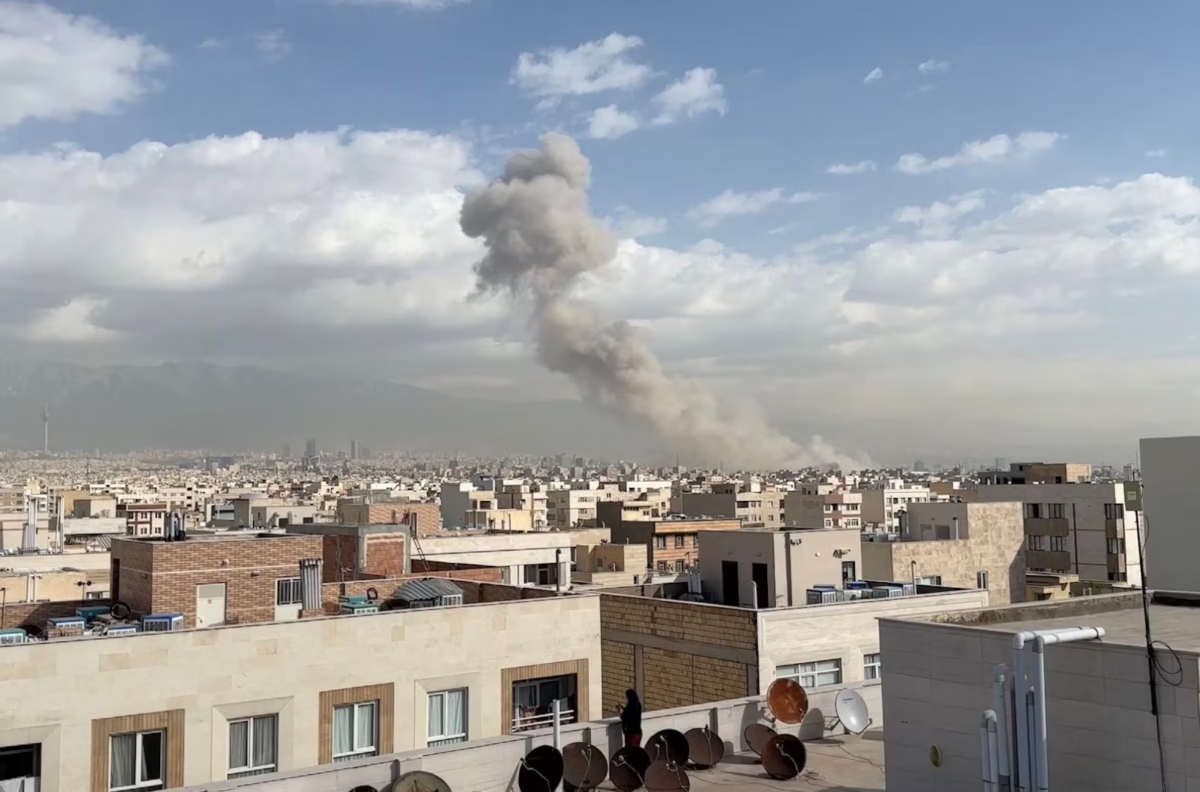
Smoke rises following an explosion in Tehran, Iran February 28, 2026 in this screen grab taken from video. WANA (West Asia News Agency)/Handout
The rapidly intensifying confrontation between Israel and Iran has entered a dangerous new phase, with missile strikes, drone attacks and military operations spreading across the Middle East.
The latest developments come as Donald Trump warned that Iran would be “hit very hard,” escalating fears that the conflict could widen into a broader regional war.
Meanwhile, Masoud Pezeshkian has attempted to calm tensions with neighbouring states by apologising for recent strikes and announcing that Tehran will avoid attacking neighbouring countries unless attacks originate from them.
Despite these diplomatic signals, the ongoing hostilities between Israel and Iran, combined with the involvement of allied groups and military bases across the region, continue to raise alarm among global leaders and security analysts.
Iran Signals Shift in Strategy Toward Gulf Nations
Iran’s president, Masoud Pezeshkian, recently stated that the country’s interim leadership council had approved halting missile strikes against neighbouring states. The decision was accompanied by an apology to regional countries affected by earlier attacks.
Pezeshkian said Iran would only target neighbouring territories if attacks against Iran originated from those locations. The statement appeared aimed at easing pressure from Gulf nations concerned about the conflict spilling across borders.
However, Iranian military officials later clarified that U.S. and Israeli military assets across the region would remain legitimate targets, particularly if they are used to launch attacks against Iran.
Analysts say the move could reflect growing diplomatic pressure from regional powers, including Saudi Arabia, Qatar, and Oman, which have reportedly urged Tehran to de-escalate.
Trump Threatens Major Strikes on Iran
Amid the rising tensions, U.S. President Donald Trump issued a stark warning that Iran could face further military action.
In a statement posted on social media, Trump claimed Iran had “apologised and surrendered to its Middle East neighbours” following the intense pressure of U.S. and Israeli strikes.
He also warned that additional targets in Iran were under consideration and that Tehran would be “hit very hard.”
Trump’s remarks followed a week of escalating military activity between Israel, the United States and Iran, including large-scale airstrikes on Iranian military infrastructure.
Israeli Airstrikes Hit Iranian Military Sites
According to the Israel Defense Forces, Israeli warplanes conducted a series of major strikes against Iranian military targets.
More than 80 fighter jets reportedly attacked key military infrastructure in Tehran and other parts of Iran, marking one of the largest aerial operations since the conflict began.
Israeli forces also carried out operations in Lebanon, including a raid aimed at locating the remains of Israeli navigator Ron Arad, who went missing in 1986. The operation did not uncover new evidence but highlighted Israel’s ongoing military presence in the region.
At the same time, Israeli strikes reportedly targeted areas linked to the militant group Hezbollah, increasing the risk of a wider regional confrontation.
Missiles and Drones Target Gulf Region
The conflict has already begun affecting several countries across the Gulf region.
Authorities in the United Arab Emirates reported that 16 ballistic missiles and more than 120 drones were launched toward the country. Most of the projectiles were intercepted, though some landed within UAE territory.
Explosions were also reported near Dubai International Airport, temporarily disrupting flights before airport operations partially resumed.
The escalating attacks have forced airlines to suspend flights and triggered emergency evacuations in parts of the region, affecting thousands of travellers.
READ ALSO
Regional Militias Threaten to Join the War
The risk of escalation is growing as Iran-aligned groups signal readiness to join the conflict.
Officials linked to the Houthi movement warned that Yemen could become part of the war if hostilities continue.
Meanwhile, clashes were reported between Israeli forces and fighters linked to Hezbollah in Lebanon’s Bekaa Valley, where at least two dozen people were reportedly killed during overnight fighting.
The involvement of these groups could transform the Israel-Iran confrontation into a multi-front regional conflict.
Oil Prices Surge as Global Concerns Grow
The ongoing military escalation has also triggered volatility in global energy markets.
Oil prices surged as investors reacted to fears that fighting could disrupt production or shipping routes in the Persian Gulf, one of the world’s most critical energy corridors.
Economists warn that a prolonged conflict could have far-reaching consequences for global energy supplies, inflation and economic stability.
Diplomatic Pressure Mounts to Prevent Wider War
International pressure is mounting to prevent the conflict from spiralling further.
Several governments, including Germany, have expressed concern about the legality and consequences of the war. German officials have stated that they will not participate militarily, citing doubts about the conflict’s legitimacy under international law.
Diplomatic channels across the region remain active as leaders attempt to prevent a broader war that could engulf multiple Middle Eastern countries.
For now, the situation remains volatile, with missile strikes, military operations and political tensions continuing to unfold rapidly.
FAQ
What is happening in the Israel-Iran conflict right now?
The conflict has escalated with Israeli airstrikes on Iranian military targets and missile and drone attacks across parts of the Middle East. The United States has also supported Israeli operations, while Iran has launched retaliatory strikes targeting regional military assets.
Why are Israel and Iran fighting?
The conflict stems from longstanding tensions over Iran’s nuclear programme, its support for armed groups such as Hezbollah, and Israel’s efforts to prevent Iran from expanding military influence in the region.
Did Iran apologise to neighbouring countries?
Yes. Iranian President Masoud Pezeshkian apologised to neighbouring countries affected by recent strikes and said Iran would stop targeting them unless attacks on Iran originate from those countries.
What did Donald Trump say about Iran?
U.S. President Donald Trump warned that Iran would be “hit very hard” and suggested additional military targets were being considered if Iran continued its attacks.
Has the conflict spread beyond Israel and Iran?
Yes. Missile and drone attacks have affected countries such as the United Arab Emirates, and clashes involving Hezbollah have occurred in Lebanon. Regional militias have also indicated they could join the war.
Are Gulf countries involved in the war?
Some Gulf nations have been impacted by missile interceptions and airspace disruptions but have generally tried to avoid direct involvement while urging de-escalation.
Could the Israel-Iran conflict lead to a wider Middle East war?
Security analysts warn that the involvement of regional groups such as Hezbollah or the Houthis could expand the conflict into a broader regional war if diplomatic efforts fail.
How is the war affecting the global economy?
The conflict has already caused oil prices to surge due to fears of supply disruptions in the Persian Gulf, a key region for global energy exports.