

Israel-Iran war escalates: Strait of Hormuz attacks, Oil prices surge and new Iranian leader faces strike rumors

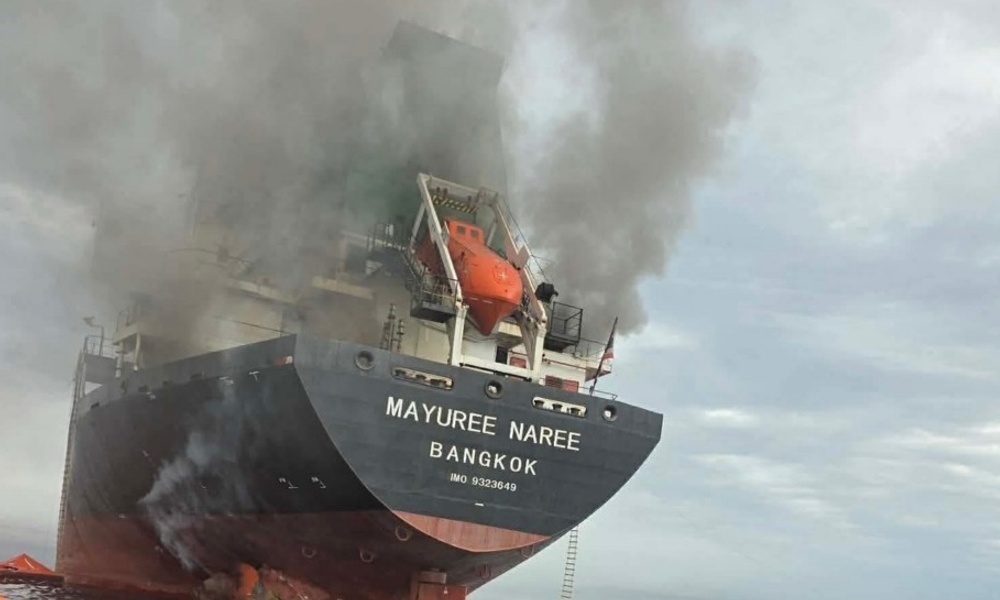
Israel-Iran conflict escalates with Strait of Hormuz ship attacks
The Israel-Iran conflict has entered a dangerous new phase, with attacks on vessels in the strategically vital raising fears of a prolonged global energy crisis.
According to Iran’s Islamic Revolutionary Guard Corps (IRGC), two ships were struck after allegedly ignoring naval warnings. A Thai-flagged vessel, Mayuree Naree, suffered an explosion in its engine room, leaving three crew members missing. Another vessel, the Liberian-flagged Express Rome, was also reportedly hit by Iranian projectiles.
The United Kingdom Maritime Trade Operations (UKMTO) confirmed that at least 13 vessels have been attacked in the Persian Gulf region since the conflict intensified on February 28. Three incidents occurred in a single day, underscoring the escalating risk to international shipping.
Iranian military officials have warned that any vessel linked to the United States or Israel would be considered a “legitimate target,” signaling a widening maritime confrontation.
Why the Strait of Hormuz Is a Critical Global Chokepoint
The Strait of Hormuz is one of the world’s most important energy corridors. Roughly 20 million barrels of oil per day, nearly one-fifth of global production, pass through the narrow waterway, according to US energy data.
Iran controls the strait’s northern coastline, giving Tehran significant leverage during times of conflict. Analysts warn that even limited disruption can send shockwaves through global markets.
Following the latest attacks, Brent crude prices surged more than 4%, trading above $91 per barrel, while US benchmark WTI climbed toward $87. Concerns over a sustained blockade have outweighed proposals from the International Energy Agency to release strategic reserves.
Major shipping firms including and have begun diverting vessels away from the region.
Israel Launches New Strikes on Tehran as Iran Ramps Up Operations
The conflict has intensified on land as well. Israel confirmed it launched an “additional wave” of strikes targeting sites in , including areas near Mehrabad International Airport.
Iran responded by declaring its “most intense and heaviest operation” since the war began, with missile interceptions reported across Gulf states and Israel.
According to Iranian officials, more than 1,300 civilians have been killed in US-Israeli strikes since the conflict started. Casualties have also been reported in Lebanon, Iraq, Israel, Kuwait, Saudi Arabia, the United Arab Emirates, Bahrain and Oman, highlighting the regional spillover.
The Israeli emergency service Magen David Adom confirmed at least 12 deaths inside Israel since hostilities escalated.
READ ALSO
Naval Mines and Drone Warfare Raise Global Security Fears
US intelligence sources say Iran has begun laying naval mines in the Strait of Hormuz. A 2025 US Congressional report estimated that Tehran possesses between 5,000 and 6,000 naval mines, including limpet and bottom-detonation devices.
Meanwhile, Western intelligence officials report that is providing Iran with advanced drone warfare tactics based on battlefield strategies used in Ukraine. Iranian-designed Shahed drones, widely deployed in recent attacks, have proven difficult to intercept.
The United States has denied Iranian claims that it struck the USS Abraham Lincoln carrier group, calling the allegations false.
New Supreme Leader Mojtaba Khamenei “Safe” Amid Injury Rumors
The conflict has also unfolded against major political upheaval inside Iran. After the reported killing of in the opening strikes, his son was appointed Iran’s new Supreme Leader.
Rumors circulated that Mojtaba Khamenei had been injured in subsequent airstrikes. However, officials close to Iranian President Masoud Pezeshkian stated that the new leader “is safe” and recovering from no reported injuries.
He has not appeared publicly since his appointment, fueling speculation online.
Oil Markets, Global Trade and Economic Fallout
The economic implications of the Israel-Iran war are becoming increasingly severe.
Energy analysts warn that if the Strait of Hormuz becomes impassable, global oil and liquefied natural gas markets could face unprecedented disruption. Few alternative export routes exist for Gulf producers such as Saudi Arabia and Kuwait.
The conflict has also triggered fears of retaliation targeting banks and economic infrastructure. Iranian military spokespeople warned that regional US and Israeli “economic centers” could face strikes in response to recent attacks.
As tensions escalate, global markets remain volatile, and diplomatic channels appear limited.
FAQ
What is happening in the Israel-Iran conflict right now?
Israel and Iran are exchanging intensified military strikes, while maritime attacks near the Strait of Hormuz have escalated. Civilian casualties are rising across multiple countries.
Why is the Strait of Hormuz important?
The Strait of Hormuz carries about 20% of the world’s oil supply. Disruption there can significantly raise global oil prices and destabilize energy markets.
How many ships have been attacked in the Strait of Hormuz?
At least 13 vessels have reportedly been attacked since the conflict escalated in late February, according to UK maritime authorities.
Are oil prices rising because of the conflict?
Yes. Brent crude and WTI prices have surged amid fears of supply disruptions linked to attacks in the Strait of Hormuz.
Has Iran laid naval mines in the Strait of Hormuz?
US intelligence sources say Iran has begun laying a limited number of naval mines, raising concerns about shipping safety.
Who is Iran’s new Supreme Leader?
Mojtaba Khamenei was appointed Supreme Leader after the reported killing of his father, Ayatollah Ali Khamenei. Officials say he is safe despite injury rumors.
Is Russia supporting Iran in the conflict?
Western intelligence sources claim Russia is providing Iran with drone tactics and military advice, though the Kremlin has not publicly confirmed this.
How many people have died in the Israel-Iran war?
More than 1,300 civilians in Iran have reportedly died, along with casualties in Israel, Lebanon, Iraq and Gulf nations. Numbers continue to rise.
Could the Strait of Hormuz be closed?
While not fully closed, escalating attacks and mine-laying could severely restrict passage, which would have major global economic consequences.