

Is Tinubu’s Extended Vacation Constitutional? What Section 145 Says

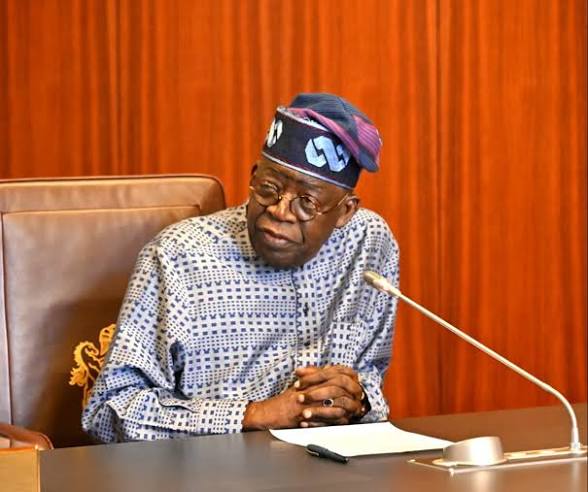
President Bola Tinubu’s extended stay outside Nigeria has triggered a fresh constitutional debate, with some federal lawmakers asking the National Assembly to reconvene and determine whether the President complied with the procedure governing presidential absence.
Tinubu left Nigeria on August 30 for what the Presidency described as a three-week working vacation in Europe. On September 21, the Presidency announced that he had extended his stay by a few days and was expected to return at the weekend.
The controversy centres on Section 145 of Nigeria’s 1999 Constitution, which deals with what happens when a president proceeds on vacation or is otherwise unable to discharge the functions of office.
At issue is not simply whether Tinubu can travel or continue working while abroad. The question is whether the constitutional procedure for presidential absence has been followed.
What does Section 145 say?
Section 145(1) provides that whenever the President transmits a written declaration to the Senate President and the Speaker of the House of Representatives stating that he is proceeding on vacation or is otherwise unable to discharge his functions, the Vice-President is to perform those functions as Acting President until the President communicates his availability to resume them.
Section 145(2) also provides for a situation where the President fails to transmit such a declaration within 21 days.
In that circumstance, the National Assembly is empowered, through simple-majority resolutions of both chambers, to mandate the Vice-President to perform the functions of President as Acting President until the President communicates his availability.
The constitutional provision can be read directly in the 1999 Constitution.
Did Tinubu transmit the required letter?
This is the question that has not been publicly settled.
Some lawmakers under the Save Democracy Group have asked Senate President Godswill Akpabio and House Speaker Tajudeen Abbas to disclose whether Tinubu transmitted the written declaration required under Section 145.
They said that if the declaration was transmitted, the leadership of both chambers should make that fact known to Nigerians.
If it was not transmitted, the lawmakers argue that the National Assembly should consider the procedure contained in Section 145(2).
Premium Times previously contacted officials in the Presidency and National Assembly to establish whether the declaration had been transmitted. The officials contacted could not confirm that such a communication had been received.
That means the public record does not presently establish that Tinubu failed to transmit the declaration. It also does not provide clear confirmation that the declaration was transmitted.
So, is the extended vacation unconstitutional?
The answer depends partly on how Section 145 is interpreted.
One constitutional lawyer cited by Premium Times argued that the word “shall” in Section 145(1) makes transmission of the declaration mandatory whenever the President proceeds on vacation.
Another lawyer offered a different interpretation, arguing that the Constitution allows the President to remain away for up to 21 days without National Assembly intervention and that the 21-day provision becomes relevant when the President remains absent beyond that period without the required declaration.
The disagreement is therefore about how subsections 145(1) and 145(2) operate together.
What is clearer is that the Constitution provides a mechanism for dealing with a prolonged presidential absence. The present dispute is whether that mechanism has been triggered and, if so, whether the National Assembly should act.
Why are lawmakers asking the National Assembly to reconvene?
The lawmakers’ argument is that Nigerians should not have to rely on assumptions about who is formally exercising presidential functions.
They want Akpabio and Abbas to establish whether Tinubu transmitted the required declaration.
If it was transmitted, they want the National Assembly leadership to confirm it publicly.
If it was not, they argue that the 21-day period has expired and that both chambers should consider the constitutional procedure for mandating Vice-President Kashim Shettima to act as Acting President.
The group described constitutional continuity as something that should be formal and transparent rather than left to assumption.
What has Akpabio said?
Akpabio has defended Tinubu’s continued stay abroad and rejected the suggestion that the President’s absence means there is a vacancy in the office.
Speaking in Akwa Ibom State, the Senate President said:
“I am not the acting president because the president is still in power.”
He described Tinubu as being on “working leave” and said the President remained in charge of government.
Akpabio also said:
“What he cannot do here, he’s doing abroad.”
The statement was made while he was responding to an earlier description of him as Nigeria’s Acting President.
However, Akpabio’s comments do not publicly establish whether Tinubu transmitted a Section 145 declaration.
That is why the constitutional question raised by the lawmakers remains separate from the question of whether Tinubu is still President.
What is the National Assembly’s position?
The Senate has rejected calls for an emergency sitting over Tinubu’s absence.
Senate spokesperson Yemi Adaramodu said there was no reason for the National Assembly to reconvene specifically over the President’s continued stay abroad. The Senate is expected to resume its normal legislative activities on September 29.
This places the focus on the National Assembly leadership: whether it will publicly clarify the status of any declaration received from the President and whether it considers Section 145 to require further action.
Why does the issue matter?
The constitutional question goes beyond Tinubu’s current trip.
The purpose of provisions such as Section 145 is to establish who formally performs presidential functions when the President is unavailable.
That distinction matters because the President’s ability to communicate with officials or issue directives from abroad is not necessarily the same question as whether the constitutional procedure for transferring presidential functions has been followed.
The present controversy therefore has two separate issues.
The first is whether Tinubu complied with Section 145.
The second is whether the National Assembly has a responsibility to clarify the constitutional status of presidential authority when there is uncertainty about that compliance.
What happened during Yar’Adua’s absence?
Nigeria has dealt with a much more serious version of this problem before.
During former President Umaru Musa Yar’Adua’s prolonged illness and absence from public view in 2009 and 2010, the failure to formally transfer presidential authority created a constitutional crisis over the powers of then-Vice-President Goodluck Jonathan.
The National Assembly eventually adopted what became known as the Doctrine of Necessity, allowing Jonathan to assume presidential powers as Acting President.
The episode remains one of the country’s most significant examples of the consequences of uncertainty surrounding presidential succession and temporary transfer of authority.
The present situation is different: Tinubu remains active publicly and the Presidency says he continues to direct government affairs while abroad.
But the constitutional question is similar in one important respect: who formally exercises presidential functions when the President is away?
What remains unanswered?
For now, three questions remain central.
Did Tinubu transmit the written declaration required under Section 145?
If he did, when was it transmitted and what exactly did it communicate about the Vice-President’s role?
If he did not, does the expiration of the 21-day period require the National Assembly to act under Section 145(2)?
Until those questions are publicly clarified, the debate over Tinubu’s extended vacation is likely to continue.
The Presidency says the President remains in charge of government, while some lawmakers are asking the National Assembly to establish whether the constitutional procedure governing his absence has been followed.
The issue, therefore, is no longer simply about where the President is spending his vacation. It is about how Nigeria’s Constitution requires presidential authority to be handled when the President is away.