

Iranian warship IRIS Dena sunk off Sri Lanka in suspected submarine attack: Over 100 missing

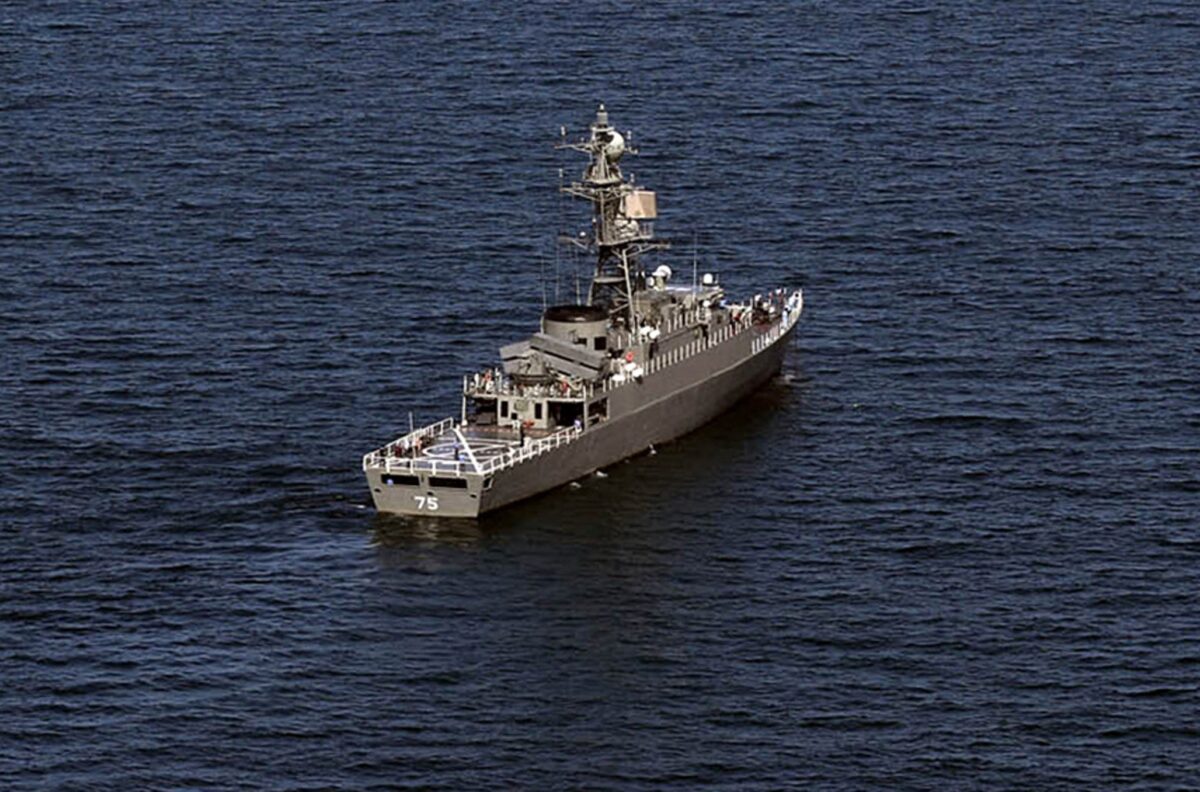
The Iranian frigate Iris Dena has been sunk off Sir Lanka’s coast. Image Credit: Iranian Army office
An Iranian naval frigate, the IRIS Dena, has sunk off the southern coast of Sri Lanka following what authorities described as a suspected submarine attack, leaving more than 100 people missing and at least one confirmed dead.
The incident marks a dramatic escalation in the rapidly widening Middle East conflict, now entering its fifth day, and underscores the growing maritime dimension of hostilities linked to the ongoing war involving Iran, Israel, and the United States.
Sri Lankan officials confirmed that the vessel went down just outside the island nation’s territorial waters after issuing a distress call early Wednesday morning.
What Happened to the IRIS Dena?
Sri Lanka’s navy and defence ministry sources reported that a submarine attack struck the Iranian warship near Galle, a major port city in southern Sri Lanka. It remains unclear who launched the strike.
According to Sri Lankan authorities:
- 79 sailors were rescued and transported to hospital
- At least one person has died
- More than 100 crew members are believed missing
- Dozens were injured, with several in serious condition
Sri Lanka’s foreign minister told parliament that rescue operations began at approximately 6 a.m. local time after receiving the distress signal. Naval ships and air force aircraft were deployed immediately.
Officials have stressed that saving lives remains the priority, with investigations into the cause of the sinking to follow.
The IRIS Dena: One of Iran’s Newest Warships
The IRIS Dena was one of Iran’s newest and most advanced frigates. The vessel was equipped with:
- Heavy naval guns
- Surface-to-air missile systems
- Anti-ship missiles
- Torpedoes
- Helicopter-carrying capability
In 2023, the Dena gained international attention during a global tour that included port calls in South Africa and Brazil, accompanied by the support vessel IRIS Makran.
The U.S. Treasury Department sanctioned both ships in February 2023 over Iran’s alleged role in supplying drones used in overseas conflicts.
Its sinking represents a significant symbolic and strategic blow to Iran’s naval capabilities.
Rising Tensions in the Strait of Hormuz
The incident comes amid heightened tensions in the Strait of Hormuz, one of the world’s most critical oil transit choke points.
Iran’s Revolutionary Guard Corps has claimed “complete control” of the waterway, warning that vessels passing through could be targeted. Shipping traffic has largely halted, not necessarily due to naval blockades, but because insurers have dramatically increased premiums or withdrawn coverage altogether.
Meanwhile, Donald Trump stated that the U.S. would ensure the “free flow of energy to the world” and directed federal financial agencies to provide insurance backing to commercial vessels.
READ ALSO
Did Iran attack USS Abraham Lincoln? Inside the controversial missile strike
Broader Middle East Conflict Intensifies
The sinking occurred against the backdrop of a broader military campaign involving U.S. and Israeli strikes on Iranian targets. Reports indicate that multiple Iranian naval assets have been destroyed in recent days.
Explosions have been reported in Tehran, missile interceptions have occurred near Turkish airspace, and Israeli forces have entered parts of southern Lebanon following rocket fire from Hezbollah.
Iran’s leadership is reportedly in transition following the reported death of Supreme Leader Ali Khamenei earlier in the conflict, though Tehran has delayed funeral proceedings citing anticipated large crowds.
Rescue Operations in Galle Continue
Images from Galle show ambulances arriving at Sri Lanka’s southern naval headquarters and security personnel guarding hospitals treating injured sailors.
Sri Lankan authorities have confirmed that:
- Rescue missions are ongoing
- No foreign aircraft or ships were observed at the time of the distress call
- The cause of the sinking remains officially unconfirmed
The Sri Lankan government has pledged to take “appropriate action” pending the outcome of investigations.
Strategic Implications of the IRIS Dena Sinking
Military analysts say the destruction of the IRIS Dena further weakens Iran’s naval posture at a time when regional tensions are peaking.
If confirmed as a submarine strike, the incident could indicate the involvement of a technologically advanced navy, though no nation has claimed responsibility.
With more than 100 sailors still unaccounted for, the humanitarian dimension of the tragedy continues to unfold alongside its geopolitical ramifications.
FAQ
What happened to the IRIS Dena?
The Iranian warship IRIS Dena sank off the coast of Sri Lanka after a suspected submarine attack. More than 100 crew members are reported missing.
Where did the IRIS Dena sink?
The vessel went down just outside Sri Lanka’s territorial waters near the southern port city of Galle.
How many people were on board?
Sri Lankan officials indicated the ship had approximately 180 personnel aboard at the time of the incident.
How many casualties have been confirmed?
At least one death has been confirmed, dozens were injured, and more than 100 are currently missing.
Who attacked the IRIS Dena?
Authorities have not confirmed who launched the attack. No nation has claimed responsibility.
Why is the Strait of Hormuz important?
The Strait of Hormuz is a key global oil shipping route, handling roughly one-fifth of the world’s petroleum trade.
Was the IRIS Dena previously sanctioned?
Yes. The U.S. Treasury sanctioned the IRIS Dena in 2023 as part of broader measures targeting Iran’s military assets.
How does this impact the wider Iran-Israel conflict?
The sinking adds a significant naval dimension to the conflict, further escalating tensions and weakening Iran’s maritime capabilities.