

Iran War Ceasefire: Trump, Tehran claim victory as two-week truce reopens Strait of Hormuz

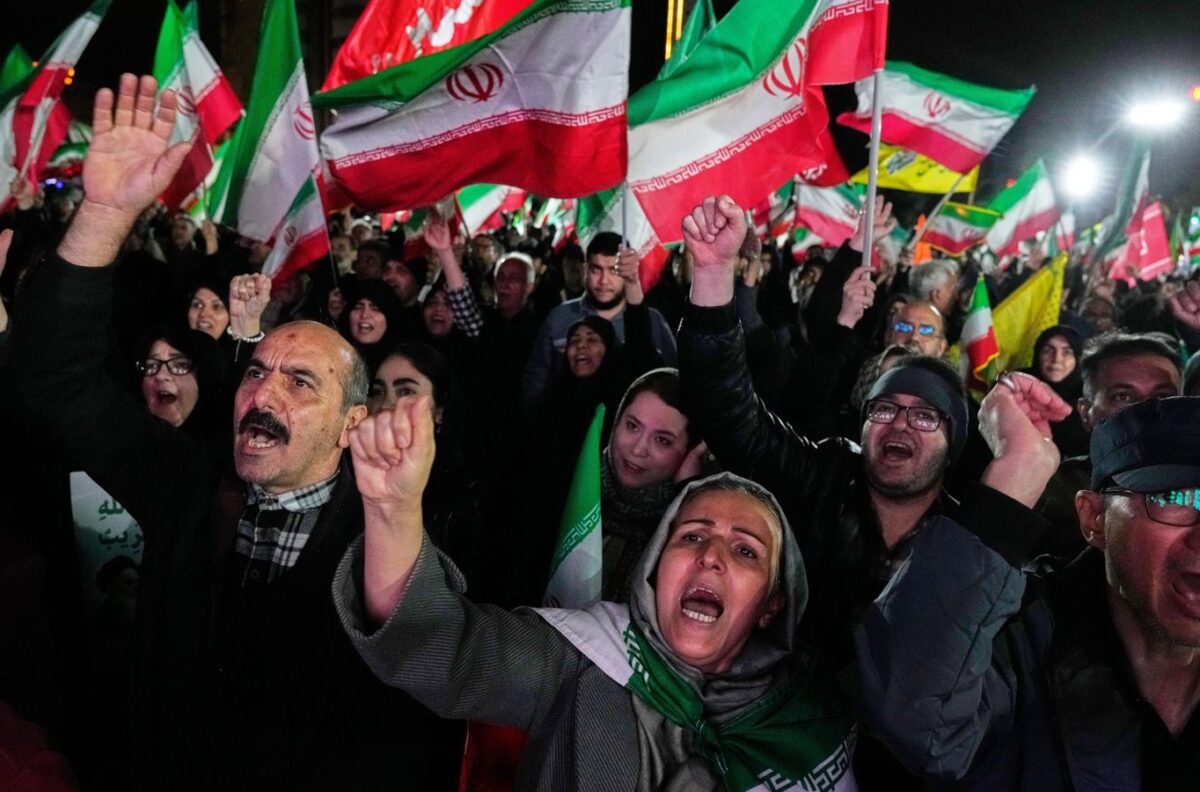
Tehran crowds celebrate fragile two-week Iran war ceasefire. Image Credit: AP Photo/Vahid Salemi
A dramatic Iran war ceasefire announced just hours before a U.S. deadline has temporarily pulled the Middle East back from the brink, easing fears of a wider regional conflict and triggering a sharp global market rebound. The two-week ceasefire between the United States and Iran, backed by Israel but disputed over Lebanon, is being framed as a victory by both Washington and Tehran, yet key questions remain over enforcement, shipping in the Strait of Hormuz, and whether planned talks in Pakistan can turn a short pause into lasting peace.
The truce was announced after U.S. President Donald Trump said he would suspend attacks on Iran if Tehran agreed to the “complete, immediate and safe opening” of the Strait of Hormuz, a strategic waterway that carries roughly 20% of global oil flows. Iran later said safe transit would be allowed during the ceasefire through coordination with its armed forces. Reuters and Al Jazeera reported that the agreement triggered a relief rally in stocks and a sharp drop in oil prices, though analysts warned the situation remains highly fragile.
What Is the Iran War Ceasefire Deal? Key Terms of the Two-Week Truce
The Iran-US ceasefire deal is a temporary, two-week suspension of attacks designed to stop a spiraling war that has disrupted energy supplies, battered markets, and raised fears of a wider regional conflagration.
According to the reporting provided, the truce rests on several core conditions:
- The United States pauses strikes on Iran for two weeks
- Iran allows safe passage through the Strait of Hormuz
- Israel halts strikes on Iran
- Talks are expected in Islamabad, Pakistan, on Friday
- The ceasefire is intended as a diplomatic window, not a final peace agreement
Trump described the move as a “total and complete victory,” while Iranian officials portrayed it as proof that Washington had accepted Tehran’s 10-point framework as a basis for negotiations. Al Jazeera reported that Tehran said talks in Islamabad would proceed based on its proposal, which includes sanctions relief, security guarantees, and terms related to Hormuz.
Why the Strait of Hormuz Matters in the Iran Ceasefire
The Strait of Hormuz is the single most important economic lever in this ceasefire.
The narrow waterway links the Persian Gulf to the Gulf of Oman and the Arabian Sea and handles about one-fifth of global oil supply. Since the war intensified, disruption in Hormuz has fueled a historic oil shock, sending energy prices sharply higher and rattling global supply chains.
Trump made the reopening of Hormuz a central condition for the ceasefire. In response, Iran said “safe passage” would be possible during the truce, but with coordination by Iran’s armed forces. That caveat is critical: commercial shipping may not immediately normalize, and insurers, shipowners, and naval security channels are likely to wait for evidence that early vessel transits can occur safely before resuming full traffic.
That means the Iran ceasefire may calm markets faster than it restores actual maritime trade, at least in the short term.
Iran’s 10-Point Peace Plan vs Trump’s 15-Point Proposal
One of the biggest online search drivers is: What is Iran’s 10-point peace plan?
Based on the source material you provided, Iran’s proposal reportedly includes:
- Regulated passage through the Strait of Hormuz
- An end to attacks on Iran and its allied groups
- Withdrawal of U.S. forces from the region
- Compensation to Iran
- Lifting of sanctions
- Unfreezing Iranian assets
- A binding UN resolution for any final settlement
- Reports from some outlets say Iranian media versions also referenced acceptance of Iran’s right to nuclear enrichment
At the same time, Washington is said to have its own 15-point proposal, which reportedly includes:
- No Iranian nuclear weapons
- Transfer or control of highly enriched uranium
- Limits on defense capabilities
- An end to proxy warfare
- Reopening the Strait of Hormuz
The immediate takeaway: the ceasefire is not a peace deal. It is a negotiated pause between two sides still publicly promoting very different endgames. That gap is why analysts see the truce as a diplomatic opening rather than a stable settlement.
READ ALSO
Lebanon Excluded? Why the Iran Ceasefire May Not Stop Regional Fighting
A major complication is that the Iran war ceasefire does not appear to fully cover Lebanon.
Israel has said it halted strikes on Iran but will continue operations against Hezbollah in Lebanon, which it argues is outside the scope of the agreement. That directly contradicts earlier messaging from Pakistan’s prime minister, who reportedly suggested Lebanon was included when he helped present the truce framework.
This matters because it means the Middle East conflict remains active on at least one major front, even while the U.S.-Iran exchange pauses. Continued Israeli operations in Lebanon could test the ceasefire’s political durability and inflame tensions if Tehran-aligned groups respond.
In short: the ceasefire lowers the risk of immediate U.S.-Iran escalation, but it does not end the broader regional war.
Global Reaction to the Iran Ceasefire: Relief, Caution, and Calls for Lasting Peace
International reaction has been broadly positive, but cautious.
Reuters reported that the European Union welcomed the two-week truce, calling it an opportunity for de-escalation and urging all parties to respect the terms and work toward a lasting agreement. Al Jazeera also reported that Gulf and regional states including Saudi Arabia, Qatar, Oman, Iraq, Egypt, and Turkiye welcomed the ceasefire while stressing that diplomacy must now replace military escalation.
This response reflects a common theme: world capitals see the truce as a temporary off-ramp, not a guaranteed peace.
Oil Prices, Stocks and Global Markets React to the Iran War Ceasefire
The market reaction was immediate, and dramatic.
Reuters reported that U.S. stock futures surged, while crude prices dropped sharply after the ceasefire announcement. Al Jazeera, citing Reuters, said investors welcomed the prospect of restored energy flows through Hormuz, with oil falling steeply and equities rallying across major indexes.
Why it matters for readers and search interest:
- Oil prices could remain volatile
- Gasoline and jet fuel relief may take longer than headline prices suggest
- Shipping and insurance risk premiums may stay elevated
- Any ceasefire violation could quickly reverse market gains
This makes the Iran ceasefire one of the most economically consequential geopolitical stories right now.
What Happens Next? Pakistan Talks Could Decide the Future of the Iran Ceasefire
The next major milestone is expected in Islamabad, Pakistan, where both sides have reportedly been invited for talks on Friday.
Those negotiations will likely focus on:
- Whether the ceasefire can be extended beyond two weeks
- Security arrangements in the Strait of Hormuz
- Sanctions relief
- Nuclear-related conditions
- Regional proxy activity
- Whether Lebanon and other conflict theaters become part of a wider deal
If those talks fail, the region could quickly slide back toward confrontation. If they succeed, the current two-week Iran ceasefire could become the foundation for a broader framework.
For now, the world is watching a narrow diplomatic window, one that may decide whether this is merely a pause in war, or the first step toward a fragile peace.
FAQ: Iran War Ceasefire Explained
1. What is the Iran war ceasefire announced on April 8, 2026?
The Iran war ceasefire is a two-week temporary truce between the United States and Iran, announced after President Donald Trump said Washington would suspend attacks if Tehran allowed the reopening of the Strait of Hormuz. Israel also said it halted strikes on Iran, but the ceasefire is not considered a final peace deal.
2. Why did the US and Iran agree to a two-week ceasefire?
The two sides agreed to the truce to prevent a wider escalation after weeks of war disrupted oil supplies, hit global markets, and raised fears of a broader Middle East conflict. The ceasefire creates a short diplomatic window for negotiations in Pakistan.
3. Does the Iran ceasefire include Israel?
Yes. According to the reporting in your source material, Israel is part of the ceasefire regarding Iran and agreed to stop strikes on Iranian targets during the two-week period.
4. Does the Iran ceasefire include Lebanon and Hezbollah?
Not fully. Israel has said Lebanon is not included, and it plans to continue operations against Hezbollah. That makes this a limited ceasefire rather than a region-wide end to hostilities.
5. What is Iran’s 10-point peace plan?
Iran’s 10-point peace plan, as described in the source reports, reportedly includes safe and regulated passage through the Strait of Hormuz, an end to attacks on Iran and allied groups, sanctions relief, release of frozen assets, compensation, and a UN-backed framework for a final settlement.
6. What is Trump’s condition for the Iran ceasefire?
Trump said the ceasefire was contingent on Iran agreeing to the “complete, immediate and safe” reopening of the Strait of Hormuz, the crucial shipping lane for global oil and gas flows.
7. Why is the Strait of Hormuz so important in the Iran war?
The Strait of Hormuz is one of the world’s most important energy chokepoints. Roughly 20% of global oil supply passes through it. Any disruption there can cause oil prices to spike, shipping costs to rise, and financial markets to react sharply.
8. Why did oil prices fall after the Iran ceasefire?
Oil prices dropped because traders interpreted the ceasefire as reducing the immediate risk of a prolonged blockade or military escalation in the Strait of Hormuz. If shipping resumes, global energy supplies may stabilize.
9. Are the US and Iran holding peace talks after the ceasefire?
Yes. Based on the source material, both sides have been invited to Islamabad, Pakistan, for talks expected on Friday. These discussions could determine whether the truce is extended or collapses.
10. Is the Iran ceasefire permanent?
No. The current agreement is a temporary two-week ceasefire, not a permanent peace deal. Its success depends on whether negotiations produce a broader settlement.
11. Could the Iran ceasefire collapse?
Yes. The ceasefire is considered fragile because:
- It is time-limited
- Lebanon remains contested
- Maritime security in Hormuz is still uncertain
- The U.S. and Iran have very different negotiating demands
12. How are global markets reacting to the Iran ceasefire?
Markets initially reacted positively:
- Oil prices fell sharply
- U.S. stock futures rose
- Risk assets rallied on hopes of de-escalation
However, analysts warn the rally could reverse if the ceasefire breaks down.