

Is Iran facing a breaking point as Khamenei blames Trump for Nationwide protests?

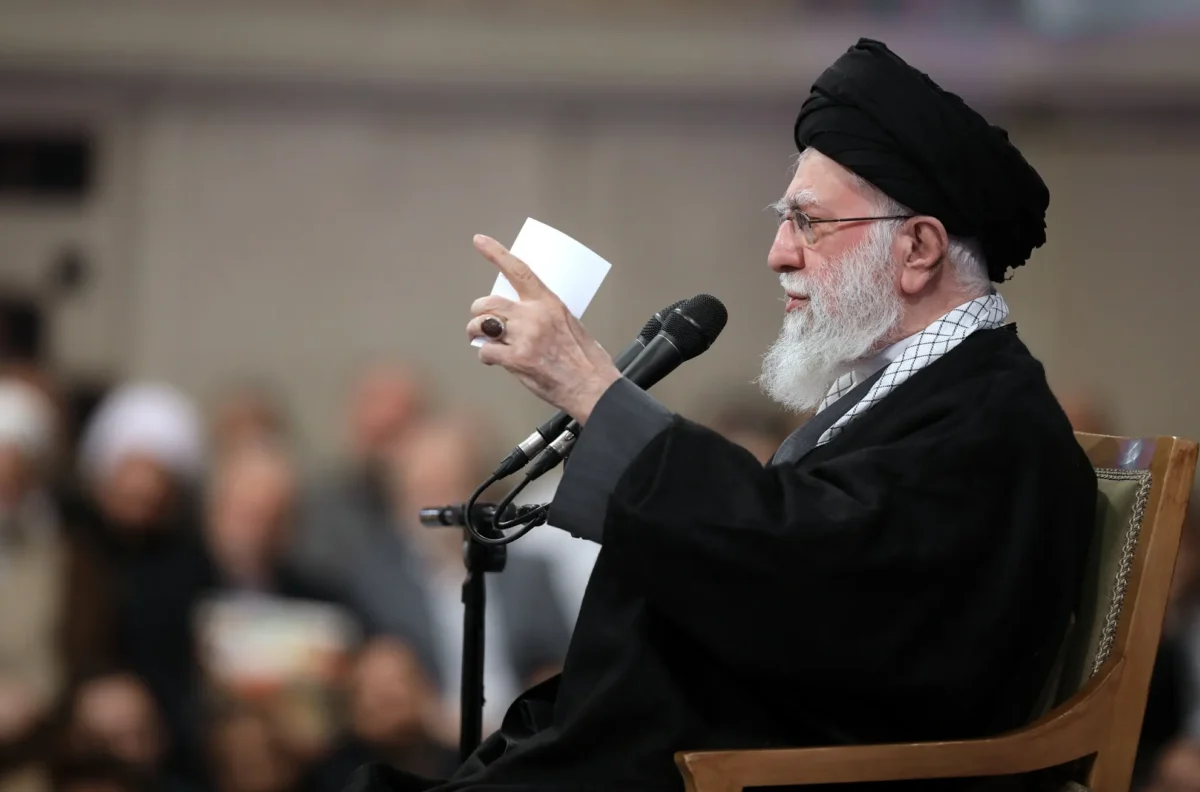
Ayatollah Ali Khamenei speaks in a meeting, in Tehran, Jan. 3. Source: Office of the Iranian Supreme Leader
Iran is facing one of its most serious internal challenges in years as Supreme Leader Ayatollah Ali Khamenei openly accused protesters of acting on behalf of U.S. President Donald Trump, even as demonstrations spread nationwide amid a deepening economic crisis and growing questions over the regime’s legitimacy.
The protests, which began in Tehran’s Grand Bazaar in late December, have now reached all 31 provinces, according to rights monitors, highlighting widespread anger over inflation, currency collapse, unemployment, and dissatisfaction with Iran’s long-standing political priorities.
Khamenei Accuses Protesters of Serving Trump
In a nationally televised address reported by Reuters, Khamenei described demonstrators as “vandals” and “mercenaries for foreigners,” accusing them of destroying public property in coordination with Washington.
“The Islamic Republic came to power through the blood of hundreds of thousands of honourable people. It will not back down in the face of vandals,” Khamenei said.
Iranian authorities reinforced the message by imposing a near-total internet blackout, effectively cutting the country of over 90 million people off from the outside world in an effort to suppress coordination and media coverage of the protests.
Economic Collapse at the Heart of the Protests
Unlike earlier protest waves driven by social or cultural grievances, the current unrest is firmly rooted in economic despair. Demonstrations were initially sparked by shopkeepers furious over the sharp collapse of the rial, soaring prices, and declining purchasing power.
Iran’s economy has been battered by sanctions, mismanagement, and declining investor confidence. Protesters say government spending on regional conflicts and ideological projects has come at the expense of ordinary citizens struggling to survive.
Chants such as “Not Gaza, not Lebanon, my life for Iran” have re-emerged, signaling public anger over Tehran’s foreign policy priorities.
A Deepening Legitimacy Crisis
Analysts warn that the unrest reflects a growing legitimacy crisis for Iran’s clerical establishment, particularly among younger citizens. Nearly half of Iran’s population is under 30, and many openly reject revolutionary slogans that once defined the Islamic Republic.
“The collapse is not just of the rial, but of trust,” said Alex Vatanka of the Middle East Institute.
Protesters interviewed by Reuters expressed frustration that Iran continues to pursue nuclear ambitions and regional influence while citizens face unemployment, isolation, and declining living standards.
READ ALSO
Crackdowns, Arrests, and Rising Death Toll
According to the U.S.-based Human Rights Activists News Agency (HRANA), at least 34 protesters and four security personnel have been killed, while more than 2,200 people have been arrested or detained.
Videos verified by Reuters show clashes between protesters and security forces in Tehran’s Grand Bazaar, crowds tearing down Iranian flags in Mashhad, and unrest spreading to cities such as Kermanshah, Abdanan, and Gonabad.
Despite authorities claiming some protests are “legitimate,” riot police have responded with tear gas, arrests, and force in multiple locations.
Trump’s Comments Raise Fears of Foreign Intervention
The unrest has reignited fears of foreign involvement after President Donald Trump warned that the U.S. could intervene if protesters are violently suppressed.
“We are locked and loaded and ready to go,” Trump wrote on Truth Social earlier this month.
Iranian officials swiftly condemned the remarks, with senior adviser Ali Larijani warning that U.S. interference could plunge the region into chaos.
While some protesters welcome international pressure, many Iranians remain wary of foreign military action after decades of war and sanctions.
Regional Impact and Oil Market Concerns
As a major OPEC member, Iran’s instability has global implications, particularly for energy markets. Brent crude prices rose as traders monitored potential disruptions linked to the unrest and political uncertainty.
Analysts note that Iran’s regional influence has already weakened following Israeli strikes on Iranian proxies and the collapse of key alliances, further complicating Tehran’s position.
No Easy Path Forward for Iran’s Leadership
Experts say the regime’s traditional strategy of repression mixed with limited concessions may no longer be effective.
“Change now looks inevitable,” Vatanka said, warning that while regime collapse is not guaranteed, the current trajectory is unsustainable.
For Khamenei, now 86, the protests represent one of the most precarious moments of his rule, with mounting domestic pressure, international scrutiny, and a generation increasingly unwilling to accept the status quo.
FAQ
Why are there protests in Iran right now?
The protests are driven mainly by economic hardship, including inflation, currency collapse, unemployment, and frustration over government priorities.
What did Khamenei say about the protests?
Iran’s supreme leader accused protesters of acting on behalf of U.S. President Donald Trump and labeled them vandals and foreign-backed mercenaries.
How widespread are the protests in Iran?
Demonstrations have spread to all 31 provinces, making this one of the most extensive protest movements in recent years.
Has Iran shut down the internet?
Yes. Authorities imposed a nationwide internet blackout to limit communication and media coverage of the unrest.
How many people have been killed or arrested?
At least 34 protesters and four security personnel have been killed, with over 2,200 arrests reported by human rights groups.
Is the U.S. involved in the protests?
There is no evidence of direct U.S. involvement, but President Trump has publicly warned that the U.S. may intervene if protesters are violently suppressed.
Could the Iranian government fall?
Analysts say regime collapse is possible but not guaranteed. However, the protests highlight a serious legitimacy crisis for Iran’s leadership.
How does this affect global oil markets?
Iran’s instability has pushed oil prices higher as investors fear potential supply disruptions from the OPEC member.
Are young people leading the protests?
Yes. Much of the unrest is driven by younger Iranians who feel disconnected from the regime’s ideology and priorities.
What happens next in Iran?
Observers expect continued protests, intensified crackdowns, and growing international pressure, with no clear resolution in sight.