

Iran nuclear talks take dramatic turn as Trump deploys warships and warns Tehran

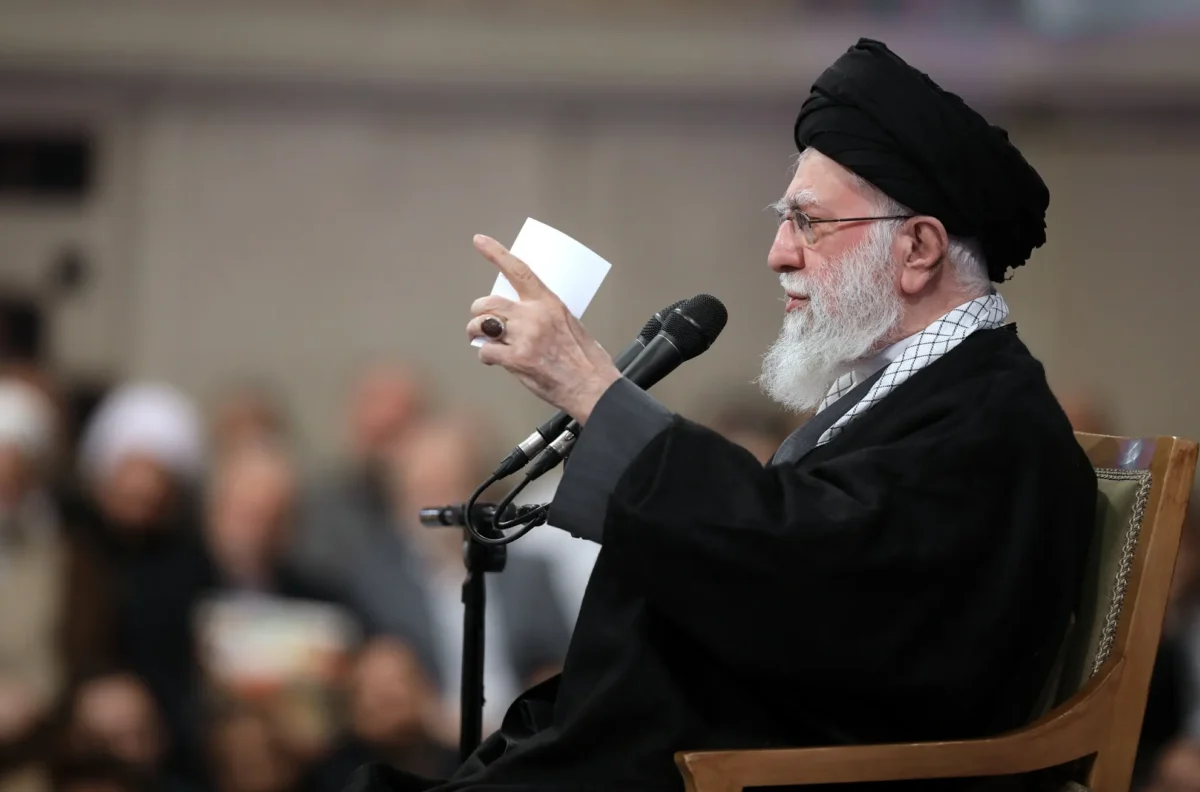
Ayatollah Ali Khamenei speaks in a meeting, in Tehran, Jan. 3. Source: Office of the Iranian Supreme Leader
Indirect negotiations between Iran and the United States in Geneva have produced what both sides describe as “good progress,” but deep divisions remain over nuclear enrichment, sanctions relief, and regional security. As talks continue, President Donald Trump has intensified military pressure in the Middle East, raising questions about how long diplomacy will be allowed to proceed.
The high-stakes discussions come amid fears of a broader regional conflict involving Israel and key shipping routes like the Strait of Hormuz.
Iran and US Agree on ‘Guiding Principles’ in Geneva Talks
The latest round of talks, held in Geneva and mediated by Oman, lasted more than three hours. Iran’s foreign minister, Abbas Araghchi, described the meeting as “more constructive” than earlier sessions and said both sides had agreed on a “set of guiding principles” toward drafting a potential agreement.
While American officials did not provide detailed public remarks, a US official acknowledged progress and indicated that Tehran would return within two weeks with more detailed proposals to bridge gaps in negotiations.
The talks were hosted with the involvement of Badr Albusaidi, who played a mediating role between the two delegations.
What Is Being Negotiated? Nuclear Program at the Center
At the core of the discussions is Iran’s nuclear program. Tehran has insisted the talks focus strictly on nuclear issues, while some US officials have suggested expanding the framework to include ballistic missiles and regional militia activity.
Vice President JD Vance emphasized that preventing Iran from acquiring a nuclear weapon remains Washington’s primary objective.
Iran has reportedly floated several concessions, including suspending uranium enrichment for three to five years, diluting its 60%-enriched uranium stockpile, or shipping highly enriched material abroad, potentially to Russia. However, Iran continues to assert that enrichment for peaceful purposes is its sovereign right.
President Donald Trump has maintained a hardline stance, stating that the US “doesn’t want any enrichment,” a position that could become a major sticking point in future rounds.
READ ALSO
Is Iran backing down? Trump says crackdown is easing as Tehran denies executions
Angie Motshekga orders shock inquiry as Iran defies Ramaphosa’s Naval drill ban
Trump’s Military Buildup Raises Pressure on Tehran
Parallel to the diplomatic track, Trump has ordered a significant US military buildup in the region. The deployment includes two aircraft carriers, among them the USS Gerald R. Ford, and additional forces positioned near Iran.
The administration’s strategy appears to combine negotiation with deterrence, leveraging economic sanctions and military readiness to push Tehran toward a deal.
Iran responded with naval exercises, temporarily closing parts of the Strait of Hormuz during war games. The show of force underscored the fragile security environment and the global economic implications should the waterway be disrupted.
Iran’s Supreme Leader Signals Defiance
Iran’s supreme leader, Ali Khamenei, issued pointed warnings during the talks. Referring to US aircraft carriers, he said that while such vessels are dangerous, more dangerous are the weapons capable of sinking them.
Khamenei also rejected demands to limit Iran’s missile capabilities, calling them “illogical” and asserting Iran’s right to self-defense. Any final agreement would require his approval, making his position central to the negotiations’ success or failure.
Sanctions Relief and Economic Incentives
Iran’s struggling economy, burdened by international sanctions, is a key driver behind the renewed diplomatic push. Tehran has demanded the lifting of banking and oil export sanctions in exchange for nuclear concessions.
Iranian officials have also suggested potential US investment opportunities in oil, gas, and mining sectors as part of a broader economic framework, aligning with Trump’s preference for deal making that includes tangible economic benefits.
Regional Implications and Risk of Escalation
Middle Eastern governments remain concerned that failed negotiations could trigger US military strikes, prompting Iranian retaliation and potentially drawing in Israel. Previous clashes in 2025 between Iran and Israel, which included US airstrikes on nuclear facilities, demonstrated how quickly tensions can escalate.
For now, both sides have agreed to continue discussions. However, Trump has offered only vague deadlines, saying the process “should happen quickly,” leaving uncertainty about how long diplomacy will be given space to work.
FAQ (SEO-Optimized)
What happened in the latest Iran-US talks?
Iran and US negotiators met indirectly in Geneva and agreed on a set of guiding principles for a possible nuclear deal. Both sides described the talks as constructive but acknowledged that major details remain unresolved.
Is Iran willing to stop uranium enrichment?
Iran has reportedly offered to suspend enrichment for three to five years and dilute its highly enriched uranium. However, it maintains that enrichment for peaceful purposes is its legal right.
What does the US want from Iran?
The United States wants strict limits — or a complete halt — to Iran’s uranium enrichment program. Some officials also want restrictions on ballistic missiles and regional militia support.
Why is Trump sending aircraft carriers to the Middle East?
The military buildup is intended to pressure Iran during negotiations and prepare for potential confrontation if talks collapse.
Could the US attack Iran?
Trump has warned of consequences if diplomacy fails, but no final decision has been announced. Analysts say negotiations are ongoing to avoid military conflict.
What role does Iran’s supreme leader play?
Ali Khamenei has final authority over national security decisions in Iran. Any agreement must receive his approval.
What does Iran want in return for concessions?
Iran is demanding sanctions relief, including lifting restrictions on oil exports and banking, and is offering potential economic cooperation with the US.
How would failure of talks affect global markets?
Escalation could disrupt oil supplies, especially if the Strait of Hormuz is affected, potentially driving up global energy prices.