

Diego Garcia attack explained: What Iran’s failed strike means for the US, UK and Middle East

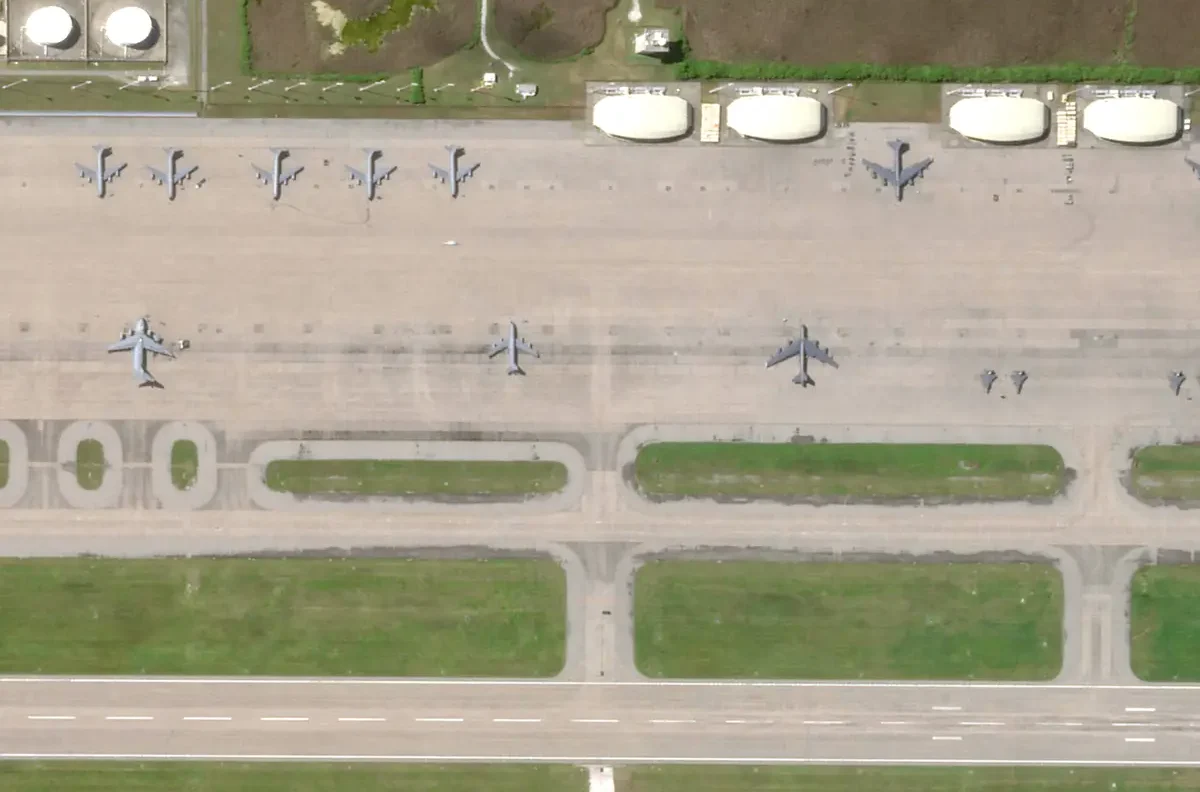
This handout satellite photo obtained from Planet Labs PBC and dated June 16, 2025, shows an overview of the Diego Garcia military base on the Chagos Archipelago in the Indian Ocean. Image Credit: AFP
Iran has fired missiles at Diego Garcia, the strategically vital joint UK-US military base in the Indian Ocean, in what appears to be one of the most significant long-range escalations of the current Middle East conflict. According to reports cited by the BBC and other international outlets, two missiles were launched toward the base, but neither reached the target, making the strike unsuccessful.
The development has instantly pushed Diego Garcia into the global spotlight. The failed strike comes as tensions intensify between Iran, the United States, the United Kingdom, and Israel, amid widening regional military operations and mounting concern over the Strait of Hormuz, global oil flows, and the risk of broader war.
The incident also matters far beyond the battlefield. Diego Garcia is not just a remote island base, it is one of the most strategically important military assets available to Washington and London, particularly for long-range bomber operations, maritime surveillance, and power projection across the Middle East, Indian Ocean, and Indo-Pacific.
Iran’s Diego Garcia missile attack: What happened?
According to the BBC, which cited separate sources after initial US media reports, Iran launched two missiles at the joint UK-US military base on Diego Garcia, and the attack was unsuccessful. The BBC said it understood the strike happened before the UK announced an expansion of American use of British bases for operations connected to the ongoing regional conflict.
The Guardian, citing reports from The Wall Street Journal and CNN, said the missiles were described as intermediate-range ballistic missiles. It reported that one missile may have failed in flight, while a US warship reportedly fired an SM-3 interceptor at the other, though it was not immediately clear whether the interception was successful. In all accounts, neither missile hit the base.
The UK Ministry of Defence (MoD) did not formally confirm or deny the reports but said Iran’s actions across the region were a threat to British interests and British allies. The Pentagon, meanwhile, said it had “nothing to provide” at the time of the reports.
That combination, partial confirmation through multiple media outlets but limited official acknowledgement, has only increased public curiosity and made Diego Garcia one of the most searched military locations in the world right now.
Why Diego Garcia matters in the Iran-US-UK conflict
Diego Garcia is the largest island in the Chagos archipelago in the Indian Ocean and hosts a joint UK-US military base. Though remote and largely inaccessible to civilians, it has long served as a critical strategic hub for Western military operations.
Its importance lies in several factors:
- It supports long-range air operations, including heavy bombers
- It offers a secure, isolated platform far from many immediate threats
- It is positioned for missions across the Middle East, East Africa, South Asia, and the Indo-Pacific
- It is a key logistics and staging point for US and UK military planning
The BBC noted that the UK had recently given the US permission to use Diego Garcia and RAF Fairford for what were initially described as defensive operations aimed at preventing Iranian missile attacks that could endanger British interests or lives. It later said the UK expanded permission for US use of British bases to include strikes on Iranian-linked sites targeting the Strait of Hormuz.
That shift matters. For Iran, Diego Garcia is not just a base, it represents British participation in US military operations. That may explain why the island was reportedly targeted.
Did Iran prove it can strike farther than previously believed?
One of the biggest questions raised by the reported Diego Garcia attack is whether Iran has demonstrated longer-range missile capability than previously acknowledged.
The BBC noted that former UK military commander General Sir Richard Barrons said the base is roughly 3,800km (2,361 miles) from Iran, far beyond the 2,000km range that Iran had previously been believed to publicly maintain for its missile program. The Guardian similarly highlighted that the attack implies Tehran may possess greater reach than it has previously admitted.
If accurate, that would be a major military and geopolitical revelation.
It would mean:
- Iran can threaten targets far deeper into the Indian Ocean
- Key US and UK bases once considered relatively safer may face new risk
- Regional deterrence calculations could shift dramatically
- More allied missile defence resources may be redirected to distant facilities
Even though the missiles did not hit, the attempted strike itself sends a message: Iran may be willing to escalate both in range and symbolism.
READ ALSO
Oil hits $115 as Israel-Iran war targets energy facilities, sparks global crisis
UK military base access and why Diego Garcia became a target
The timing of the reported attack is crucial.
According to the BBC’s live reporting timeline:
- 28 February: The UK reportedly withheld permission for the US to use British bases in the conflict
- 1 March: Prime Minister Keir Starmer said permission was granted for “defensive” strikes from RAF Fairford and Diego Garcia
- 20 March: The UK expanded that permission to include strikes on Iranian sites tied to threats against the Strait of Hormuz
This change in policy appears to have increased the political and military significance of UK bases in the eyes of Tehran.
Iran had already warned that allowing the US to use British bases would be seen as “participation in aggression.” That warning now appears more consequential given the reports surrounding Diego Garcia.
The base is therefore no longer just a logistics hub in public discussion, it is now being viewed as a frontline strategic asset in a widening regional confrontation.
Diego Garcia’s wider geopolitical significance goes beyond the current war
Even before the reported missile attack, Diego Garcia was already central to a major geopolitical debate.
The island is part of the Chagos Islands, a territory at the center of a long-running dispute between the United Kingdom and Mauritius. The BBC noted that under a deal announced last year, the UK would lease back Diego Garcia for 99 years at an average cost of £101 million per year, preserving military access even amid sovereignty changes.
That means the base is important on three levels:
- Military: A crucial UK-US forward operating base
- Diplomatic: A symbol of British and American strategic alignment
- Legal/territorial: A sensitive issue tied to decolonization, sovereignty, and international law
Now, with Iran reportedly firing missiles toward it, Diego Garcia’s relevance has expanded from niche geopolitical debate to front-page global security issue.
Could the Diego Garcia strike escalate the Middle East war?
That is the central question now.
The strike did not hit the base, and there is no indication yet that the US or UK has announced a specific retaliatory response tied directly to the Diego Garcia incident. However, the symbolism is hard to ignore.
A reported Iranian attempt to hit a joint UK-US base could:
- Increase pressure on the UK government to harden its military posture
- Encourage the US to expand missile defence or operational tempo
- Intensify debate over allied involvement in the Strait of Hormuz
- Raise global fears over oil prices, shipping security, and broader regional spillover
In a conflict already affecting energy markets, air defence networks, and regional alliances, Diego Garcia may become a new flashpoint.
For now, the reported facts are clear: Iran launched missiles, the base was not hit, and Diego Garcia has become a symbol of how far this conflict could spread.
FAQ
1) What is Diego Garcia?
Diego Garcia is the largest island in the Chagos archipelago in the Indian Ocean. It hosts a highly strategic joint UK-US military base used for air, naval, logistics, and long-range military operations.
2) Where is Diego Garcia located?
Diego Garcia is located in the central Indian Ocean, in the Chagos Islands, far from major civilian population centers. It is roughly 3,800km (2,361 miles) from Iran, according to reporting cited by the BBC.
3) Did Iran fire missiles at Diego Garcia?
Yes, according to BBC, The Wall Street Journal, and CNN reporting cited in live coverage, Iran launched two missiles toward Diego Garcia.
4) Did the Iranian missiles hit Diego Garcia?
No. Reports indicate neither missile hit the base. The strike was unsuccessful.
5) Why is Diego Garcia important?
Diego Garcia is important because it is a key UK-US military hub for:
- Long-range bomber missions
- Maritime operations
- Logistics and refuelling
- Regional force projection across the Middle East and Indo-Pacific
It is considered one of the West’s most strategically valuable remote bases.
6) Why did Iran reportedly target Diego Garcia?
The likely reason is Diego Garcia’s role in supporting US and UK military operations linked to the current regional conflict. The UK recently allowed broader American use of British bases, including Diego Garcia, which Iran had warned could amount to participation in aggression.
7) Is Diego Garcia a US base or a UK base?
It is a joint UK-US military base. The island is part of a British-administered territory arrangement, but the base is operated in close military cooperation between the United Kingdom and the United States.
8) Can Iran’s missiles really reach Diego Garcia?
That is now a major question. If the reports are accurate, the attempted strike suggests Iran may possess longer-range missile capability than the previously cited 2,000km range, since Diego Garcia is about 3,800km away.
9) How many missiles were reportedly fired at Diego Garcia?
Reports say two missiles were launched toward Diego Garcia.
10) Was one of the missiles intercepted?
Some reports cited by the Guardian say a US warship fired an SM-3 interceptor at one missile, but it remains unclear whether an interception actually occurred. One missile was also reported to have failed in flight.
11) What did the UK Ministry of Defence say about the Diego Garcia strike?
The UK Ministry of Defence did not confirm or deny the missile reports but said Iran’s attacks across the region are a threat to British interests and allies.
12) What did the Pentagon say about the Diego Garcia reports?
The Pentagon reportedly said it had “nothing to provide” at the time of inquiries.
13) Why is Diego Garcia in the news right now?
Diego Garcia is in the news because it was reportedly targeted by Iranian missiles, making it a major flashpoint in the expanding Middle East conflict involving Iran, the US, the UK, and Israel.
14) Is Diego Garcia connected to the Strait of Hormuz crisis?
Yes. The UK recently expanded US access to British bases, including Diego Garcia, for operations tied to threats against the Strait of Hormuz, a critical global oil shipping route.
15) Who controls Diego Garcia?
Diego Garcia is tied to a complex sovereignty arrangement involving the UK and the Chagos Islands dispute with Mauritius. Under a recent arrangement, the UK is expected to lease back the base for 99 years, preserving military access.
16) Could the Diego Garcia incident escalate the war?
Potentially, yes. Even though the missiles did not hit the base, the reported attack on a joint UK-US installation could increase military tension, deepen allied involvement, and raise fears of broader regional escalation.