

Did Iran attack USS Abraham Lincoln? Inside the controversial missile strike

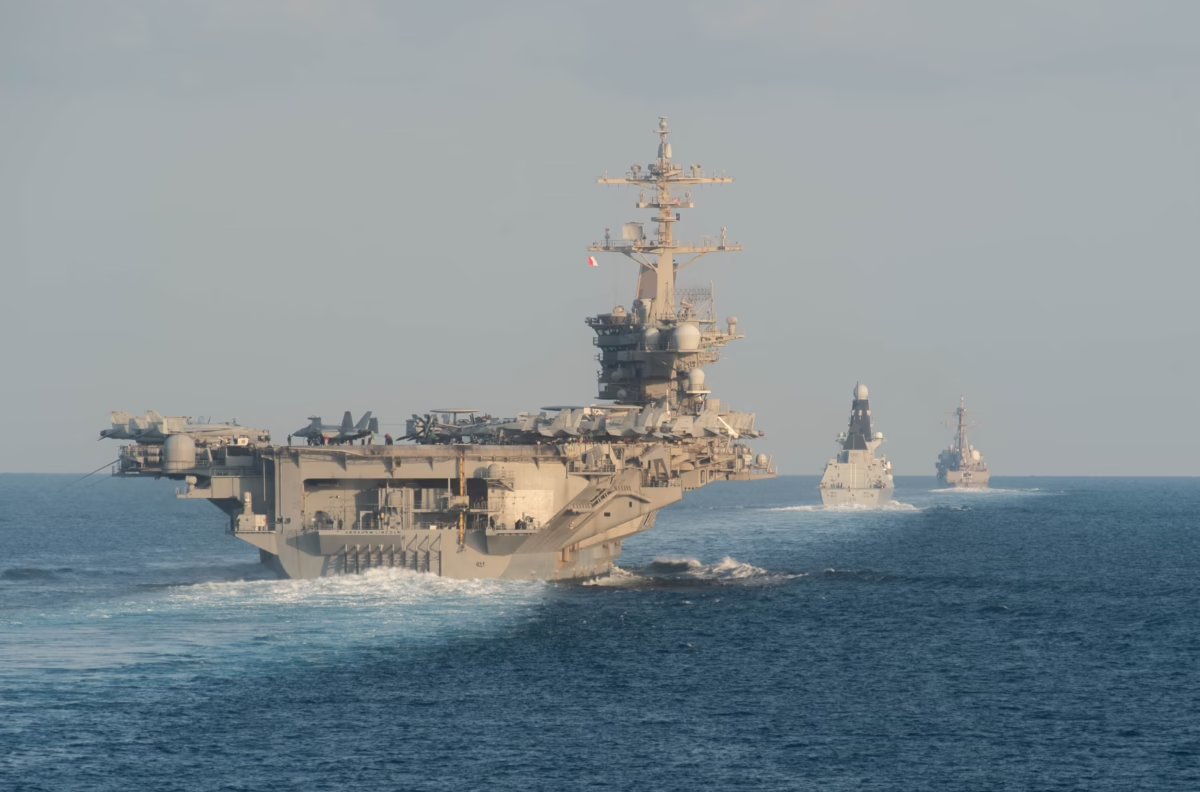
Iran missile strike USS Abraham Lincoln
Tensions in the Middle East escalated dramatically after Iran’s powerful paramilitary force, the Islamic Revolutionary Guard Corps (IRGC), claimed responsibility for a missile strike targeting the American aircraft carrier USS Abraham Lincoln in the Gulf.
The announcement came hours after reports that US and Israeli military strikes had killed Iran’s Supreme Leader, Ali Khamenei — a development that has sent shockwaves across the region and raised fears of a broader conflict.
Iran’s Retaliation Claim
In a statement carried by Iranian state-affiliated media, the Revolutionary Guards declared that the USS Abraham Lincoln had been hit by four ballistic missiles. The statement described the attack as retaliation for what it called “aggression” against Iran’s leadership and sovereignty.
“The land and sea will increasingly become the graveyard of the terrorist aggressors,” the IRGC warned, signaling the potential for further military action.
There has been no immediate independent confirmation from US officials regarding the extent of any damage or casualties aboard the carrier.
A Dangerous Escalation
The USS Abraham Lincoln, a nuclear-powered aircraft carrier, represents one of the most formidable symbols of American naval power. Its deployment to the region had already been viewed as a show of force amid rising tensions between Washington, Tehran and Tel Aviv.
If confirmed, a direct missile strike on a US aircraft carrier would mark one of the most significant confrontations between Iran and the United States in decades — potentially triggering a rapid cycle of retaliation.
The United States has not yet publicly detailed its response, but defense analysts warn that any confirmed attack on a US naval vessel could prompt swift military action.
Fallout From Khamenei’s Reported Death
The IRGC’s claim follows reports that coordinated US-Israeli strikes targeted key Iranian military and nuclear facilities, resulting in the death of Supreme Leader Ali Khamenei.
Khamenei, who had served as Iran’s highest authority for decades, was both the country’s religious and political figurehead. His death, if fully confirmed by Tehran, would represent a historic turning point for the Islamic Republic.
Iranian officials have vowed revenge, framing the alleged killing as an act of war.
Regional and Global Implications
The Gulf region — a critical artery for global oil shipments — is now bracing for potential disruption. A conflict involving missile strikes on naval assets could threaten commercial shipping lanes and energy supplies.
Global markets reacted nervously to early reports of the confrontation, with energy prices expected to surge amid fears of instability in one of the world’s most strategically important waterways.
Security experts warn that proxy forces aligned with Iran across the Middle East could also become involved, expanding the scope of the crisis beyond direct state-to-state conflict.
Uncertainty and Information Gaps
While the Revolutionary Guards have asserted that four ballistic missiles struck the carrier, details remain scarce. It is unclear whether the missiles penetrated US defenses, whether the ship sustained significant damage, or whether there were casualties.
US military officials have historically maintained that carrier strike groups are equipped with advanced missile defense systems capable of intercepting incoming threats.
Until independent verification emerges, the situation remains fluid.
What Happens Next?
Diplomatic channels appear strained, and the risk of miscalculation is high. Analysts caution that rapid escalation could pull additional regional and global powers into the confrontation.
For now, the world watches closely as Washington and Tehran stand at the brink of what could become a far-reaching conflict with profound geopolitical consequences.
FAQ
What did Iran claim?
Iran’s Revolutionary Guards said they struck the USS Abraham Lincoln with four ballistic missiles.
Why did Iran say it carried out the attack?
The Guards described the strike as retaliation after US and Israeli attacks reportedly killed Iran’s Supreme Leader.
Has the US confirmed the strike?
As of now, there has been no independent confirmation from US officials regarding damage or casualties.
Why is this significant?
An attack on a US aircraft carrier would represent a major escalation and could trigger broader military retaliation.
Could this affect global oil supplies?
Yes. The Gulf region is a key route for global oil shipments, and military escalation could disrupt energy markets.