

Who was the man found in a sleeping bag? DNA finally solves 26-Year Olympic National Park mystery

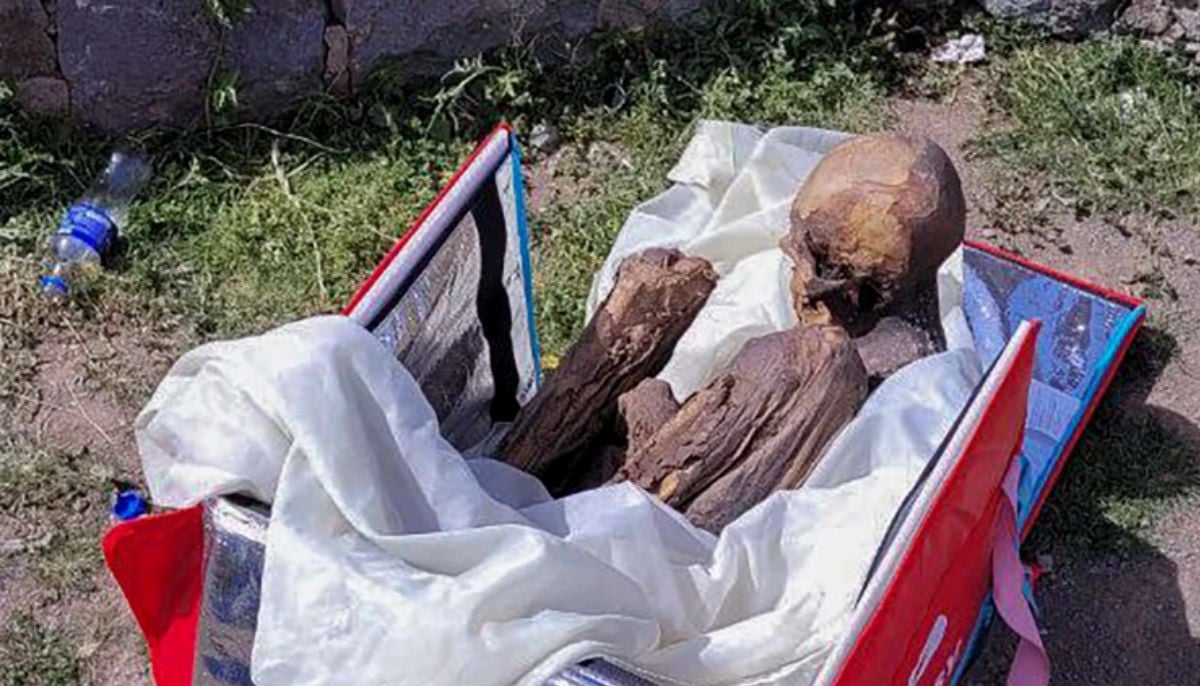
26-year sleeping bag mystery solved through DNA breakthrough. Image Credit: Geo News
A decades-old mystery has finally been solved after investigators identified human remains discovered inside a sleeping bag in a remote section of Washington state’s Olympic National Park nearly 26 years ago.
Authorities announced that the remains belong to Joseph Louis Serrao Jr., a Hawaii native who had not been heard from since 1998. The identification was made possible through advanced DNA analysis and forensic genealogy, bringing long-awaited answers to a case that had remained unsolved for more than two decades.
The breakthrough highlights the growing role of modern forensic technology in resolving cold cases that once appeared impossible to solve.
How the Human Remains Were Discovered
The case dates back to July 2000 when a researcher exploring a remote area near the Sol Duc River in Olympic National Park discovered human skeletal remains.
According to investigators, the remains were found inside a sleeping bag located within a tent in the park’s backcountry. Several personal belongings were also recovered at the scene, including binoculars, a day hiking pack, a shoulder bag, a folding saw, a blanket, and winter survival gear.
At the time, forensic experts estimated that the deceased was a man between the ages of 30 and 50 who had likely died between six months and two years before the discovery.
Despite extensive efforts, authorities were unable to determine the individual’s identity due to a lack of usable fingerprints and limited forensic technology available at the time.
Who Was Identified?
Investigators have now confirmed that the remains belonged to Joseph Louis Serrao Jr., who was born in December 1960.
Family members told forensic specialists that Serrao had been living in Washington before he disappeared and that they had not heard from him since 1998.
Based on his birth date, Serrao would have been in his late 30s at the time of his death, matching the age estimates provided by forensic experts when the remains were first examined.
The identification finally gives Serrao’s family answers after years of uncertainty about what happened to their loved one.
How DNA and Forensic Genealogy Solved the Case
The breakthrough came in 2024 when an anthropologist from the King County Medical Examiner’s Office submitted a DNA sample from the unidentified remains to forensic laboratory Othram.
Using advanced forensic genealogy techniques, scientists created a DNA profile and searched for potential relatives through genetic connections.
By 2025, researchers had identified possible family members connected to the unknown individual. Investigators then contacted relatives across multiple states, including Hawaii, where Serrao’s family had roots.
Authorities compared DNA samples provided by family members with the genetic material recovered from the remains.
The results confirmed a match, officially identifying the remains as those of Joseph Louis Serrao Jr.
READ ALSO
Why the Case Remained Unsolved for So Long
When the remains were first discovered in 2000, investigators faced significant challenges.
The remote location where the body was found limited available evidence, while the condition of the remains prevented authorities from obtaining usable fingerprints or other immediate identifiers.
Without modern forensic genealogy tools, investigators had few avenues to pursue.
Advancements in DNA technology over the last decade have dramatically transformed cold case investigations, allowing authorities to identify previously unknown victims through distant family connections and genetic databases.
This case serves as another example of how science continues to provide answers in long-forgotten investigations.
Family Finally Receives Long-Awaited Answers
Officials say solving the case brings a measure of closure to relatives who spent nearly three decades searching for answers.
Debra Flowers, deputy chief of the National Park Service’s Criminal Investigative Division, praised the persistence of investigators and forensic experts involved in the effort.
The investigation was conducted through a collaboration between the National Park Service, the King County Medical Examiner’s Office, and Othram’s forensic laboratory.
While the identification marks a major milestone, authorities have not publicly released additional details regarding the circumstances surrounding Serrao’s death.
Growing Impact of DNA Technology on Cold Cases
The identification of Joseph Serrao Jr. reflects a broader trend in criminal investigations where DNA testing and forensic genealogy are helping authorities solve cases once considered unsolvable.
Across the United States, advances in genetic science have led to the identification of unidentified remains, missing persons, and homicide victims years or even decades after their deaths.
For Serrao’s family, the breakthrough ends nearly 28 years of uncertainty and ensures that his identity is no longer lost to history.
As forensic science continues to evolve, more families may finally receive the answers they have been waiting for.
FAQ
Who was identified as the person found in the sleeping bag?
The remains were identified as Joseph Louis Serrao Jr., a Hawaii native who was last heard from in 1998 and had been living in Washington before his disappearance.
Where were the remains found?
The remains were discovered in July 2000 in a remote backcountry area of Olympic National Park near the Sol Duc River in Washington state.
How were the remains identified after 26 years?
Investigators used advanced DNA testing and forensic genealogy. DNA extracted from the remains was analyzed and compared with relatives’ DNA samples, leading to a positive identification.
What is forensic genealogy?
Forensic genealogy is a scientific technique that combines DNA analysis with family history research to identify unknown individuals by locating genetic relatives.
Why did it take so long to identify the remains?
At the time the remains were found, authorities lacked usable fingerprints and sufficient evidence. Modern DNA technology and forensic genealogy tools were not yet available.
Who helped solve the case?
The case was solved through collaboration between the National Park Service, the King County Medical Examiner’s Office, and forensic laboratory Othram.
When did investigators make the breakthrough?
A key breakthrough occurred in 2024 when a DNA sample was submitted for advanced testing. Potential relatives were identified in 2025, leading to confirmation of the victim’s identity.
What items were found with the remains?
Authorities found a sleeping bag inside a tent along with binoculars, a hiking pack, a shoulder bag, a folding saw, a blanket, and winter gear.
Has the cause of death been released?
Officials have not publicly disclosed additional details about the circumstances surrounding Serrao’s death.
Why is this case significant?
The case demonstrates how modern DNA technology and forensic genealogy can solve cold cases and identify missing persons decades after their disappearance.
What is Othram?
Othram is a forensic laboratory specializing in advanced DNA testing and forensic genealogy to help law enforcement solve cold cases and identify unknown individuals.
Can forensic genealogy solve other cold cases?
Yes. Forensic genealogy has become one of the most effective tools for identifying unknown remains and solving decades-old criminal investigations across the United States.