

Is Trump’s DOJ losing its grip after another failed indictment of Letitia James?

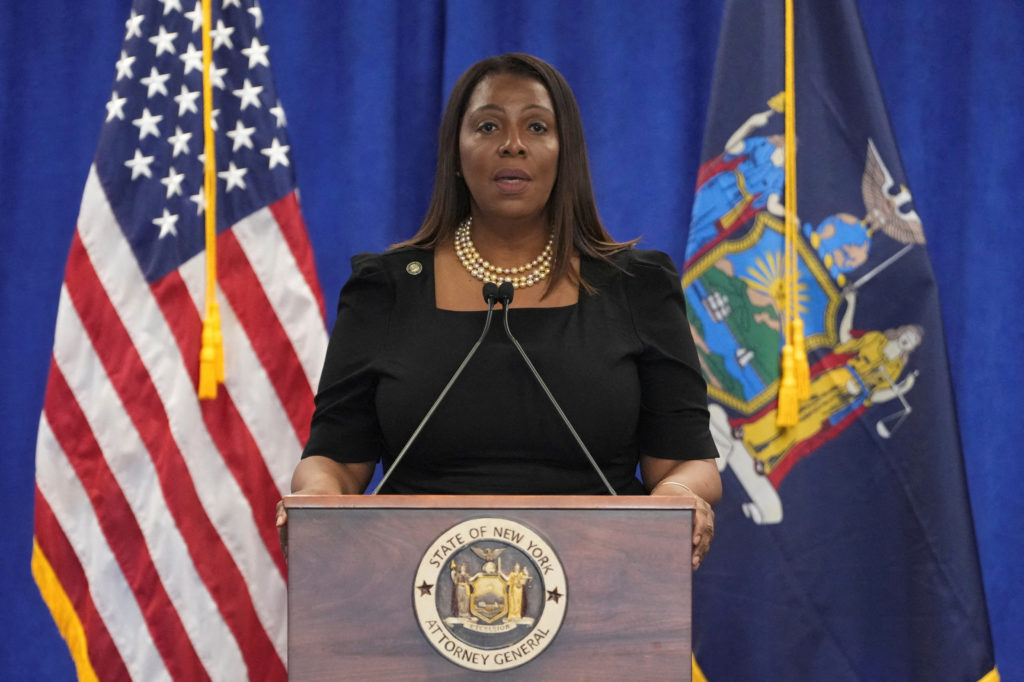
New York Attorney General Letitia James speaks during a press conference following a ruling against former U.S. President Donald Trump ordering him to pay $354.9 million and barring him from doing business in New York State for three years, in the Manhattan borough of New York City, U.S., February 16, 2024. Image Credit: REUTERS/David Dee Delgado/File Photo
A federal grand jury in Virginia has refused, for the second time in a week, to indict New York Attorney General Letitia James on mortgage-related charges, delivering another blow to the Justice Department and to President Donald Trump’s escalating campaign of legal retribution. The repeated rejection, known as a “no true bill,” is an exceedingly rare outcome, and one that underscores mounting internal and judicial resistance to politically charged prosecutions.
Intense DOJ Pressure Meets Another Legal Roadblock
The Justice Department swiftly re-presented its case after an earlier grand jury in Norfolk declined to indict James. But the second attempt, brought before a panel in Alexandria, resulted in the same outcome: no charges.
The grand jury considered five cases and returned four indictments, but not the one involving James. The failure, analysts note, signals significant skepticism about the strength of the evidence.
James’ attorney, Abbe Lowell, criticized the repeated attempts, calling further efforts a “mockery of our system of justice” and arguing that the case “should never have seen the light of day.”
The Justice Department declined to comment.
READ ALSO
Who is Letitia James? Trump’s adversary and NY Attorney General indicted on Federal Charges
Unlawful Appointment Ruling Complicates Trump’s Retaliatory Push
The case’s unraveling began last month when a federal judge ruled that Lindsey Halligan, Trump’s handpicked interim U.S. attorney, had been unlawfully appointed, forcing the dismissal of the original indictments against both Letitia James and former FBI Director James Comey.
The judge concluded that Trump and his allies attempted to bypass the Senate confirmation process by stacking successive 120-day appointments, a move deemed unconstitutional.
Despite the dismissal being “without prejudice,” allowing re-prosecution, the quick failures before two separate grand juries are raising constitutional, procedural and political concerns.
Retired federal judge Nancy Gertner argued that losing before a grand jury is “one of the best indications that there’s no there there, that they don’t have a case.”
Allegations Against James Stem From Mortgage Paperwork
The original case accused James of inaccurately stating that a Norfolk home she purchased would be her second residence, allegedly enabling her to secure a favorable mortgage rate. Prosecutors argued she rented the home out instead.
Before the case was thrown out, James had pleaded not guilty to charges of making false statements and bank fraud.
Her defense team has argued that she was selectively and vindictively prosecuted, pointing to public comments and social media posts in which Trump called for her to face criminal jeopardy.
Wider Pattern of Legal Pushback Against Trump-Driven Cases
The rejection of charges against James is part of a broader trend. Judges and juries have recently rebuffed multiple DOJ-led prosecutions viewed as politically motivated, including cases in Washington, Los Angeles and Maryland.
According to reporting, some Trump-appointed officials privately see grand jury failures as a “pressure valve”, allowing prosecutors to demonstrate loyalty to the president’s demands even when evidence is weak.
Meanwhile, internal DOJ tensions continue to mount. Career prosecutors reportedly viewed the case against James as insufficient from the outset, but political pressure prevailed.
A Justice Department Under Strain
Federal officials confirm that the White House remains insistent on achieving an indictment, prompting the DOJ to explore other options. Yet legal experts warn that repeated failures risk damaging the department’s credibility and raising serious policy questions.
As the political and legal maneuvering continues, one reality is clear: twice in seven days, grand jurors refused to support the prosecution of Letitia James, a stark rebuke rarely seen at the federal level.
FAQ
1. Why was the Justice Department trying to indict Letitia James?
The DOJ alleged she misrepresented a Norfolk property as a second residence to obtain a better mortgage rate. Her team said the case was politically motivated.
2. Why did the grand jury reject the indictment twice?
Grand juries in Norfolk and Alexandria issued “no true bills,” meaning the evidence presented was insufficient to justify charges.
3. Can Letitia James still be charged again?
Yes. The dismissed case was “without prejudice,” legally allowing the DOJ to attempt reindictment, though repeated failures raise policy concerns.
4. What role did Trump play in the case?
Trump publicly demanded the prosecution of James, one of his most prominent political adversaries. Defense attorneys argue this amounted to selective and vindictive prosecution.
5. Why was Lindsey Halligan’s appointment ruled unlawful?
A federal judge ruled that Trump circumvented the Senate confirmation process by stacking interim appointments beyond the 120-day legal limit.
6. What charges did Letitia James previously face?
She had been charged with one count of making false statements to a financial institution and one count of bank fraud, both of which were dismissed.
7. What happens after a “no true bill” decision?
The case cannot proceed unless prosecutors present it to a different grand jury, though repeated failures undermine credibility.
8. Are other Trump critics facing similar prosecutions?
Yes. James Comey and other perceived opponents have been targeted, though multiple cases have collapsed due to procedural errors or insufficient evidence.
9. Does the grand jury’s refusal indicate bias?
Legal experts say it more likely reflects weak evidence and procedural issues, not political bias among jurors.
10. What does this mean for the DOJ’s reputation?
Repeated failed indictments may damage public confidence and raise questions about politicization within the department.