

Ghana becomes first African Nation to sign historic EU defence deal amid rising Islamist threats

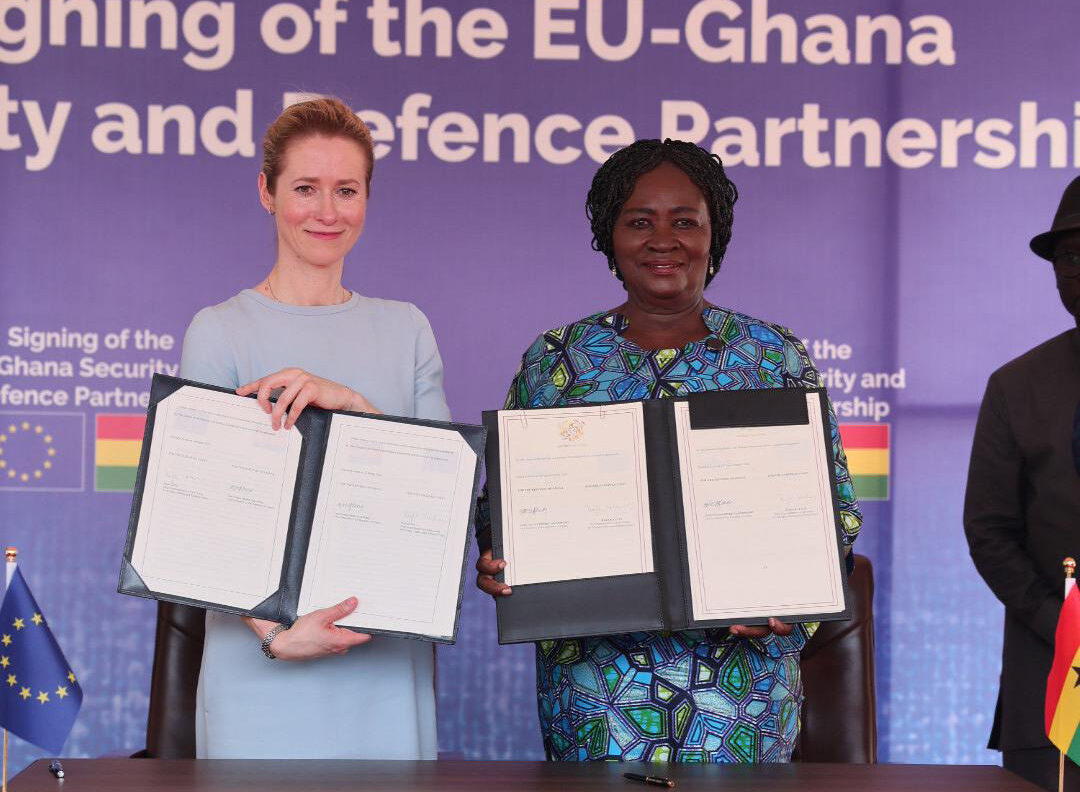
High Representative Kaja Kallas on behalf of the European Union and Naana Jane Opoku-Agyemang, Vice-President of Ghana, for the Republic of Ghana. Image Credit: EU
In a historic move, Ghana has become the first African country to sign a comprehensive defence agreement with the European Union (EU), aimed at bolstering national and regional security against Islamist militant threats. The deal, signed by EU foreign policy chief Kaja Kallas and Ghanaian Vice President Naana Jane Opoku-Agyemang in Accra, includes cooperation in counterterrorism, cybersecurity, maritime security, and border protection.
Despite Ghana being largely untouched by militant violence, neighboring West African countries such as Burkina Faso, Niger, and Mali have experienced surging activity from al-Qaeda and Islamic State (IS) affiliates, displacing millions and heightening regional security concerns.
EU-Ghana Deal: Strengthening Regional Security
Vice President Opoku-Agyemang highlighted the significance of the deal, emphasizing Ghana’s commitment to preemptive security measures. The agreement provides Ghana with advanced military equipment, including drones, anti-drone systems, bomb disposal vehicles, and motorcycles, enhancing the country’s capability to prevent incursions and strengthen rapid response operations.
EU representative Kaja Kallas underlined that the partnership reflects the bloc’s strategic support for West Africa, focusing on combating terrorism, safeguarding maritime routes, and reinforcing border security.
Rising Islamist Threats in West Africa
Although Ghana remains relatively stable, militants often cross from Burkina Faso into Ghana to regroup or smuggle weapons, food, and fuel when pressured by military operations in their home territories. In Burkina Faso alone, over two million people have been displaced in the past decade due to Islamist insurgencies, prompting international concern.
Experts warn that Ghana’s strategic location in West Africa makes it a potential logistical base for militants, making the EU partnership vital for preventing spillover of violence into Ghanaian territory.
READ ALSO
Dangote Refinery crashes petrol price to N1,200: Nigerians may finally see cheaper fuel
Ghana’s Role as a Regional Security Leader
Security analysts describe Ghana as one of the most stable and peaceful countries in West Africa, positioning it as a key partner for the EU in regional counterterrorism initiatives. Ghana’s military is expected to leverage the EU’s support to strengthen intelligence capabilities, secure borders, and protect critical infrastructure.
National Security Coordinator Osman Abdul Razak emphasized that the deal demonstrates Ghana’s proactive stance in tackling emerging threats both nationally and regionally, sending a strong signal to potential extremist actors.
What the Deal Means for Ghana’s Military
The delivery of advanced military hardware represents a significant upgrade for Ghana’s defence forces. The introduction of drones and anti-drone systems will enhance surveillance and early threat detection, while bomb disposal vehicles and motorcycles will improve mobility and response efficiency in high-risk areas.
This partnership also highlights Ghana’s growing cybersecurity capabilities, an essential element as militant groups increasingly exploit digital networks for communication and coordination.
Future Implications for West African Security
The EU-Ghana deal is expected to influence security strategies across the West African region, encouraging neighboring countries to strengthen cooperation against Islamist insurgencies. Analysts predict that the partnership may reduce militant mobility, limit weapons smuggling, and enhance humanitarian safety for displaced populations.
The historic agreement solidifies Ghana’s role as a security anchor in West Africa, providing both regional stability and a model for strategic partnerships between African nations and international allies.
FAQ
1. What is the Ghana-EU defence deal?
The Ghana-EU defence deal is a historic security partnership signed in Accra, aimed at strengthening Ghana’s counterterrorism, border security, maritime security, and cybersecurity capabilities.
2. Why did Ghana sign a defence agreement with the EU?
Ghana signed the agreement to proactively counter Islamist militant threats in the West African region and to enhance national and regional security.
3. Who signed the Ghana-EU defence agreement?
The agreement was signed by EU foreign policy chief Kaja Kallas and Ghanaian Vice President Naana Jane Opoku-Agyemang in Accra.
4. What military equipment did Ghana receive from the EU?
Ghana received drones, anti-drone systems, bomb disposal vehicles, and motorcycles to strengthen its military’s operational and surveillance capabilities.
5. Is Ghana at risk from Islamist militants?
While Ghana has largely remained stable, militants from Burkina Faso and neighboring countries occasionally cross Ghana’s borders to regroup or smuggle weapons, making preventative security measures crucial.
6. Which countries are affected by Islamist insurgency in West Africa?
Countries including Burkina Faso, Niger, Mali, Ivory Coast, Benin, and Togo have been affected by al-Qaeda and Islamic State (IS) affiliates.
7. How will the EU support Ghana’s security?
The EU will support Ghana through equipment delivery, training, counterterrorism collaboration, and enhancing border, maritime, and cybersecurity capabilities.
8. What does the deal mean for Ghana’s regional role?
The agreement positions Ghana as a regional security leader in West Africa, promoting stability and collaboration to mitigate militant threats.
9. Why is this deal historic?
Ghana is the first African country to sign a comprehensive defence agreement with the EU, signaling a new era of international security cooperation in Africa.
10. How does the deal affect displaced populations in West Africa?
By limiting militant activity and smuggling networks, the deal aims to enhance safety for civilians and reduce displacement caused by insurgency in neighboring countries.