

How did Frank Gehry die? 10 things to know about Titan of Architecture

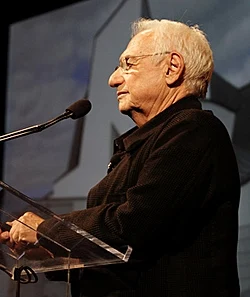
Frank Owen Gehry
The architectural world is mourning the passing of Frank Owen Gehry, the visionary whose bold imagination reshaped cities and inspired generations of designers. Gehry died on Friday at his residence in Santa Monica, California, at the age of 96, following a short respiratory illness, confirmed by his longtime chief of staff, Meaghan Lloyd.
Gehry was widely regarded as one of the most groundbreaking architectural minds of the modern age — a creator whose buildings felt alive, whose forms defied logic, and whose audacity challenged centuries of architectural convention. His work blurred the boundaries between sculpture and structure, transforming steel, titanium, and glass into monumental expressions of energy and emotion.
The Bilbao “Miracle” That Changed Architecture Forever
Although Gehry had been known in architectural circles for years, his global breakthrough arrived in 1997 with the opening of the Guggenheim Museum Bilbao in northern Spain. The museum’s gleaming, titanium curves — twisting, folding, and flowing like metal caught in motion — stunned the world. More than a building, it became a cultural and economic phenomenon, reviving a declining industrial city and giving birth to what became known as the “Bilbao Effect”: the idea that a single extraordinary building could transform an entire region.
The museum’s seductive, shimmering forms and its fearless deviation from traditional architectural language turned Gehry into a household name, elevating him to the same level of global recognition once reserved for icons like Frank Lloyd Wright. For many, the Bilbao Guggenheim was not just a masterpiece — it was a turning point, signaling the start of a new era in late 20th-century architecture.
A Career Built on Experimentation and Emotion
Gehry was among the earliest architects to embrace digital modeling technologies, using advanced software to transform impossible-looking sketches into breathtaking structures. His work celebrated fluidity and movement, and often pushed engineering to its limits. The result was a series of buildings that felt expressive, theatrical, and deeply personal.
Among his most celebrated works were the Walt Disney Concert Hall in Los Angeles — renowned for its warm, enveloping interior and metallic exterior — and the New World Center in Miami, with its striking cylindrical volumes. In Paris, his Fondation Louis Vuitton appeared as if it were crafted from sails of illuminated glass, floating gently among the trees.
Each design reflected Gehry’s lifelong mission: to create buildings that moved people, emotionally and visually.
A Humble Beginning That Sparked a Revolution
Before international acclaim, Gehry first caught the attention of the architectural world in 1978 with a radically unconventional renovation of his own home in Santa Monica. Taking an ordinary Cape Cod–style bungalow, he deconstructed and expanded it with raw materials — plywood, corrugated metal and chain-link fencing — presenting a rough-edged honesty that would become his hallmark. The house was provocative, challenging and instantly iconic, announcing the emergence of a force who had no interest in conformity.
By the time he won the prestigious Pritzker Architecture Prize in 1989, Gehry had already secured his place among the giants of his field. Over a career spanning more than six decades, he reshaped the vocabulary of contemporary architecture and inspired countless architects to take creative risks, embrace new technologies, and rethink what buildings could be.
His legacy is not just a body of extraordinary work, but a transformation of architectural culture itself.
10 Things to Know About Frank Gehry
1. He Was One of the Most Influential Architects of the Modern Era
Frank Gehry was widely regarded as one of the most transformative architects of the 20th and 21st centuries. His work reshaped global conversations about form, movement, and the emotional potential of architecture. Gehry’s bold, sculptural approach broke away from traditional design norms and positioned him as a revolutionary force in contemporary architecture.
2. Gehry Designed the Iconic Guggenheim Museum Bilbao
The Guggenheim Museum Bilbao, completed in 1997, remains Gehry’s most celebrated masterpiece. The museum’s fluid titanium curves and shimmering forms became a global sensation, sparking what critics called the “Bilbao Effect”—a phenomenon where architecture revitalizes entire cities. The museum put Bilbao on the world map and elevated Gehry to global fame.
3. He Was a Pioneer of Computer-Aided Architectural Design
Long before digital modeling became mainstream, Gehry embraced advanced computer technologies—especially CATIA, a software originally designed for aerospace engineering. This allowed him to create complex, free-flowing shapes that were previously impossible to build. His innovative use of digital tools changed the architectural profession forever.
4. He Won the Prestigious Pritzker Architecture Prize in 1989
The Pritzker Prize, often referred to as the Nobel Prize of architecture, recognized Gehry’s groundbreaking contributions to design. His award marked a turning point in how the world perceived avant-garde architecture, validating his unconventional methods and expressive structures.
5. His Design Approach Blended Art, Emotion, and Structure
Gehry believed architecture should evoke emotions, challenge boundaries, and interact with its environment. His buildings often feature sweeping curves, metallic surfaces, and sculptural forms that appear to move. This artistic philosophy made his work instantly recognizable and deeply influential.
6. He Reimagined His Own House Into a Landmark of Deconstructivism
Gehry’s rise to fame began with his Santa Monica home in 1978. Instead of building something new, he tore open the existing bungalow and wrapped it in materials like plywood, corrugated metal, and chain-link fencing. The result shook the architectural world and marked a bold early example of deconstructivist design.
7. He Designed Celebrated Cultural Buildings Around the World
Beyond Bilbao, Gehry’s global footprint includes masterpieces such as the Walt Disney Concert Hall in Los Angeles, the Fondation Louis Vuitton in Paris, and the New World Center in Miami. Each building showcases his trademark sculptural daring and commitment to experiential architecture.
8. His Work Was Deeply Influenced by Personal and Artistic Inspirations
Gehry drew inspiration from fish forms, crumpled paper, childhood memories, and modern art movements. Artists like Jasper Johns and Robert Rauschenberg shaped his creative lens, while his own Jewish and Canadian upbringing contributed to the layered identity reflected in his work.
9. He Remained Active Well Into His 90s
Even at an advanced age, Gehry continued designing, sketching, and imagining new projects. His lifelong dedication to creativity showed his belief that architecture is not just a profession but a continuing conversation with society, art, and culture.
10. Frank Gehry Passed Away at 96, Leaving a Monumental Legacy
Gehry died at his home in Santa Monica at the age of 96, following a brief respiratory illness. His passing marked the end of an era, but his legacy lives on through the iconic buildings he created, the cities he transformed, and generations of architects he inspired.
FAQ
Who was Frank Gehry?
Frank Gehry was a globally renowned architect celebrated for his sculptural buildings and pioneering use of digital design technology. He is considered one of the most influential architects of modern times.
What is Frank Gehry’s most famous building?
His most famous work is the Guggenheim Museum Bilbao in Spain, known for its titanium curves and transformative cultural impact.
Why was Gehry important to modern architecture?
Gehry pushed the boundaries of form, technology, and emotion in architecture. His innovative use of computer modeling revolutionized the design industry.
What awards did Frank Gehry win?
He won numerous awards, most notably the Pritzker Architecture Prize in 1989, recognizing his bold contributions to the field.
What was unique about his design style?
Gehry’s style featured fluid shapes, metallic skins, and expressive forms that often resembled sculpture. His buildings prioritized emotional impact and visual movement.