

Fed raises rates as inflation refuses to cool: What the September FOMC decision means for Americans

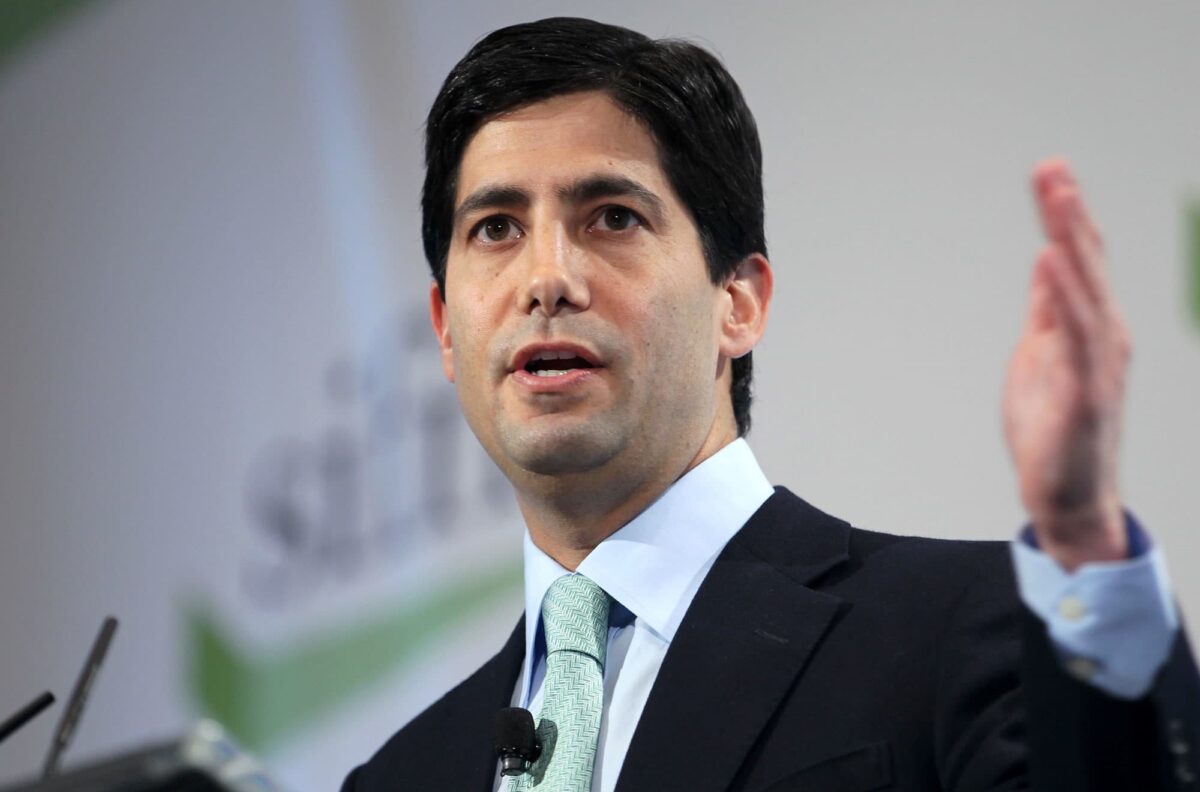
Kevin Warsh emerges as a top Fed chair contender. Image Source: Getty Images
The Federal Reserve has raised its benchmark interest rate for the first time since July 2023, marking a major shift in monetary policy as officials respond to persistent inflation and renewed pressure from energy prices.
The Federal Open Market Committee voted unanimously, 12-0, to increase the federal funds rate by 25 basis points, taking the target range from its previous level to 3.75%–4%.
The decision came after the Fed had kept rates unchanged throughout the year and followed a growing debate among policymakers over whether inflationary pressures were becoming too persistent to ignore.
The September FOMC meeting took place on September 15 and 16, with the Federal Reserve’s scheduled press conference following the policy announcement on September 16.
The latest move puts the central bank back into tightening mode and gives financial markets another major issue to monitor: whether the Fed will raise rates again before the end of 2026.
FOMC signals another interest rate hike
The biggest development beyond Wednesday’s quarter-point increase was the updated outlook from Fed officials.
The latest projections showed that most participating policymakers see room for another rate increase this year. According to the projections provided with the decision, 16 of 18 participants indicated another hike was possible, while four saw the possibility of two additional increases.
Two participants expected the rate to stop at the September increase.
The projections provide an important signal because the Federal Reserve does not make its future decisions automatically. Officials will continue to assess inflation, employment, economic growth and financial conditions before deciding whether another increase is justified.
That means markets will now be watching incoming inflation and employment data closely.
Why did the Fed raise rates now?
The timing of the September rate hike is significant.
The Fed has been dealing with inflation that remains above its long-term 2% target, while energy prices have added another layer of uncertainty to the economic outlook.
Higher oil and fuel costs can feed into transportation, manufacturing and household expenses. If businesses pass those higher costs to consumers, inflation can become more persistent.
The concern for policymakers is that an extended period of higher energy prices could begin influencing broader inflation expectations.
The experience of the pandemic-era inflation surge remains relevant. Policymakers previously expected some supply and demand pressures to fade before inflation ultimately accelerated to levels not seen in decades.
The current FOMC decision reflects a more cautious approach toward allowing another inflationary episode to become entrenched.
Fed raises inflation projections
The September projections also showed that policymakers have become slightly more concerned about inflation this year.
The Fed now sees headline personal consumption expenditures inflation at 3.7% for the year, while core PCE inflation is projected at 3.4%.
Both estimates were raised by 0.1 percentage point from the previous projections.
The central bank expects inflation to decline considerably in 2027, with headline PCE inflation projected at 2.3% and core PCE inflation at 2.5%.
The projections suggest that the Fed does not expect inflation to return immediately to its 2% target.
That creates a difficult policy environment: keeping rates high for longer can put pressure on borrowing and economic activity, while moving too quickly toward lower rates could risk allowing inflation to remain elevated.
What happened to the US unemployment outlook?
The employment picture also played a role in the Fed’s calculations.
The latest projections lowered the unemployment rate outlook to 4.1%, down 0.2 percentage point from the previous forecast.
That matters because the Federal Reserve has a dual mandate involving maximum employment and stable prices.
A labor market that remains relatively stable gives policymakers more room to concentrate on inflation without responding immediately to a sharp deterioration in employment.
The combination of persistent inflation and a comparatively resilient labor market helps explain why the Fed was prepared to tighten policy again.
READ ALSO
Trump set to name Kevin Warsh as next Fed Chair as Powell era nears its end
What the FOMC decision means for mortgages
The Fed’s benchmark interest rate does not directly determine mortgage rates, but monetary policy can influence borrowing costs across financial markets.
Mortgage rates had already moved higher ahead of the FOMC decision as investors adjusted to expectations for tighter monetary policy.
A higher-rate environment can make home purchases more expensive because prospective buyers may face larger monthly payments.
Existing homeowners with fixed-rate mortgages are generally insulated from immediate changes to their existing loan rates, while borrowers with variable-rate debt can be more exposed to changes in interest rates.
The broader message from the September decision is that borrowing costs may remain sensitive to future inflation data and expectations about the Fed’s next move.
Treasury yields react to the Fed decision
Treasury markets have also been adjusting to the prospect of higher rates.
The 10-year Treasury yield had climbed significantly in the weeks leading up to the September meeting, while the two-year Treasury yield remained particularly sensitive to expectations for Federal Reserve policy.
Following the decision, Treasury yields moved lower as investors assessed the Fed’s attempt to contain inflation.
The reaction illustrates how markets can respond not only to the actual rate decision but also to the language surrounding future policy.
For investors, the next important question is whether the Fed’s inflation concerns will translate into another rate increase or whether economic data will change the policy outlook.
What the September FOMC decision means for markets
The FOMC announcement comes at a delicate point for financial markets.
Stocks initially moved higher following the decision, while Treasury yields declined.
Markets had largely anticipated the September rate increase, meaning the bigger source of uncertainty was the Fed’s outlook for the remainder of the year.
The possibility of another hike is now firmly part of the policy discussion.
Investors will also be watching how companies respond to higher financing costs, how consumers handle more expensive borrowing and whether inflation continues to move away from its current elevated levels.
When is the next Fed rate decision?
The September FOMC decision does not guarantee another increase.
The Federal Reserve will examine economic data before its remaining meetings of 2026, with particular attention on inflation, employment and financial conditions.
The updated projections indicate that another increase is possible, but the actual decision will depend on how the economy develops.
That leaves markets with a new focus after September’s meeting: not whether the Fed has returned to rate hikes, but how long the renewed tightening cycle could last.
Frequently Asked Questions
What did the FOMC decide in September 2026?
The FOMC voted unanimously to raise the federal funds target range by 25 basis points to 3.75%–4%.
Did the Federal Reserve raise interest rates today?
Yes. The Federal Reserve raised its benchmark interest rate by 0.25 percentage point on September 16, 2026.
When was the last Fed rate hike before September 2026?
The September 2026 increase was the Federal Reserve’s first rate hike since July 2023.
Will the Fed raise interest rates again in 2026?
The latest projections indicate that another increase is possible before the end of 2026. The timing and size of any future move will depend on incoming economic data.
Why is the Fed raising interest rates?
The central bank cited elevated inflation and its objective of bringing inflation back toward its 2% goal. Higher energy prices have also increased concerns about persistent inflation.
What is the Fed interest rate after the September 2026 FOMC meeting?
The federal funds target range is 3.75% to 4% following the September 16 decision.
What does the Fed rate hike mean for mortgage rates?
Mortgage rates can be influenced by broader financial-market conditions and expectations for Federal Reserve policy. A higher-rate environment can keep borrowing costs elevated, though mortgage rates do not move one-for-one with the federal funds rate.
What is the FOMC?
The Federal Open Market Committee, or FOMC, is the Federal Reserve body responsible for setting the stance of US monetary policy, including decisions involving the federal funds rate.
What is the Fed’s inflation target?
The Federal Reserve’s long-term inflation goal is 2%, measured using the annual change in the personal consumption expenditures price index.
What should markets watch after the September FOMC meeting?
Markets will closely monitor upcoming inflation data, employment figures, energy prices, Treasury yields and comments from Federal Reserve officials for clues about the next policy decision.