

El-Rufai in fresh trouble: ICPC slams Ex-Kaduna Governor with new corruption charges as court battle deepens

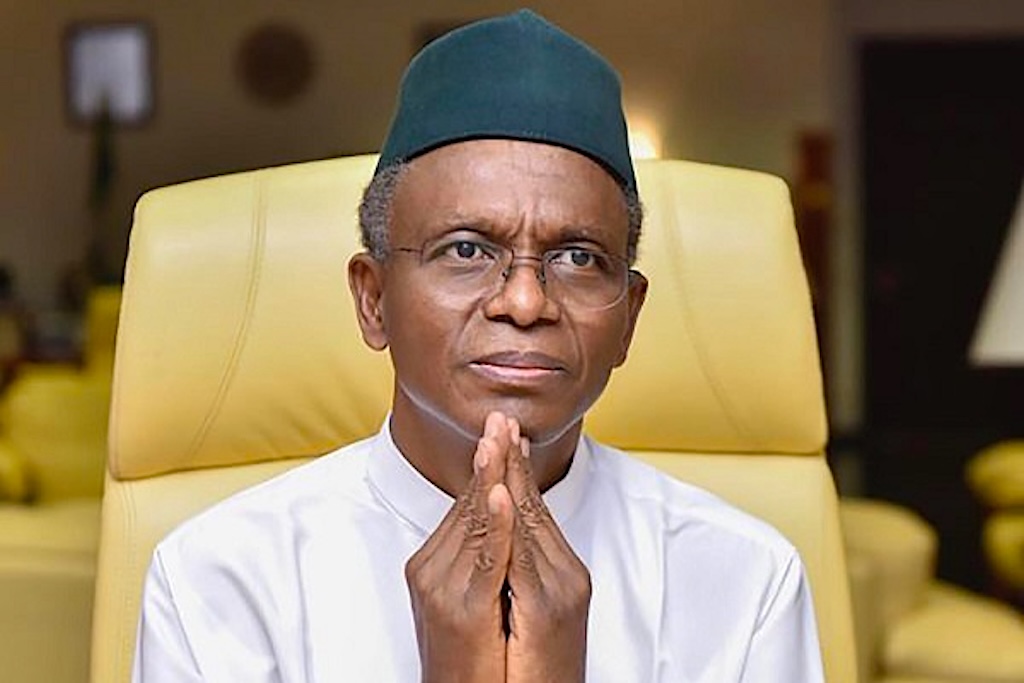
El Rufai
Former Kaduna State Governor Nasir El-Rufai is facing a major escalation in his legal troubles after the Independent Corrupt Practices and Other Related Offences Commission (ICPC) arraigned him before the Kaduna State High Court on fresh and expanded criminal charges.
The latest development marks a significant twist in the high-profile corruption case that has kept El-Rufai in the headlines, with prosecutors accusing the former governor of fraud, abuse of office, conspiracy, criminal breach of trust, money laundering-related offences, and unlawful contract awards linked to his time in office.
The case, which comes just days after El-Rufai attended his mother’s burial following a controversial compassionate release from custody, has intensified public scrutiny and sparked fierce political debate. With multiple court proceedings now running in parallel, the former governor’s legal battle is fast becoming one of the most consequential anti-corruption trials involving a former Nigerian governor in 2026.
ICPC Arraigns El-Rufai Over Fresh Charges in Kaduna High Court
According to reports by The ICIR, Nasir El-Rufai was arraigned on Tuesday before the Kaduna State High Court alongside a co-defendant, Amadu Sule (Leda), in a case filed by the Federal Republic of Nigeria through the ICPC.
The anti-graft agency accused the former governor of multiple offences allegedly committed during and after his tenure as Kaduna State governor between 2015 and 2023, with some allegations stretching into 2025.
This fresh arraignment comes on top of an already existing federal case. El-Rufai is also being prosecuted at the Federal High Court in Kaduna, where he had earlier been arraigned alongside another co-defendant, Joel Adoga, over related allegations of corruption, abuse of office and money laundering.
The overlapping state and federal proceedings have added complexity to the case and heightened interest across Nigeria’s political and legal circles.
What Are the New Charges Against El-Rufai?
The expanded charge sheet, as cited by The ICIR, contains serious allegations that could have major political and legal consequences for El-Rufai.
Among the headline accusations is the claim that in December 2016, while serving as governor, El-Rufai allegedly induced the Kaduna State Government to approve an N11 billion payment to Indokaduna MRTS JV Nigeria Limited for a light rail project that was never executed.
Prosecutors also alleged that he approved and received severance payments exceeding N289 million in 2020 and 2023, beyond what he was legally entitled to, an action they say amounts to abuse of office and corruption.
In another major count, the prosecution claimed that between March and November 2022, El-Rufai and another person allegedly dishonestly disposed of $1,085,066.38 in World Bank loan funds, which prosecutors say violated the terms of the loan agreement.
The charges further include allegations of:
- Unlawful contract awards worth billions of naira
- Irregular CCTV contracts in Kaduna metropolis
- Conferring unfair advantage on associates
- Suspicious land allocations
- Concealment of funds
- Violations of the Money Laundering (Prevention and Prohibition) Act, 2022
These accusations collectively form one of the broadest legal cases yet brought against the former governor.
READ ALSO
El-Rufai’s detention: Full breakdown of charges against ex-Kaduna governor
Dubai and Cairo Allegation Raises Stakes in El-Rufai Case
One of the most striking claims in the fresh case is the allegation that El-Rufai and his brother, Bashir Ahmad El-Rufai, who is said to be at large, conspired outside Nigeria in October 2025 to offer monetary inducement to federal investigators.
According to the charge cited by The ICIR, the alleged conspiracy took place in Dubai, United Arab Emirates, and Cairo, Egypt, and involved an attempt to compromise an ongoing federal investigation connected to Singularity Network Security Limited.
If pursued aggressively in court, this count could become one of the most explosive aspects of the case because it extends the allegations beyond state-level procurement issues into a possible attempt to interfere with a federal anti-corruption investigation.
El-Rufai’s Earlier Arrest, Bail Battle and Courtroom Drama
The current arraignment follows months of legal tension.
Channels Television reported that the ICPC arrested El-Rufai on February 18, 2026, and after 34 days in custody, he was first arraigned on March 24, 2026, at the Federal High Court in Kaduna.
His legal team, led by Barrister Ubong Akpan, also raised concerns during proceedings, including a petition against Justice Rilwan Aikawa before the National Judicial Council (NJC). Despite that, the judge ruled that he would proceed with the arraignment and later consider any formal application regarding recusal.
In a separate controversy, El-Rufai was reportedly released on March 27 on compassionate grounds to attend his mother’s burial, despite what critics described as a subsisting remand order. That move drew widespread public attention and further amplified the political sensitivity of the case.
Political Reactions and Public Attention Around El-Rufai’s Trial
The case has attracted extraordinary political attention, partly because El-Rufai remains a major national political figure and an influential voice within opposition realignments.
Both The ICIR and Channels Television note that the proceedings have drawn intense public scrutiny. Supporters and allies have described the charges as politically motivated, while anti-graft authorities insist the case is based on documented allegations of financial misconduct.
Notably, El-Rufai reportedly received condolences and visits from high-profile political figures after his mother’s death, including President Bola Tinubu, Vice President Kashim Shettima, and other top politicians across party lines. That broad show of sympathy underscored the former governor’s enduring relevance in Nigeria’s political landscape, even as he battles criminal allegations.
Given his political profile and his recent links to broader opposition movements, the case is likely to remain a dominant story in the build-up to future political contests.
Why the El-Rufai ICPC Case Matters in 2026
The El-Rufai corruption case matters for more than legal reasons.
It is a test of how far Nigerian anti-corruption institutions are willing to go against powerful former officeholders. It also raises questions about governance, contract transparency, public borrowing, World Bank-funded projects, and elite accountability.
The allegations tied to Kaduna State finances, light rail contracts, CCTV projects, and foreign-linked inducement claims are likely to shape public discourse for months, especially if the courts allow full evidence to be tested in open proceedings.
For many Nigerians, the case is no longer just about one former governor, it is becoming a referendum on whether the country’s anti-graft institutions can pursue high-profile cases to their legal conclusion.
FAQ
1. Why was El-Rufai arraigned by the ICPC?
Nasir El-Rufai was arraigned by the ICPC over fresh and expanded allegations of corruption, including fraud, abuse of office, conspiracy, criminal breach of trust, unlawful contract awards, and money laundering-related offences tied to his tenure as Kaduna State governor.
2. What are the fresh charges against El-Rufai in 2026?
The fresh charges reportedly include allegations involving:
- An N11 billion payment for a Kaduna light rail project that prosecutors say was never executed
- Severance payments above legal entitlement allegedly exceeding N289 million
- Alleged disposal of $1,085,066.38 in World Bank loan funds
- Irregular CCTV contracts and procurement violations
- Alleged unfair contract advantages and land allocations
- Alleged money laundering-related offences
3. Did ICPC arrest El-Rufai?
Yes. According to the provided reports, ICPC arrested El-Rufai on February 18, 2026, before arraigning him in court later in March 2026.
4. Is El-Rufai facing more than one court case?
Yes. El-Rufai is reportedly facing:
- A Federal High Court case in Kaduna, where he was earlier arraigned alongside Joel Adoga
- A Kaduna State High Court case, where he was later arraigned on fresh charges alongside Amadu Sule (Leda)
5. What is the N11 billion light rail allegation against El-Rufai?
Prosecutors allege that in December 2016, El-Rufai induced Kaduna State to approve an N11 billion payment to Indokaduna MRTS JV Nigeria Limited for a light rail project that was allegedly never executed.
6. What is the World Bank loan fund allegation in El-Rufai’s case?
The prosecution alleges that between March and November 2022, El-Rufai and another person dishonestly disposed of $1,085,066.38, said to be part of a World Bank loan to Kaduna State, in a way that violated the loan agreement.
7. Is El-Rufai on bail?
The provided reports indicate that El-Rufai’s bail application was pending, and that hearings were adjourned for consideration of bail and related applications. He was also reportedly released temporarily on compassionate grounds to attend his mother’s burial.
8. Why is El-Rufai trending in Nigeria?
El-Rufai is trending because of:
- His fresh ICPC arraignment
- Serious allegations involving billions of naira and foreign-linked claims
- His high political profile as a former governor and national political figure
- The wider implications for anti-corruption enforcement in Nigeria
9. Are the charges against El-Rufai proven?
No. At this stage, these are allegations filed in court. Under the law, El-Rufai remains presumed innocent unless and until proven guilty by a competent court.
10. Why is the El-Rufai case important politically?
The case is politically significant because El-Rufai is a prominent former governor with national influence. His trial could affect:
- Opposition alignments
- Public trust in anti-graft institutions
- Debates around accountability, governance and elite prosecution in Nigeria
11. Who is prosecuting El-Rufai?
The case is being prosecuted by the Independent Corrupt Practices and Other Related Offences Commission (ICPC) on behalf of the Federal Republic of Nigeria.
12. What should journalists say accurately in headlines?
The most accurate and legally safe framing is:
“ICPC arraigns El-Rufai over fresh corruption charges in Kaduna.”
This reflects the verified court development without presenting allegations as proven facts.