

El-Rufai’s detention: Full breakdown of charges against ex-Kaduna governor

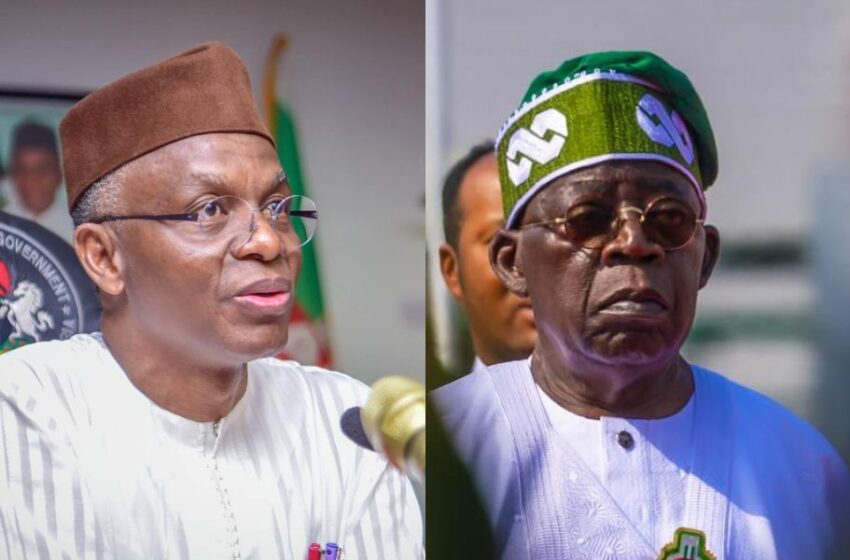
Nasir El-Rufai criticises President Bola Tinubu.
Former Nasir El-Rufai, who served as governor of Kaduna State, is facing a new legal battle after being arraigned on multiple corruption and money laundering charges.
The case, filed by the Independent Corrupt Practices and Other Related Offences Commission, was brought before the Federal High Court in Kaduna, marking a significant escalation in allegations against the former governor.
ICPC Accuses El-Rufai of Inflated Severance Payments
At the heart of the charges is an allegation that El-Rufai unlawfully inflated his severance benefits while in office.
According to the anti-graft agency, the former governor allegedly received about ₦579.7 million as severance allowance—far above the legally approved amount of roughly ₦20 million. Prosecutors argue that the payments exceeded permissible limits by a wide margin and amounted to proceeds of corruption.
The charges state that the transactions, which occurred in different phases between 2020 and 2023, violated provisions of Nigeria’s money laundering laws.
Alleged $817,900 in Suspicious Dollar Deposits
Beyond the severance claims, the ICPC is also probing a series of foreign currency transactions linked to El-Rufai.
The commission alleges that the former governor received a total of $817,900 through multiple deposits into a domiciliary account over several years. These deposits were reportedly made in tranches by different individuals across locations including Kaduna and Abuja.
Authorities claim the funds were suspicious and lacked legitimate explanations, raising concerns about financial misconduct and concealment of illicit proceeds.
Breakdown of the 10 Charges Filed in Court
Court documents reveal that the charges cover both naira and dollar transactions, as well as alleged conspiracy.
The ICPC accuses El-Rufai of receiving large sums of money beyond his legal entitlements, including two separate severance payments of nearly ₦290 million each. In addition, several counts relate to dollar deposits ranging from $4,000 to over $300,000 allegedly paid into his account by different individuals.
One of the charges also alleges that El-Rufai conspired with an associate, Joel Adoga, to disguise the origin of a $10,000 deposit—an act prosecutors say contravenes anti-money laundering regulations.
Full List of Charges Against El-Rufai
1. Alleged Inflated Severance Payment (2020)
El-Rufai is accused of receiving ₦289.8 million as severance allowance in September 2020, far above his legitimate entitlement of about ₦20 million.
2. Alleged Inflated Severance Payment (2023)
He allegedly received another ₦289.8 million in January 2023 as severance pay, again exceeding the approved amount.
3. Alleged $320,800 Deposit (Multiple Tranches)
Between September 2017 and March 2023, he allegedly received $320,800 in deposits from Joel Adoga into his domiciliary account.
4. Alleged $155,800 Deposit
In May 2022, he allegedly received $155,800 from Peter Akagu Jones into the same account.
5. Alleged $305,300 Deposit
Also in May 2022, he allegedly took possession of $305,300 deposited by Ajayi Ayodele.
6. Alleged $5,000 Deposit (April 2016)
He is accused of receiving $5,000 in April 2016 from Umar Farouq in Abuja.
7. Alleged $5,000 Deposit (June 2016)
Another $5,000 deposit allegedly came from Umar Saleh around June 2016.
8. Alleged $4,000 Deposit (December 2016)
In December 2016, he allegedly received $4,000 from Umar Farouk Saleh.
9. Alleged $10,000 Deposit (October 2017)
He is accused of receiving $10,000 from Umar Farouq in October 2017.
10. Alleged Conspiracy to Conceal $10,000 (2019)
El-Rufai and Joel Adoga are accused of conspiring in July 2019 to disguise the origin of $10,000, allegedly to conceal its source.
Court Proceedings and Bail Hearing Update
The arraignment took place on Tuesday, March 24, 2026, at the Federal High Court sitting in Kaduna, where both prosecution and defence teams presented initial arguments.
However, the court adjourned the bail hearing to March 31, 2026, to allow the defence adequate time to prepare its application. Legal representatives for the former governor are expected to challenge aspects of the charges as proceedings continue.
Security Drama as DSS Restricts Access at Court
The court appearance was not without tension, as operatives of the Department of State Services reportedly restricted access to parts of the court premises.
One of El-Rufai’s wives was initially denied entry through the main gate and was later redirected to an alternative entrance. The development added a layer of drama to an already high-profile case attracting national attention.
What the Charges Mean for El-Rufai’s Political Future
The charges represent one of the most serious legal challenges faced by the former governor since leaving office.
If proven, the allegations could carry significant legal consequences, including penalties under Nigeria’s anti-money laundering framework. Beyond the courtroom, the case also has political implications, potentially affecting El-Rufai’s influence within national politics.
However, as with all criminal proceedings, the former governor remains presumed innocent until proven guilty by the court.
Growing Focus on Accountability in Public Office
The case highlights Nigeria’s ongoing efforts to strengthen accountability and transparency in public service.
Anti-corruption agencies have increasingly targeted high-profile figures, signalling a broader push to enforce financial regulations and curb abuse of office.
For observers, the outcome of this case could set an important precedent for how similar allegations are handled in the future.