

El Paso airspace shock: FAA grounds flights after ‘Cartel drone’ scare, here’s what actually happened

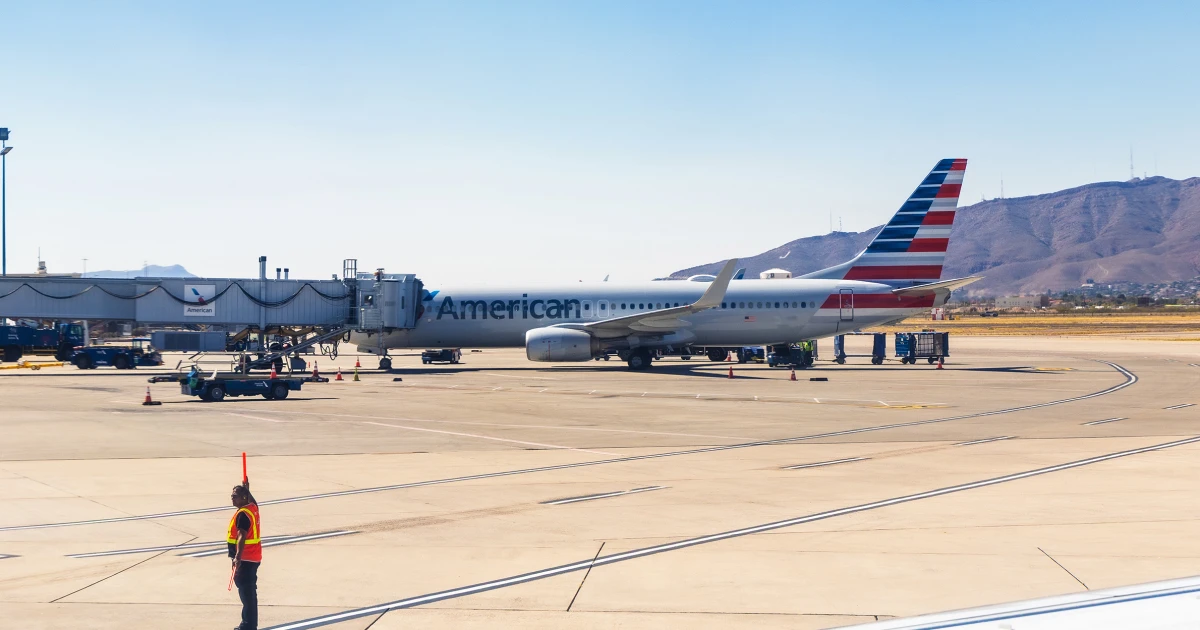
El Paso International Airport. Image Credit: Min Zhang/Getty Images file
The sudden shutdown of El Paso’s airspace stunned travelers, city officials, and federal lawmakers after the Federal Aviation Administration (FAA) grounded all flights late Tuesday night following what officials initially described as a Mexican cartel drone breach. Within hours, however, conflicting accounts emerged — including reports that an anti-drone laser had targeted what turned out to be a party balloon.
The unprecedented move temporarily halted commercial, cargo, and medical aviation operations at El Paso International Airport, igniting sharp political backlash and raising urgent questions about federal coordination, border security, and aviation safety.
Why Did the FAA Shut Down El Paso Airspace?
According to federal officials, the airspace closure began at 11:30 p.m. MST after authorities detected what they believed were cartel drones entering U.S. airspace near the southern border.
Transportation Secretary Sean Duffy said the threat had been “neutralized,” while the Pentagon confirmed that anti-drone measures were deployed. The Department of War stated that drones were disabled and that no ongoing threat to commercial aviation remained.
However, reporting from Washington later revealed a more complicated picture.
Multiple sources briefed on the matter said Customs and Border Protection (CBP) deployed a high-energy anti-drone laser, loaned from the Department of Defense, without sufficient coordination with the FAA. Officials believed they were targeting a cartel-operated drone, but the object was later identified as a party balloon.
The FAA, citing “special security reasons,” initially imposed a 10-day Temporary Flight Restriction (TFR) covering airspace up to 18,000 feet. The restriction was lifted approximately seven hours later following intervention from federal leadership.
Laser Technology and Safety Concerns
At the center of the controversy is the use of experimental counter-drone laser technology near civilian airspace.
Sources indicated that the FAA had not yet completed a full safety assessment of the system’s risks to commercial aircraft. Officials reportedly warned that if they were not given sufficient time to review the technology, they would shut down nearby airspace, a warning that ultimately materialized.
The incident has intensified scrutiny over interagency coordination between the Pentagon, Homeland Security, CBP, and the FAA, particularly in high-traffic border cities like El Paso.
READ ALSO
FAA shuts down El Paso Airport for 10 days: All flights grounded over ‘special security reasons’
Local Leaders: “This Never Should Have Happened”
El Paso Mayor Renard Johnson strongly criticized the lack of communication.
“You cannot restrict airspace over a major city without coordinating with the city, the airport, hospitals, and community leadership,” Johnson said, calling the breakdown “unacceptable.”
Medical evacuation flights were reportedly diverted to Las Cruces, though University Medical Center (UMC) confirmed it remained operational and did not experience major disruptions.
El Paso County Judge Ricardo Samaniego also stated he was not informed ahead of the closure, raising concerns about emergency preparedness.
Representative Veronica Escobar and Senator Ted Cruz both called for further briefings, while Senator Jack Reed described a 10-day shutdown of a major U.S. air corridor as an “extraordinary step.”
Flights Canceled and Regional Impact
During the temporary closure:
- Six flights were canceled
- Five flights were delayed
- Approximately nine flights were diverted to Las Cruces
Air traffic control audio reportedly captured pilots caught off guard by the sudden restriction.
The FAA typically avoids broad airspace shutdowns due to their ripple effects across national aviation networks. Even brief closures can disrupt schedules, logistics chains, and emergency operations.
White House Reversal and Political Fallout
By Wednesday morning, the White House directed that the restriction be lifted. Officials maintained that there was no ongoing threat to commercial aviation.
Yet the conflicting narratives, cartel drone incursion versus misidentified balloon, have fueled political tension. Mexico’s President Claudia Sheinbaum denied any evidence of cross-border drone activity.
The Trump administration has consistently emphasized its focus on combating cartel drone operations along the border. Homeland Security previously testified that thousands of drones have flown near border zones in recent years, though Mexican officials dispute cross-border incursions.
Bigger Questions About Border Drone Policy
This episode highlights broader national debates over:
- Use of military-grade counter-drone systems near civilian infrastructure
- Oversight of interagency operations
- Transparency in emergency aviation decisions
- Border security technology deployment
With congressional hearings likely and classified briefings requested, El Paso’s brief shutdown may have lasting implications for how the U.S. manages airspace security near international borders.
FAQ
Why did the FAA close El Paso airspace?
The FAA imposed a Temporary Flight Restriction after reports of a suspected cartel drone entering U.S. airspace. Concerns escalated after anti-drone laser technology was deployed without full safety review.
Was the drone actually a cartel drone?
According to multiple officials briefed on the incident, the object targeted by CBP’s anti-drone laser turned out to be a party balloon, not a cartel-operated drone.
How long was El Paso airspace closed?
Although initially announced as a 10-day closure, the FAA lifted the restriction after approximately seven hours.
Did the airspace closure affect commercial flights?
Yes. Several flights were canceled or delayed, and some were diverted to Las Cruces. Medical flights were also temporarily impacted.
What is an anti-drone laser?
It is high-energy military technology designed to disable or destroy unmanned aerial systems. Its use near civilian aviation corridors raises safety concerns.
Is El Paso International Airport open now?
Yes. The FAA lifted the flight restriction, and normal operations resumed shortly afterward.
Did the White House intervene?
Reports indicate that the White House directed the FAA to lift the airspace closure following backlash and review.
Are cartel drones common near the border?
U.S. officials say thousands of drones have flown near border zones in recent years, though Mexico disputes cross-border incursion claims.