

Dolores Huerta breaks decades of silence, accuses César Chávez of sexual abuse as César Chávez day events are canceled

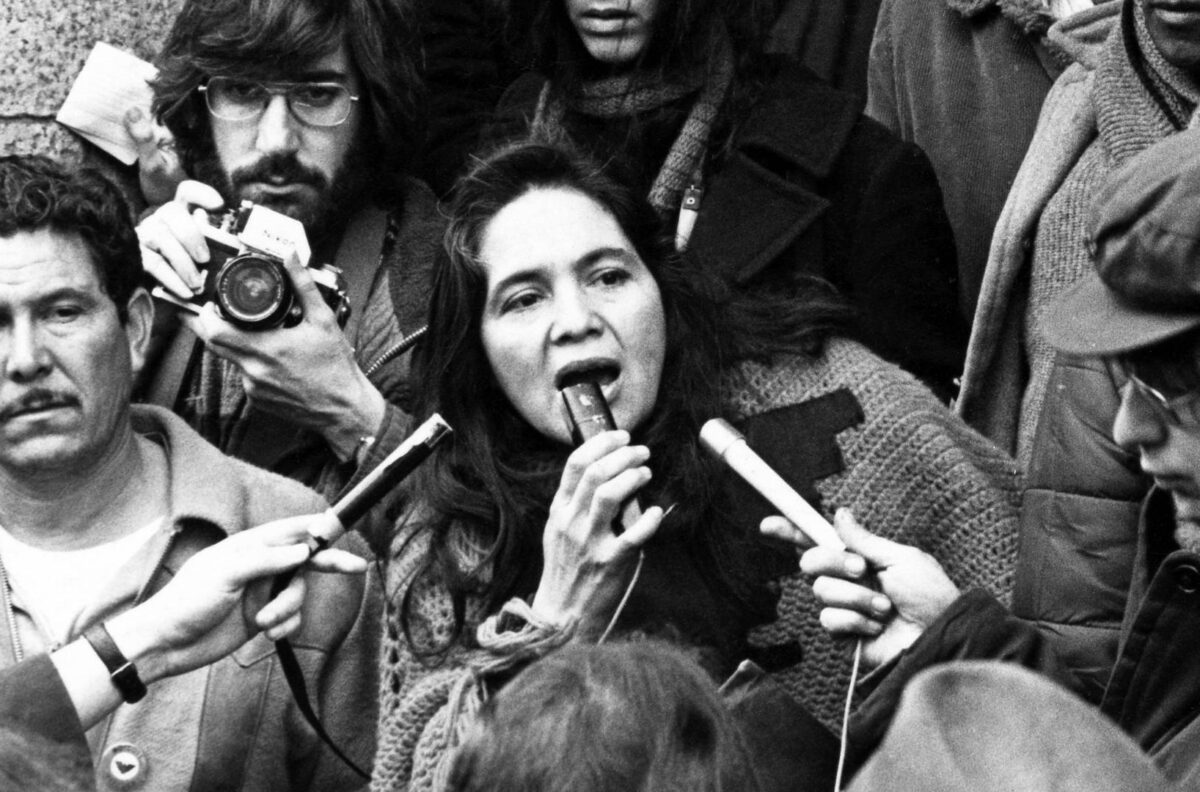
Dolores Huerta at a press conference in 1975. Courtesy of Walter P. Reuther Library Archives of Labor and Urban Affairs Wayne State University
In a stunning development that is reshaping the legacy of one of America’s most recognized labor icons, Dolores Huerta, the legendary labor organizer and co-founder of the United Farm Workers (UFW), has publicly accused the late César Chávez of sexual abuse. Huerta’s statement, released on March 18, 2026, comes amid a broader wave of allegations against Chávez and has already triggered widespread fallout, including the cancellation or rebranding of multiple César Chávez Day celebrations across the United States.
Huerta, now nearly 96, said she remained silent for roughly six decades because she feared speaking out would damage the farmworker movement she helped build. Her disclosure has intensified a national reckoning over how institutions and communities should respond when celebrated historical figures face serious abuse allegations.
Dolores Huerta Says César Chávez Sexually Abused Her in the 1960s
According to Huerta’s public statement, she experienced two separate non-consensual sexual encounters with Chávez during the 1960s. She said the first involved manipulation and pressure in a power-imbalanced relationship, while the second was forced and against her will. Huerta added that both encounters led to pregnancies, and that she secretly arranged for the children to be raised by other families, only recently sharing the truth of their conception with them.
Huerta said she could “no longer stay silent” after learning, through a New York Times investigation cited by multiple outlets, that other women and girls had also come forward with allegations involving Chávez. She emphasized that her decision to speak was driven both by solidarity with other survivors and by a desire to ensure that the farmworker movement is not defined by one man’s actions.
César Chávez Abuse Allegations Spark National Backlash
The accusations against Chávez extend beyond Huerta’s account. Multiple reports published on March 18 say a broader investigation alleges that Chávez groomed and sexually abused girls who were involved in the farmworker movement over a period of years. The allegations have caused an immediate public backlash, especially in states where César Chávez Day is officially recognized.
The United Farm Workers, the union Chávez co-founded with Huerta, announced it would not participate in upcoming César Chávez Day events. The union described the allegations as deeply disturbing, particularly claims involving young women or minors.
READ ALSO
César Chávez Day Events Canceled or Rebranded Across Several States
One of the most visible consequences of the allegations is the rapid cancellation or reconsideration of public events honoring Chávez. Several organizations and municipalities have either canceled celebrations, paused commemorations, or begun discussions about rebranding events that had been scheduled around March 31, Chávez’s birthday.
In Arizona, Governor Katie Hobbs said the state would no longer observe César Chávez Day as a state holiday, making Arizona one of the first states to take formal action in response to the allegations. In California and the Bay Area, some leaders have also begun discussing whether streets, schools, and public memorials named after Chávez should be renamed.
Political and Community Leaders React to Dolores Huerta’s Statement
Reaction from elected officials and labor leaders was swift. California Governor Gavin Newsom said the labor movement is “much bigger than one man” and stressed support for victims, truth, and transparency. Senator Alex Padilla described the allegations as “heartbreaking” and praised the courage of survivors who came forward. Former Health and Human Services Secretary Xavier Becerra also said the public must stand behind the truth and those who speak it.
San Francisco Mayor Daniel Lurie specifically named Huerta among survivors and called the allegations deeply disturbing. Labor groups including the AFL-CIO also distanced themselves from upcoming César Chávez Day observances, stating that no legacy can excuse abuse.
Why Dolores Huerta’s Voice Matters in the Farmworker Movement
Huerta is not just another public figure commenting on Chávez, is one of the most influential labor activists in modern American history. As co-founder of the United Farm Workers, she helped shape the farmworker rights movement, labor organizing campaigns, and civil rights advocacy in the United States for decades. Her statement therefore carries historic and political weight far beyond a personal revelation.
Her central message is that the farmworker movement must survive this reckoning. Huerta stressed that the rights won by farmworkers were achieved by thousands of people and should not be erased by the actions of one leader. That framing is now being echoed by many community leaders trying to separate the movement’s legacy from Chávez’s personal conduct.
What This Means for César Chávez’s Legacy
For decades, Chávez has been memorialized through schools, streets, parks, marches, and annual observances across the U.S. But the allegations now threaten to fundamentally alter how he is remembered in public life. With institutions reconsidering tributes and some communities discussing renaming memorials, the controversy could lead to one of the most significant historical re-evaluations of a labor icon in recent memory.
At the same time, Huerta’s statement is pushing a broader conversation: whether social justice movements can preserve their achievements while honestly confronting the misconduct of powerful leaders within them. For many supporters, that distinction may define the next chapter of the farmworker rights legacy.
FAQ
1. What did Dolores Huerta say about César Chávez?
Dolores Huerta said César Chávez sexually abused her during two separate encounters in the 1960s. She stated that one encounter involved manipulation and pressure, while the other was forced and against her will. Huerta also said both encounters resulted in pregnancies.
2. Did Dolores Huerta accuse César Chávez of rape or sexual assault?
Yes. Multiple March 18, 2026 reports say Huerta publicly accused Chávez of sexual abuse and described at least one encounter as forced and non-consensual. Some reports and summaries characterize the allegation as rape.
3. Why is Dolores Huerta speaking out now?
Huerta said she remained silent for decades because she feared exposing the truth would harm the farmworker movement. She said she decided to come forward after learning that other women and girls had also accused Chávez, and she felt she could no longer remain silent.
4. Did Dolores Huerta say she had children with César Chávez?
Yes. Huerta said the two non-consensual encounters led to pregnancies. She stated that she kept those pregnancies secret and arranged for the children to be raised by other families, later developing a close relationship with them.
5. What are the allegations against César Chávez in 2026?
The allegations reported on March 18, 2026 include claims that Chávez sexually abused Dolores Huerta and also groomed and sexually abused girls involved in the farmworker movement. These claims emerged through a major media investigation and subsequent public statements.
6. Is César Chávez Day canceled in 2026?
Not everywhere, but many events tied to César Chávez Day have been canceled, paused, or rebranded. The United Farm Workers said it would not participate in upcoming César Chávez Day events, and several local organizers have canceled planned observances.
7. Which states are affected by the César Chávez Day controversy?
Reports say the controversy has impacted events and discussions in states where César Chávez Day is recognized, including California, Arizona, Utah, Texas, Colorado, Oregon, and Minnesota. Arizona has already announced it will stop observing the holiday at the state level.
8. Did Arizona cancel César Chávez Day?
Arizona officials said the state will no longer observe César Chávez Day on March 31 as a state holiday following the allegations. This made Arizona one of the first states to take direct action.
9. What did the United Farm Workers say about the allegations?
The United Farm Workers said it would not participate in upcoming César Chávez Day events and described the allegations as deeply troubling, especially the claims involving young women or minors.
10. Who is Dolores Huerta?
Dolores Huerta is a prominent American labor leader and civil rights activist who co-founded the United Farm Workers. She is widely recognized as one of the most influential organizers in the farmworker rights movement in U.S. history.
11. Why is Dolores Huerta important to the labor movement?
Huerta played a foundational role in organizing farmworkers, advocating for labor rights, and helping build the UFW into a nationally recognized force. Her activism spans labor rights, women’s rights, and civil rights advocacy.
12. Are schools, streets, and memorials named after César Chávez being renamed?
Some public officials and institutions have begun discussing possible renaming of streets, schools, and memorials that honor Chávez. While many decisions are still pending, the debate is already underway in parts of California and the Bay Area.
13. What did Gavin Newsom say about the César Chávez allegations?
California Governor Gavin Newsom said the labor movement is bigger than one person and stressed support for victims, truth, and transparency while the allegations are being processed publicly.
14. What does this mean for César Chávez’s legacy?
The allegations have triggered a major reassessment of Chávez’s public legacy. Communities are now weighing whether to continue honoring him while separating the broader farmworker movement’s achievements from the alleged conduct of one leader.
15. Is the farmworker movement still being defended despite the allegations?
Yes. Huerta and several public leaders have emphasised that the farmworker movement was built by many people and that its achievements should not be erased. The focus, they say, should be on supporting survivors while preserving the movement’s larger mission.