

Why did the Delta flight return to Atlanta? Inside details to know

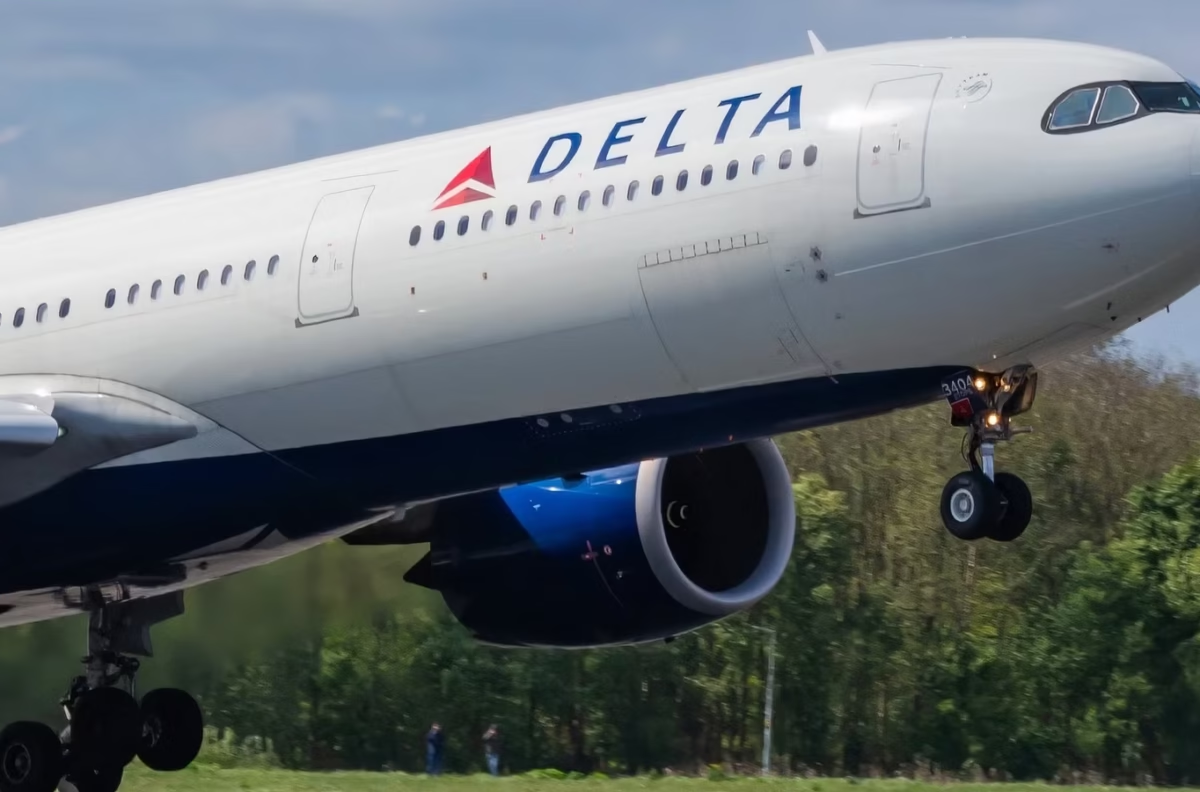
Delta flight delayed after emergency slide deployment
Passengers aboard a Delta Air Lines flight were left shaken after their journey was abruptly cut short mid-air due to a technical issue, forcing the aircraft to return to its departure airport in Atlanta.
The incident, which involved a Boeing 717 aircraft, has once again highlighted aviation safety protocols and the quick decision-making required when problems arise shortly after takeoff.
Delta Flight Turns Back After Engine and Tire Problem Shortly After Takeoff
The affected flight, identified as Delta Flight 828, had departed Hartsfield-Jackson Atlanta International Airport en route to Springfield, Missouri, when the crew detected an issue involving one of the aircraft’s engines and tires.
According to airline officials, the problem surfaced early in the flight, prompting pilots to discontinue the journey and initiate a return to Atlanta as a precautionary measure.
Eyewitness footage from the airport showed the aircraft surrounded by emergency response vehicles on the tarmac after landing.
Emergency Landing in Atlanta Shows Safety Protocols in Action
The aircraft landed safely and was later towed to the gate, where all 110 passengers, along with two pilots and three flight attendants, disembarked without injury.
Airline authorities stressed that the decision to return was in line with strict safety regulations, which prioritise immediate action over continued flight when anomalies are detected.
In aviation, even minor irregularities can trigger emergency procedures, especially during the climb phase when aircraft systems are under significant operational demand.
Similar Delta Flight Incident Highlights Early Detection During Climb Phase
In a related development, another Delta-operated Boeing 717 flight — DL1182 — also returned to Atlanta after a technical issue was detected shortly after takeoff en route to Tallahassee.
The aircraft reportedly did not reach cruising altitude, indicating that the fault was identified during the early ascent phase. Pilots opted for a controlled turnaround rather than risk continuing the journey.
Experts say returning to the departure airport is often the safest option, as it provides immediate access to full maintenance facilities and emergency services.
What Happens When Pilots Declare an In-Flight Emergency
When a technical fault is detected mid-air, pilots follow strict protocols. Declaring an emergency allows air traffic control to prioritise the aircraft, clear airspace, and prepare emergency response teams on the ground.
The Federal Aviation Administration mandates that distressed aircraft receive maximum assistance, ensuring a safe and coordinated response.
These procedures were evident in Atlanta, where emergency crews quickly surrounded the aircraft upon landing.
Passengers Rebooked as Delta Responds to Disruption
Following the incident, affected passengers were provided with refreshments while awaiting alternative travel arrangements.
Delta apologised for the disruption, reiterating that safety remains its top priority.
In a separate overnight case, another Delta flight (DL1560) scheduled from Atlanta to Tampa was halted before takeoff after pilots detected an issue with the aircraft’s left engine. Emergency crews responded immediately, and passengers were rebooked.
Boeing 717 Aircraft Known for Reliability but Strict Monitoring Applies
The Boeing 717-200 aircraft involved in the incidents is widely used for short-haul routes and is known for its operational efficiency.
However, aviation experts note that all modern aircraft are subject to rigorous monitoring systems. Any deviation from expected performance — no matter how small — is treated with urgency.
This “zero-risk tolerance” approach is why flights are often diverted or delayed at the slightest sign of trouble.
Why Flight Diversions Are a Sign of Strong Safety Systems
While such incidents can be unsettling for passengers, aviation professionals insist they demonstrate that safety systems are working as intended.
Early detection of faults, combined with decisive action by trained crews, helps prevent more serious complications.
In this case, the safe return of the aircraft and absence of injuries underscore the effectiveness of global aviation safety standards.
FAQs
Why did the Delta flight return to Atlanta?
The aircraft experienced an issue with its engine and tires shortly after takeoff.
Was anyone injured during the incident?
No, all passengers and crew members were safely evacuated.
What happens when a plane declares an emergency?
Air traffic control gives it priority, clears space, and emergency teams are deployed.
Are Boeing 717 aircraft safe?
Yes, they are reliable, but like all aircraft, they undergo strict monitoring and maintenance.
Will passengers be compensated?
Airlines typically rebook passengers and may offer support depending on the situation.