

Don’t miss it: The December 2025 cold moon will be the final and most Powerful—Supermoon of the year

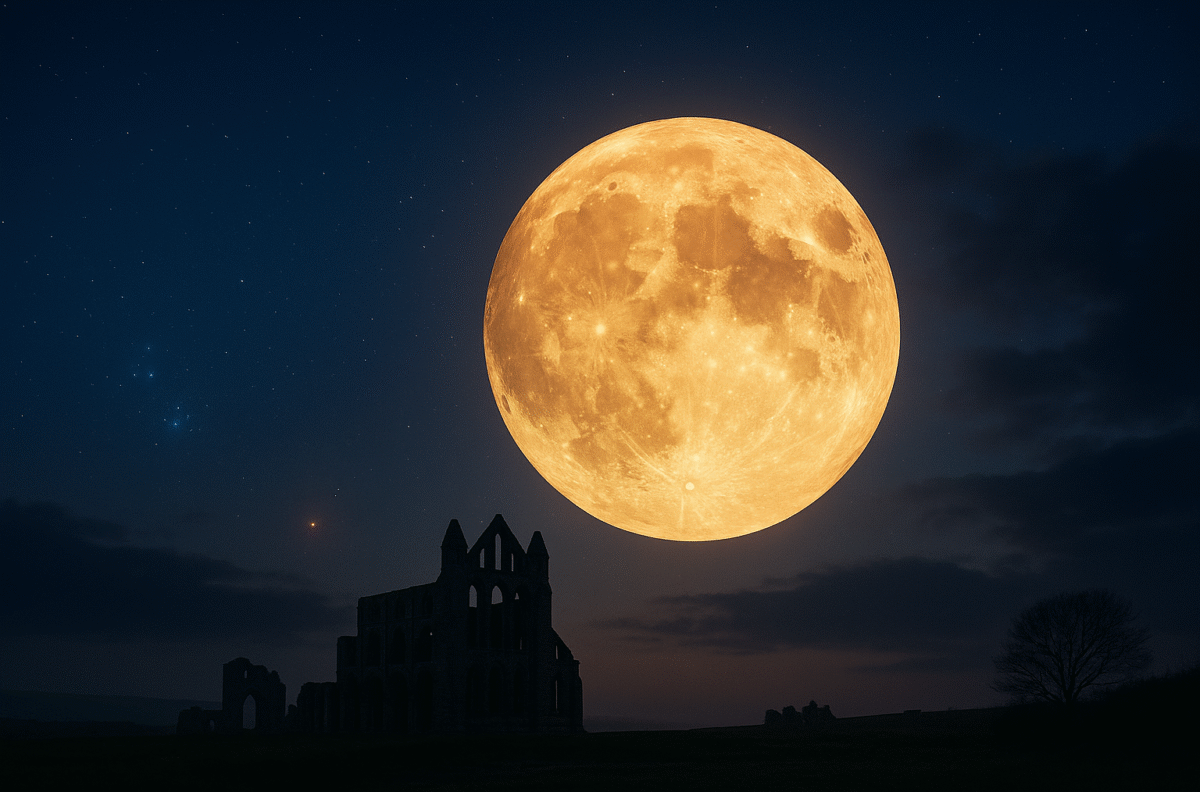
Skywatchers across the world are preparing for an extraordinary celestial display as the December Cold Moon rises on Thursday, December 4, 2025. Not only is this the final full moon of the year, but it also marks the third and final supermoon of 2025, closing out the lunar calendar with a brilliant finale.
While supermoons have become more familiar in recent years—typically appearing three to four times annually—it remains unusual to witness three consecutive supermoons, with a potential fourth arriving with the first full moon of 2026. This rare clustering alone makes December’s moon one worth stepping outside for.
Why Is This Moon So Special?
A supermoon occurs when the Moon reaches perigee, the closest point to Earth in its elliptical orbit, while simultaneously entering its full phase. When these moments align, the Moon appears noticeably larger, brighter, and more striking than usual, casting a silvery glow that enhances landscapes and sharpens night shadows.
The Cold Moon will emerge when the Sun and Moon sit directly opposite each other—a phenomenon known as syzygy—producing a perfectly illuminated lunar surface.
When and Where to Watch the Cold Moon Rise
For moon enthusiasts in the UK, the full moon will begin its ascent on December 4 in the north-eastern sky:
-
London: 14:52 GMT
-
Edinburgh: 14:29
-
Belfast: 14:52
-
Cardiff: 15:05
After rising, the Cold Moon will glide across the sky through the night before setting between 08:00 and 09:00 the next morning. This long window of darkness guarantees plenty of time for photographers, stargazers, and casual night watchers to enjoy the spectacle.
As it climbs into view, the moon will appear in a celestial triangle with the Pleiades star cluster and the glowing red star Aldebaran. Nearby, Jupiter will shine brightly, accompanied by the iconic winter constellation Orion the Hunter, adding even more brilliance to the night sky.
Will Weather Conditions Cooperate?
A sweeping band of rain and clouds is expected to move eastward across the UK on Thursday, potentially lingering into the evening for parts of northern and eastern Scotland and eastern England. Fortunately, as the system clears, wide breaks of clearer sky should develop overnight.
However, with temperatures dropping near freezing, mist and patchy fog may form in some regions, which could reduce visibility. Even so, many areas will have promising opportunities for moonwatching, provided conditions stay stable.
Why Is It Called the Cold Moon?
Long before modern calendars existed, ancient cultures named each full moon based on seasonal cues. The Cold Moon, traditionally associated with Indigenous North American naming systems, marks the deepening chill leading into winter and the approach of the solstice. Other historic names include The Long Night Moon and The Moon Before Yule, reflecting both the extended darkness and the anticipation of winter celebrations.
The next full moon arrives on January 3, 2026, known as the Wolf Moon—and yes, it too will be another supermoon.
FAQ
What makes December’s Cold Moon a supermoon?
It reaches full illumination while at perigee—its closest point to Earth—making it appear bigger and brighter.
Is the Cold Moon visible worldwide?
Yes, although exact rise times and visibility depend on your location and weather.
Why is it called the Cold Moon?
Its name comes from traditional moon-naming systems that mark the seasonal shift into winter.
What planets will be visible near the Cold Moon?
Jupiter will appear nearby, along with the constellation Orion and the Pleiades cluster.