

Bushehr nuclear power plant under fire: Why a strike could trigger a Gulf-wide catastrophe

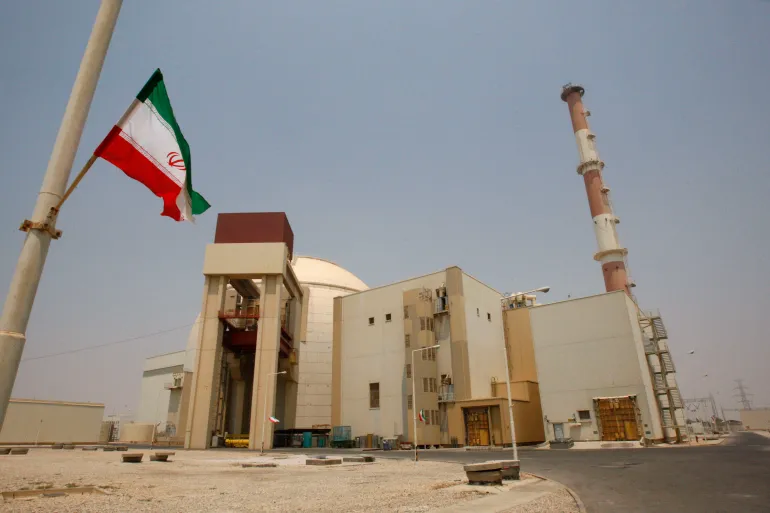
Bushehr nuclear power plant fears rise after repeated strikes near site
Fresh alarm is spreading across the Middle East after renewed attacks near Iran’s Bushehr nuclear power plant, the country’s only operational nuclear reactor, raised fears of a potential radiological disaster that could reach far beyond Iran’s borders.
The latest incident, reported over the weekend, involved a projectile striking near the Bushehr site, killing one member of the plant’s physical protection staff and damaging an auxiliary building, according to the International Atomic Energy Agency (IAEA). While the IAEA said there was no increase in radiation levels after the strike, the attack has intensified warnings that any direct hit on the reactor or its critical systems could trigger a much wider crisis affecting the entire Gulf region.
At the centre of growing concern is a simple but urgent question: What happens if Bushehr is directly hit? Nuclear experts, regional officials and the UN’s atomic watchdog have repeatedly warned that an attack on the plant could cause the release of radioactive material, contaminate Gulf waters, disrupt desalination-dependent water supplies, and force evacuations across multiple countries.
What Is the Bushehr Nuclear Power Plant?
The Bushehr Nuclear Power Plant is Iran’s only functioning nuclear power station and one of the most strategically sensitive energy facilities in the Middle East. Located in the coastal city of Bushehr in southern Iran, the plant was originally started in 1975 by German companies before being completed in 2011 with Russian support. It remains the first nuclear power plant in the Middle East and currently operates one active reactor.
Bushehr Unit 1 supplies about 1,000 megawatts (MW) to Iran’s national electricity grid, making it a critical civilian power asset. Two additional reactor units are also under construction and are expected to become operational later in the decade. The site has also hosted hundreds of Russian technical personnel, though some staff have reportedly been evacuated as security concerns escalated.
That combination, civilian electricity generation, nuclear fuel presence, coastal location, and geopolitical tension, is exactly why any strike near Bushehr is being treated as a major regional security risk.
What Happened at Bushehr and Why It Is Raising Global Alarm
Recent reporting says the Bushehr site has come under repeated pressure during the ongoing US-Israel war on Iran. Iranian officials have claimed the facility has been hit or targeted multiple times since the conflict escalated, while the IAEA confirmed that the latest projectile strike near the site killed one Iranian security staff member and damaged a side structure. The main reactor sections were not reportedly hit, and radiation levels remained stable after the incident.
Still, the symbolism and risk are enormous.
Iran’s Atomic Energy Organisation has described the repeated strikes as a grave violation of international norms, while Tehran has asked the IAEA to explicitly condemn the attacks. Reuters also reported that Russia’s Rosatom has evacuated additional personnel from the site, warning that developments around the plant are moving toward a worst-case scenario.
In conflict zones, even “near misses” around nuclear sites can become major hazards because reactor safety depends on more than just the reactor dome itself. Power lines, cooling systems, spent fuel storage, and on-site support buildings all matter.
Why a Direct Attack on Bushehr Could Be Catastrophic
The biggest fear is not simply an explosion, it is a radiological release.
According to Al Jazeera’s explainer, a direct strike on the reactor or on spent fuel storage pools could release radioactive particles into the atmosphere, including dangerous isotopes such as caesium-137. Those particles can spread through air and water, contaminate food supplies, damage farmland, pollute drinking water sources, and create long-term public health risks.
The IAEA has repeatedly warned that even a strike on the electricity lines powering Bushehr’s cooling systems could be devastating. If cooling is interrupted, the reactor could overheat, potentially leading to a meltdown scenario and radioactive leakage. IAEA chief Rafael Grossi has previously warned that such an event could cause a “very high release of radioactivity” with consequences well beyond Iran’s borders.
That is why experts say Bushehr is not just an Iranian issue, it is a regional emergency risk.
READ ALSO
Why the Gulf Could Be Hit Harder Than Many Expect
One of the most alarming dimensions of the Bushehr crisis is geography.
Bushehr sits on the Gulf coast, meaning any significant release of radioactive material could affect marine ecosystems, fisheries, and desalination-based water systems across neighbouring Gulf states. Most Gulf countries rely heavily on desalinated seawater for drinking water, and experts warn that many desalination plants are not inherently designed to remove radioactive contamination.
That means a severe Bushehr incident could become not just a nuclear safety crisis, but also a water security crisis.
Al Jazeera reported that Qatar’s Prime Minister, Sheikh Mohammed bin Abdulrahman bin Jassim Al Thani, had previously said simulations showed a serious hit on Bushehr could contaminate the Gulf so badly that countries like Qatar could run out of water within days if desalination had to stop. Whether or not the worst-case scenario materialises, the broader point is clear: the consequences would not stop at Iran’s shoreline.
What the IAEA and International Law Say About Striking Nuclear Facilities
The International Atomic Energy Agency has been warning for months against attacks on nuclear power infrastructure, especially Bushehr. Following the latest incident, the agency reiterated that there was no radiation spike, but the fact that a projectile struck near the site has only strengthened calls for restraint.
Under international humanitarian law, nuclear electrical generating stations receive special protection because of the risk of releasing “dangerous forces.” Article 56 of Additional Protocol I to the Geneva Conventions specifically states that nuclear electrical generating stations should not be made the object of attack if doing so could cause severe civilian losses. The International Committee of the Red Cross (ICRC) also notes that attacks on such facilities may, under certain conditions, amount to war crimes.
In short, the legal framework is clear: civilian nuclear infrastructure is not supposed to become a battlefield target when the risk to civilians is this high.
Why Bushehr Is Being Compared to Fukushima and Chernobyl
As public concern grows, many people are asking whether Bushehr could become another Fukushima Daiichi nuclear disaster or Chernobyl disaster.
Experts caution that every reactor design and accident scenario is different. Al Jazeera cited analysts who said Bushehr may not necessarily produce a Chernobyl-scale atmospheric disaster under all circumstances. However, they stressed that water contamination may be the more immediate and regionally devastating threat because it could cripple desalination and affect life across Gulf states.
So while Bushehr may not mirror past disasters exactly, the humanitarian and environmental stakes remain enormous.
What the Bushehr Nuclear Power Plant Means Right Now
For now, the most important fact is that the reactor itself has not been reported as breached, and the IAEA says there has been no increase in radiation levels after the latest strike. That is crucial. But the repeated attacks near such a sensitive facility have dramatically raised the risk profile of the entire conflict.
The Bushehr nuclear power plant is no longer just a background energy site in the Iran war. It has become a global flashpoint, one that could transform a regional conflict into an environmental, health, and humanitarian emergency affecting millions across the Gulf.
If there is one takeaway from the latest developments, it is this: Bushehr is too dangerous to become a war zone.
FAQ: Bushehr Nuclear Power Plant
1. What is the Bushehr nuclear power plant?
The Bushehr nuclear power plant is Iran’s only operational nuclear power station. It is located in southern Iran on the Gulf coast and currently operates one active reactor that generates around 1,000MW of electricity for the national grid.
2. Why is the Bushehr nuclear power plant in the news?
Bushehr is in the news because projectiles have struck near the site during the ongoing US-Israel war on Iran. The latest reported incident killed one security staff member and damaged an auxiliary building, raising fears of a much bigger nuclear safety crisis.
3. Has the Bushehr reactor been hit directly?
As of the latest reports, the main reactor sections were not reported as hit directly. The IAEA said there was no increase in radiation levels after the latest strike near the plant.
4. Could an attack on Bushehr cause a nuclear disaster?
Yes, potentially. A direct strike on the reactor, spent fuel storage, or critical cooling systems could release radioactive material into the environment and trigger a regional nuclear emergency.
5. Why is Bushehr considered dangerous if attacked?
Because nuclear plants depend on:
- reactor integrity
- cooling systems
- electricity supply lines
- safe fuel storage
If any of these are severely damaged, the plant could face overheating, radioactive leakage, or meltdown risks.
6. What did the IAEA say about Bushehr?
The IAEA confirmed that a projectile hit near Bushehr, killing one staff member, but said there was no rise in radiation levels after the incident. It has repeatedly warned that attacks on nuclear facilities like Bushehr could have severe regional consequences.
7. Could Bushehr contamination affect Gulf countries?
Yes. Because Bushehr is on the Gulf coast, radioactive contamination could spread through air and seawater, potentially affecting neighbouring countries, marine life, and desalination-dependent water systems.
8. Why are Gulf countries especially worried about Bushehr?
Many Gulf states rely heavily on desalinated seawater for drinking water. If the Gulf becomes contaminated, desalination plants may not be able to safely process water, creating a serious regional water crisis.
9. Could Bushehr become another Chernobyl or Fukushima?
Not necessarily in the exact same way. Experts say every nuclear incident is different. However, while Bushehr may not automatically mirror Chernobyl, the risk of radioactive water contamination and regional disruption is still extremely serious.
10. Is it illegal to attack a nuclear power plant during war?
International humanitarian law gives special protection to nuclear power plants. Article 56 of Additional Protocol I to the Geneva Conventions protects nuclear electrical generating stations if attacking them could release dangerous forces and cause severe civilian losses.
11. Why is Bushehr so strategically important to Iran?
Bushehr is important because it:
- supplies electricity to the national grid
- is Iran’s only operating nuclear power plant
- is located on the Gulf coast
- has major geopolitical and symbolic value
- involves Russian technical cooperation
12. How many times has Bushehr reportedly been attacked?
Iranian officials say the facility has been targeted multiple times since the current conflict escalated. Reuters reported Iranian officials saying Bushehr had been targeted four times, including the latest incident.
13. Are Russian workers still at Bushehr?
Some Russian personnel have reportedly been evacuated from the site as tensions rose. Reuters said Rosatom removed additional staff while warning of worsening danger around the plant.
14. What happens if Bushehr’s cooling system fails?
If cooling systems fail, reactor temperatures can rise dangerously. That could lead to fuel damage, overheating, or a meltdown, with a potential release of radioactive material. This is one of the scenarios the IAEA has specifically warned about.
15. Why is Bushehr one of the most dangerous flashpoints in the Iran war?
Because a major incident there would not stay local. It could quickly become:
- a nuclear safety emergency
- a regional water crisis
- an environmental disaster
- a cross-border humanitarian crisis
- a major geopolitical escalation