

Did Brian Walshe kill his wife? Inside the shocking trial over Ana Walshe’s disappearance and alleged dismemberment

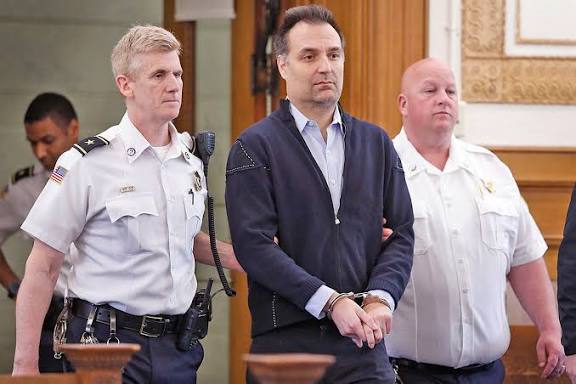
A high-profile Massachusetts murder case is returning to the spotlight as Brian Walshe — already a convicted fraudster — stands trial for the alleged killing and dismemberment of his wife, Ana Walshe, whose disappearance stunned the affluent community of Cohasset nearly three years ago. Jury selection concluded in Norfolk County Superior Court, and opening statements began Monday as prosecutors prepared to lay out their most detailed narrative yet of what they say happened on New Year’s Day 2023.
Ana Walshe, a Serbian-born mother of three and a rising corporate executive, vanished after attending a small New Year’s Eve gathering at the couple’s home. Although her body has never been located, investigators argue that a combination of digital evidence, surveillance footage, and physical items recovered from a trash processing center paint a devastating picture of what occurred inside the Cohasset residence.
Prosecutors contend that Brian Walshe carried out a calculated killing motivated by financial strain and fueled by suspicions that his wife was involved in an extramarital relationship. A central element of the prosecution’s case is a $2.7 million life insurance policy in Ana’s name, for which Brian was the sole beneficiary. At the time of her disappearance, he was also awaiting sentencing in an unrelated federal art fraud scheme involving counterfeit Andy Warhol pieces.
Authorities say that beginning early on January 1 — the same morning Brian claims Ana left the home for a sudden work emergency in Washington, D.C. — he conducted disturbing internet searches related to dismemberment, decomposition, and body disposal. Over the next 48 hours, investigators allege he continued to research methods for cleaning a crime scene, evading detection, and handling human remains.
Prosecutors have also presented evidence of Brian Walshe entering a Home Depot wearing a surgical mask and gloves, purchasing a Tyvek suit, buckets, a hatchet, goggles, baking soda, and several cleaning chemicals. Surveillance footage further shows an individual resembling Walshe disposing of heavy trash bags near his mother’s home. Those bags, later recovered from a nearby waste facility, contained tools and personal items linked to Ana — including a hacksaw, a hatchet, a handbag, boots matching those she was last seen wearing, and her COVID-19 vaccination card.
During multiple police interviews, Brian Walshe insisted his wife had willingly left the home on January 1 and had not returned, but investigators quickly found contradictions in his timeline. Ana’s employer in Washington was the first to raise concern on January 4, stating she had missed scheduled meetings and that no work emergency had been reported — directly contradicting Brian’s claims.
The defense, led by attorney Tracy Miner, maintains that the case is built on speculation, media bias, and a lack of direct physical proof linking Brian Walshe to a homicide. Miner has previously suggested that Ana may have chosen to disappear on her own and argues investigators prematurely focused on her client due to his criminal history.
The trial, expected to last up to three weeks, comes after Walshe pleaded guilty in November to two lesser charges: misleading investigators and improperly transporting human remains. His attorneys acknowledged in legal documents that he disposed of his wife’s body after her death, but they continue to deny that he killed her.
A mental health evaluation delayed the trial after Walshe was stabbed in jail, though a state physician ultimately deemed him competent to stand trial following a 40-day assessment. Prosecutors initially planned to call more than 60 witnesses, though that number will be lower due to the earlier guilty pleas.
As the jury settles in for what promises to be an emotional and highly scrutinized trial, the case raises new questions about investigative integrity as well. One of the potential witnesses is former Massachusetts State Police investigator Michael Proctor, whose credibility recently came under fire during the widely publicized Karen Read trial. Whether his involvement will influence the jury’s perception remains to be seen.
FAQ Section
1. Who is Brian Walshe?
He is a Massachusetts man previously convicted in a federal art fraud case and now charged with murdering his wife, Ana Walshe.
2. Has Ana Walshe’s body been found?
No. Despite extensive searches, her remains have never been recovered.
3. What evidence are prosecutors relying on?
Digital search history, surveillance video, items recovered from trash bags, and contradictions in Brian Walshe’s statements.
4. What is the alleged motive?
Prosecutors claim financial pressure and a $2.7 million life insurance policy, along with suspicions of an affair.
5. How long is the trial expected to last?
Approximately two to three weeks.
6. What charges has Walshe already pleaded guilty to?
Misleading police and improper conveyance of human remains.