

Inside Barack Obama $850 Million Legacy: Presidential Center nears Opening as 2026 Countdown Begins

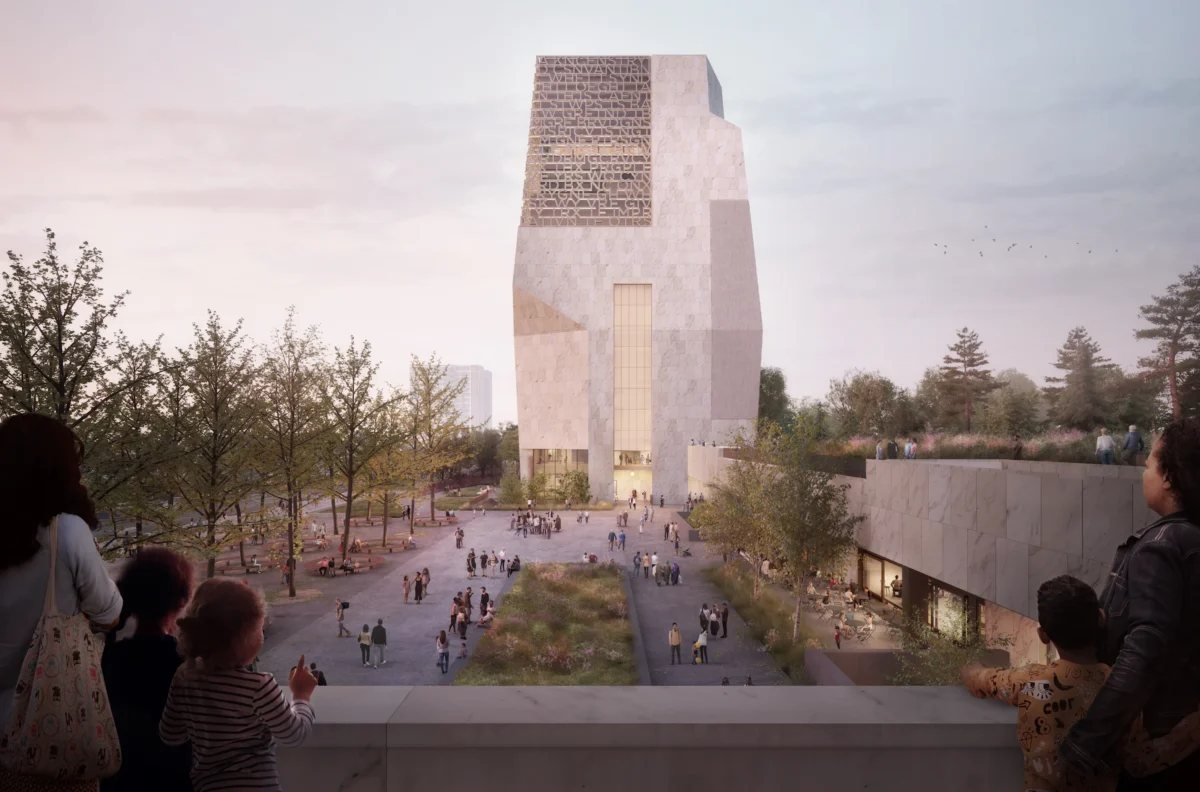
Obama Presidential Center tower rises over Chicago’s Jackson Park. Image Source: Obama Presidential Center
With just months remaining before its highly anticipated June 2026 opening, the Obama Presidential Center (OPC) in Chicago’s historic Jackson Park is emerging as one of the most ambitious presidential projects in modern American history. Towering 225 feet above the South Lakefront, the granite-clad structure is not only a tribute to former President Barack Obama, but a bold attempt to fuse a national monument with a community-focused civic space.
Privately funded and projected to cost roughly $850 million, the center reflects Obama’s personal imprint, civic philosophy, and belief in collective actiom, an approach that continues to stir admiration, debate, and national interest.
Barack Obama’s Direct Hand in Design and Vision
Foundation officials describe Barack Obama as a deeply engaged force behind the center’s design. A self-described “armchair architect,” Obama pushed for a taller museum tower than originally proposed and influenced everything from the building’s contours to its symbolic meaning.
The structure’s exterior is clad in New Hampshire “Tapestry” granite, chosen for its ability to change tone with weather and light, an intentional metaphor for democracy itself. According to tour guides, the building’s four-sided form represents four hands coming together, symbolizing unity and shared responsibility.
Inside the Museum: From ‘Me’ to ‘We’
At the heart of the campus is the eight-floor museum, designed to take visitors on a journey from individual identity to collective civic engagement. Four paid-admission floors chronicle Obama’s presidency alongside defining movements of the era, including Black Lives Matter, immigration activism, and youth-led protests.
The museum also showcases commissioned works by renowned artists such as Julie Mehretu, Nick Cave, Richard Hunt, and Idris Khan, reinforcing the center’s emphasis on art as a vehicle for social reflection.
Notably, Obama chose not to store his physical presidential archives on-site. Instead, he became the first U.S. president to digitize 96% of his records, making emails, speeches, photos, and even tweets accessible to researchers worldwide.
READ ALSO
Kyiv under fire as Russia launches Massive Strike ahead of Trump-Zelensky Peace Talks
A Community Hub Beyond Politics
Spanning nearly 20 acres, the Obama Presidential Center extends far beyond a traditional library. Facilities include The Forum, a civic commons designed for public gatherings, performances, and dialogue. Its main atrium honors Hadiya Pendleton, the Chicago teen killed in 2012, while the Elie Wiesel Auditorium provides an intimate, acoustically optimized space for lectures and events.
Other standout features include:
- A Chicago Public Library branch with books curated by Barack and Michelle Obama
- A recording studio for youth podcasting and music production
- Home Court, a regulation NBA-size basketball court doubling as an event space
- Playgrounds, gardens, and 3.1 miles of walking paths
Economic Impact and Philanthropic Power
The Obama Foundation has raised more than $1.5 billion, with major contributions from figures such as Jeff Bezos, Bill Gates, Marc Benioff, Steve Ballmer, and Reid Hoffman. Officials estimate the center will attract 700,000 to 1 million visitors annually, generating over $3 billion in long-term economic impact.
The campus is also designed with sustainability in mind, powered entirely by renewable energy, capturing 98% of rainfall, and saving more than 1 million gallons of water annually.
Controversy, Delays, and Neighborhood Concerns
Originally slated to open in 2021, the project faced years of legal challenges and community pushback over tree removal, historic preservation, and fears of housing displacement. While no formal community benefits agreement was reached, city-led measures like the Woodlawn Housing Preservation Ordinance and Jackson Park Housing Pilot were enacted to protect residents.
Foundation officials say community feedback reshaped major elements of the project, including relocating a parking garage underground and expanding public green spaces.
A New Chapter for Barack Obama’s Post-Presidency
As construction nears completion, the Obama Presidential Center stands as a defining symbol of Barack Obama’s post-White House legacy, one rooted in storytelling, civic participation, and community empowerment. Whether viewed as visionary or controversial, its impact on Chicago and the national conversation is undeniable.
FAQ
What is the Obama Presidential Center?
The Obama Presidential Center is a privately funded museum and civic campus in Chicago dedicated to the life, presidency, and values of Barack Obama.
When will the Obama Presidential Center open?
The center is expected to open to the public in June 2026, pending final construction timelines.
Where is the Obama Presidential Center located?
It is located in Jackson Park on Chicago’s South Side, near Lake Michigan.
How much did the Obama Presidential Center cost?
The project is projected to cost approximately $850 million, funded entirely through private donations.
Is this a traditional presidential library?
No. Barack Obama chose to digitize his presidential records, making this the first fully digital presidential library.
What can visitors see at the Obama Presidential Center?
Visitors will find a museum, art installations, community spaces, gardens, playgrounds, a library branch, and an observation deck with panoramic views.
Why was the Obama Presidential Center controversial?
Critics raised concerns about environmental impact, loss of parkland, and potential housing displacement in surrounding neighborhoods.
How involved is Barack Obama in the project?
Obama is heavily involved, influencing the design, programming, food offerings, and overall vision of the center.
How many visitors are expected each year?
Officials estimate 700,000 to 1 million visitors annually, making it one of Chicago’s major cultural attractions.