

Bank of England holds interest rates at 3.75% as Iran War fears shake UK mortgage and inflation outlook

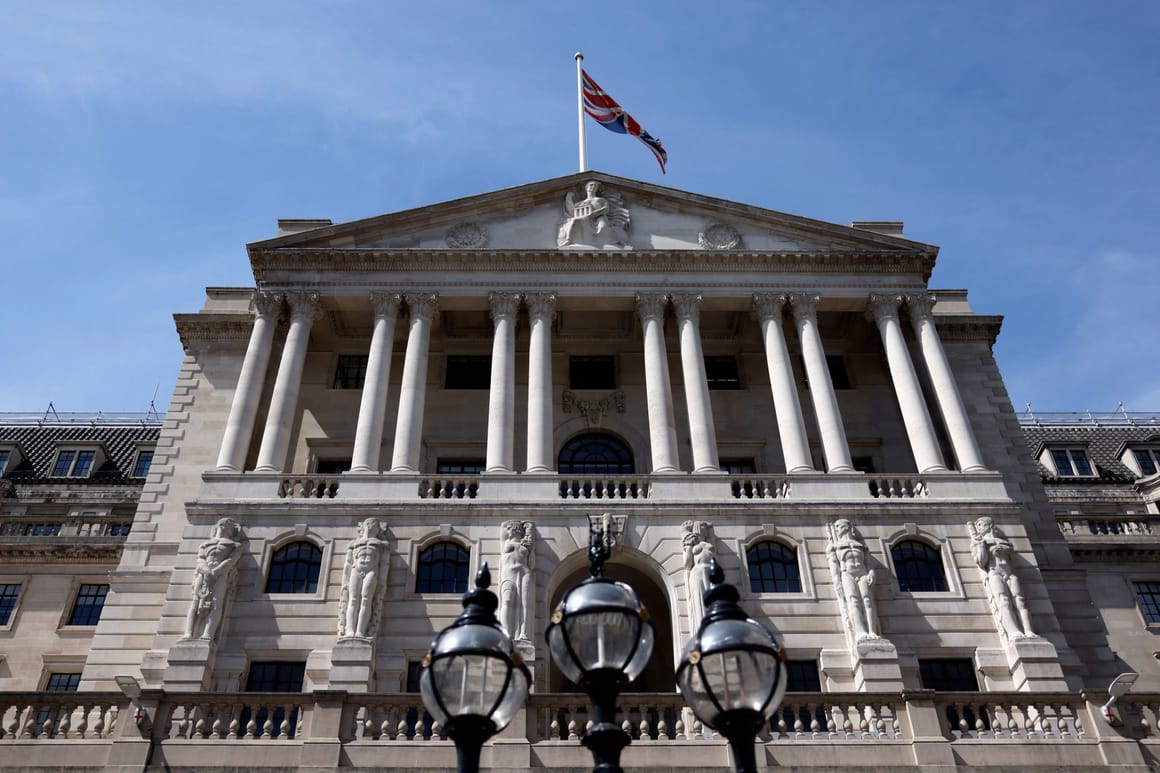
Bank of England keeps rate at 3.75% amid inflation fears. Image Credit: Getty Images
The Bank of England has kept UK interest rates unchanged at 3.75%, a closely watched decision that reflects growing concern over the economic fallout from rising geopolitical tensions in the Middle East. The move, announced on March 19, 2026, comes as policymakers weigh the risk that surging oil and gas prices could reignite inflation just as the UK economy shows signs of weakness.
The decision is significant for millions of households across Britain because the Bank Rate directly influences mortgage costs, savings returns, and borrowing conditions across the wider economy. While financial markets had previously expected further rate cuts in 2026, the recent spike in global energy prices has forced the Bank into a more cautious stance, delaying hopes of cheaper borrowing for homeowners and businesses.
Bank of England Holds Interest Rates at 3.75% in March 2026
The Bank of England’s Monetary Policy Committee (MPC) maintained the Bank Rate at 3.75%, marking another pause after a series of reductions that began in August 2024. The official Bank of England website lists the current Bank Rate at 3.75%, with the next decision scheduled for April 30, 2026.
This latest decision reinforces the central bank’s message that while inflation has eased significantly from the double-digit highs seen in recent years, policymakers are not yet ready to declare victory. The Bank continues to balance two competing pressures: inflation remains above target, but economic growth and labour market conditions have softened.
Why the Bank of England Did Not Cut Rates This Month
Before the latest escalation in the Middle East, many analysts had expected the Bank to begin lowering rates further in 2026. However, the outbreak of conflict involving Iran and the resulting jump in global energy prices have raised fresh concerns that inflation could rise again later this year. BBC reporting noted that rising oil and gas prices effectively ruled out a March cut, while the Bank’s March announcement confirms policymakers chose to hold steady instead.
The Bank has repeatedly stressed that energy-driven inflation shocks can quickly feed through to households via fuel, heating, utility bills, and business costs. If companies pass those higher costs on to consumers, the UK could face a second wave of price pressures even as domestic demand remains subdued. That risk appears to have been a major factor behind the decision to hold rates.
READ ALSO
What Bank of England’s interest rate cut means for mortgages and savings
What the 3.75% Interest Rate Means for Mortgages, Loans, and Savings
For UK borrowers, the decision means borrowing is not getting cheaper yet. Households hoping for lower mortgage rates may now need to wait longer, especially as lenders reprice fixed-rate deals in response to heightened market uncertainty.
Although the Bank Rate stayed unchanged, mortgage markets have already started adjusting. The Bank itself explains that Bank Rate influences other interest rates across the economy, meaning changes, or even expectations of changes, can affect mortgage and savings products before official moves filter through fully.
For savers, the news is slightly more positive. Higher rates can support better savings returns, especially on fixed-term products and cash savings accounts. However, the broader environment remains uncertain, and banks may still be selective in passing on the full benefit to customers.
Inflation Still Above Target Despite Recent Improvement
One of the key reasons the Bank remains cautious is that UK inflation is still above the official 2% target. The Bank of England currently lists inflation at 3%, even though it expects inflation to fall back toward target later this spring.
That outlook had encouraged optimism in February, when the Bank said there could still be scope for some further cuts later in the year if the economy evolved as expected. In the February MPC meeting, the vote was split 5–4 in favour of holding at 3.75%, with four members backing a cut to 3.5%, a sign that policymakers were already divided before the latest geopolitical shock.
Now, with global energy markets under pressure, the path ahead has become less certain. If oil and gas remain elevated, inflation could stay stubbornly above target for longer, making rate cuts harder to justify.
Could the Bank of England Raise Rates Again in 2026?
That possibility can no longer be ruled out.
Recent market expectations have shifted sharply. Instead of anticipating multiple cuts this year, some traders are now pricing in the possibility that the next move could even be a rate increase if inflation accelerates again. While that is far from guaranteed, it shows just how dramatically the outlook has changed in a matter of weeks. BBC business coverage highlighted that some market participants now see September as a possible window for a move higher if inflation worsens.
Still, the Bank’s own February guidance suggested that if the economy behaves as expected, there could be room for gradual easing later in the year. The next few inflation readings, energy price movements, and wage data will be crucial.
What Happens Next for the Bank of England and UK Households
The next major milestone is the Bank of England’s April 30, 2026 MPC meeting, when policymakers will reassess inflation, wages, growth, and the fallout from global events.
For now, the message is clear: the Bank of England is in wait-and-see mode. Households should not expect immediate relief on mortgages or other borrowing costs, and any fresh rise in fuel or energy prices could quickly change the outlook again.
In practical terms, this means consumers may need to prepare for a prolonged period of higher-for-longer borrowing costs, even if the UK economy remains fragile. For savers, the current environment may continue to offer stronger returns than in recent years, but for mortgage holders and businesses, the pressure is unlikely to ease quickly.
FAQ: Bank of England Interest Rates 2026
1. What is the Bank of England interest rate today?
The Bank of England interest rate (Bank Rate) is currently 3.75%. The Bank confirmed on March 19, 2026 that it would keep rates unchanged at this level.
2. Why did the Bank of England hold interest rates at 3.75%?
The Bank held rates because of renewed concerns that higher oil and gas prices linked to the Middle East conflict could push inflation higher again. Policymakers chose caution instead of cutting rates amid uncertainty.
3. Will UK interest rates fall in 2026?
They still might, but the path is now less clear. In February, the Bank said there could be scope for some further cuts this year if the economy evolved as expected. However, recent geopolitical tensions and rising energy prices have made cuts less certain.
4. Could the Bank of England raise rates again this year?
It is possible, though not guaranteed. Some market participants are now pricing in a chance of a rate rise later in 2026 if inflation surges again because of higher energy costs.
5. What does the 3.75% Bank Rate mean for UK mortgages?
It means mortgage relief may not come soon. Fixed mortgage deals may remain elevated or even rise in the short term, especially if lenders expect inflation to stay sticky. Bank Rate influences borrowing costs across the economy.
6. Will mortgage rates go down after this Bank of England decision?
Not necessarily. Even though the Bank held rates steady, mortgage lenders often react to market expectations, inflation risks, and funding costs. If energy prices keep rising, some mortgage deals could remain expensive for longer.
7. Is the Bank of England base rate the same as mortgage rates?
No. The Bank Rate is the interest rate the Bank of England sets for the wider financial system. Mortgage lenders use it as a benchmark, but mortgage rates also depend on market conditions, lender competition, and fixed-rate funding costs.
8. How does the Bank of England interest rate affect savings?
A higher Bank Rate can lead to better savings account returns, especially on fixed-term accounts and easy-access savings products. However, banks do not always pass on the full rate benefit immediately.
9. What is UK inflation right now?
The Bank of England currently lists UK inflation at 3%, which is still above its 2% target.
10. When is the next Bank of England interest rate decision?
The next scheduled MPC decision is on April 30, 2026.
11. Who decides UK interest rates?
UK interest rates are decided by the Bank of England’s Monetary Policy Committee (MPC), which meets eight times a year to set policy aimed at keeping inflation stable.
12. Why are oil prices important for UK interest rates?
Higher oil and gas prices can increase petrol, heating, electricity, transport, and food costs, which can push inflation higher. If inflation rises, the Bank may delay cuts or even consider raising rates again.
13. Did the Bank of England cut rates earlier in the cycle?
Yes. The Bank had already reduced rates several times from the post-2023 peak. By February 2026, the Bank said it had cut rates six times since August 2024, but paused at 3.75% in both February and March 2026.
14. Is now a good time to fix a mortgage in the UK?
That depends on your risk tolerance, lender offers, and how long you plan to stay in the property. With uncertainty around inflation and energy prices, many borrowers are locking in deals for stability. Compare products carefully before deciding.
15. What should UK households watch next?
Watch for:
- April 2026 inflation data
- Energy price movements
- Wage growth and jobs data
- The Bank of England’s April 30 decision
These will likely determine whether rates stay flat, fall later in the year, or rise again.