

Anthropic stock shock: Trump bans AI firm from Federal use as OpenAI secures Pentagon deal

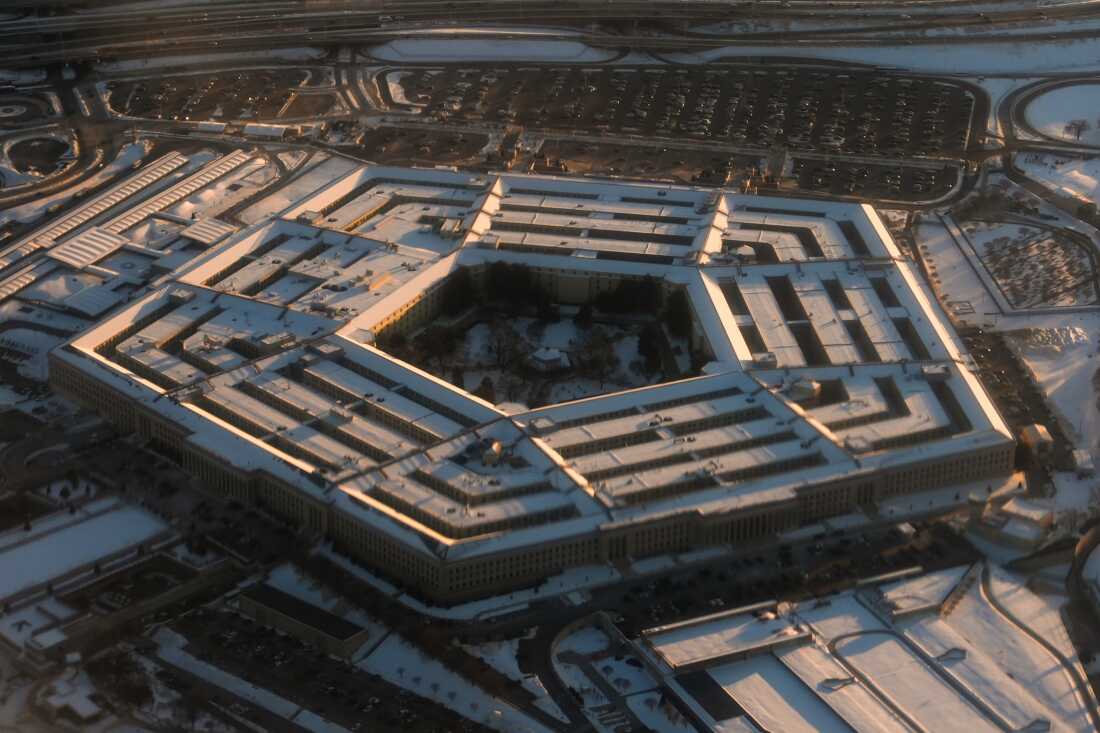
The Pentagon is seen from an airplane, Monday, Feb. 2, 2026, in Washington. Image Credit: Julia Demaree Nikhinson/Associated Press
Anthropic stock has become the center of investor attention after President Donald Trump ordered all federal agencies to cease using the company’s artificial intelligence tools, escalating a high-stakes dispute between the White House and the AI startup. The move came just hours before rival announced it had secured a Pentagon agreement to deploy its AI systems within classified military networks.
The dramatic policy shift has raised urgent questions about Anthropic’s valuation, government contracts, and future stock prospects, even as the company vows to challenge the decision in court.
Why Anthropic Was Banned from Federal Use
The Trump administration directed agencies to phase out Anthropic’s AI tools over six months after Defense Secretary Pete Hegseth labeled the company a “supply chain risk.” The designation typically applies to firms with ties to foreign adversaries, making this an unprecedented move for a U.S.-based AI company.
Anthropic, led by CEO Dario Amodei, had refused Pentagon demands to allow unrestricted use of its AI systems in areas such as autonomous weapons and domestic surveillance. The company insisted on maintaining strict safety guardrails, including prohibitions against mass surveillance and fully autonomous offensive weapons.
In response, the administration threatened to invoke the Defense Production Act, which would allow the government to compel compliance.
Anthropic said it would challenge the “supply chain risk” designation in court, calling it legally unsound and warning it sets a dangerous precedent for American tech firms negotiating with federal agencies.
OpenAI’s Pentagon Deal Adds Competitive Pressure
On the same day as the ban, OpenAI CEO Sam Altman confirmed that his company had signed a deal with the Department of Defense, which Trump has referred to as the “Department of War.”
Altman stated that OpenAI’s contract included similar restrictions to those Anthropic sought, including bans on domestic mass surveillance and ensuring human oversight in the use of force.
The Pentagon’s campaign involving OpenAI is part of a broader AI modernization effort, reflecting how artificial intelligence is rapidly becoming central to military operations.
For investors tracking Anthropic stock, the development intensifies competition between two of the world’s most valuable AI startups.
READ ALSO
How the Ban Could Impact Anthropic Stock and Valuation
Anthropic’s most recent valuation reportedly reached $380 billion, driven by strong revenue growth and enterprise adoption of its AI models, including Claude. The company’s Pentagon contract alone was worth approximately $200 million.
While the federal ban may disrupt certain defense-related revenues, analysts note that Anthropic’s broader commercial business remains intact. However, companies that contract with the military may need to reconsider using Anthropic tools for defense-linked projects.
Market watchers say the political clash introduces regulatory and reputational risk, which can influence investor sentiment, even for privately held companies.
Currently, Anthropic is not publicly traded, meaning retail investors cannot directly purchase Anthropic stock. However, venture capital stakeholders and secondary market participants are closely monitoring developments.
AI Industry Divided Over Military Use
The dispute highlights a growing divide in Silicon Valley over the military application of AI. Anthropic has publicly maintained “red lines” regarding autonomous weapons and mass domestic surveillance.
Interestingly, Sam Altman previously expressed support for similar principles, suggesting broader industry concern about how AI is deployed in defense contexts.
The confrontation has evolved beyond a corporate dispute into a defining moment for AI governance, federal oversight, and national security policy.
What Happens Next?
Anthropic says it has not received direct communication regarding the formal supply chain designation but plans to legally challenge any official ruling.
Meanwhile, OpenAI’s agreement positions it as a primary AI partner for U.S. defense agencies, potentially shifting billions in future government AI spending.
For investors and tech observers, the unfolding situation may influence:
- AI sector valuations
- Federal procurement policies
- Military AI regulations
- Competitive dynamics between OpenAI and Anthropic
As artificial intelligence becomes more embedded in national security strategy, the outcome of this standoff could shape the future of the AI industry for years to come.
FAQ – Anthropic Stock & Federal Ban 2026
Is Anthropic publicly traded?
No. Anthropic is currently a private company. Retail investors cannot directly buy Anthropic stock on public exchanges.
Why did Trump ban Anthropic from federal use?
The administration claimed Anthropic posed a “supply chain risk” after the company refused Pentagon demands for unrestricted AI usage, particularly involving autonomous weapons and surveillance.
What does “supply chain risk” mean?
It is a government designation that restricts contractors from doing business with a company deemed a security risk. It is rarely applied to U.S.-based firms.
How does this affect Anthropic’s valuation?
While the ban may impact defense-related contracts, Anthropic’s broader enterprise business remains active. However, regulatory uncertainty could affect investor sentiment.
Did OpenAI get a Pentagon contract?
Yes. OpenAI confirmed it signed an agreement with the Department of Defense to deploy AI tools within classified systems, with certain safety guardrails in place.
Who is Anthropic’s CEO?
Anthropic is led by Dario Amodei, a former OpenAI executive who co-founded the company after departing from OpenAI.
What is the Defense Production Act?
The Defense Production Act allows the U.S. government to direct private companies to prioritize national defense needs during emergencies.
Can companies working with the military still use Anthropic?
Companies contracting with the military may need to prove their defense work does not involve Anthropic’s tools if the supply chain designation is enforced.
Will this impact AI stocks overall?
The dispute may increase regulatory scrutiny across the AI sector, potentially affecting valuations of companies engaged in defense or government contracts.