

Alex Otti breaks silence on Tinubu’s 2027 bid, rules out defection as he unveils bold plan to take Abia off National Grid

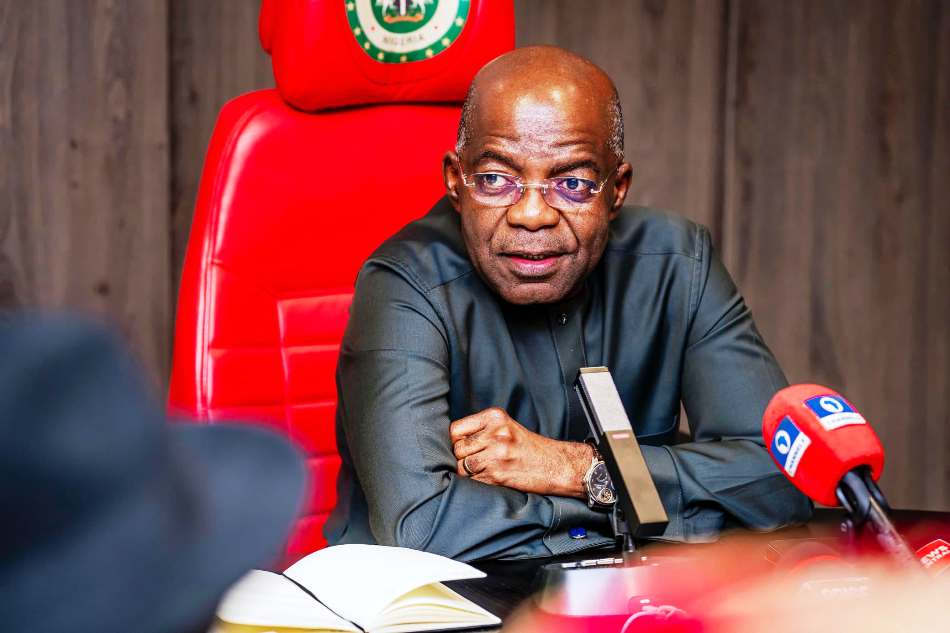
Alex Otti
Abia State Governor Alex Otti has made headlines after declaring that he is “not in a position to oppose” President Bola Tinubu’s candidacy ahead of the 2027 general election, while also dismissing speculation about a possible defection from the Labour Party and unveiling an ambitious plan to take Abia State off Nigeria’s national grid.
The governor’s comments, delivered during his March media chat and at a separate industrial event in Aba, have sparked intense political and economic interest nationwide. At a time when political realignments are already shaping the road to 2027, Otti’s remarks are being closely scrutinised for what they reveal about his relationship with the federal government, the future of the Labour Party, and his development strategy for Abia State.
His latest statements place him at the centre of two major national conversations: Nigeria’s emerging 2027 political calculations and the race by subnational governments to secure independent, reliable electricity supply amid persistent national grid instability.
Alex Otti says he will not oppose Tinubu’s 2027 candidacy
Governor Otti said clearly that he is not seeking the presidency and therefore sees no basis for opposing President Bola Tinubu’s expected 2027 re-election bid. Speaking during his monthly media chat, the Abia governor said he is focused on his own political future in Abia and believes it would be contradictory to seek a second term while objecting to another elected official doing the same.
According to Otti, the issue is less about party labels and more about democratic order and institutional logic. He stressed that governance in Nigeria is interconnected, from the federal government to the states and local councils, and that once decisions are made through democratic processes, leaders must work within them even when they do not agree with every detail.
His comments followed public claims by Isialangwa North and South federal lawmaker Ginger Onwusibe that the Abia governor would not oppose Tinubu’s re-election. Otti effectively reaffirmed that position, framing it as a pragmatic and constitutional stance rather than a partisan endorsement.
Why Otti’s Tinubu comments matter ahead of the 2027 elections
Otti’s remarks are politically significant because they come at a time when Nigeria’s opposition landscape remains fluid. As one of the most visible governors elected on the Labour Party platform in the 2023 cycle, his position carries symbolic weight far beyond Abia State.
By saying he will not oppose Tinubu’s candidacy, Otti appears to be signalling a non-confrontational relationship with the presidency, even while remaining outside the ruling APC. Analysts are likely to read the statement as an effort to balance political realism with state-level development priorities, especially in a federal system where access to cooperation with Abuja can influence infrastructure, investment, and policy implementation.
The comment may also shape conversations around coalition-building, opposition strategy, and whether governors from non-APC states are likely to adopt more issue-based alignments rather than strict partisan confrontation as the 2027 race draws closer.
Alex Otti denies defection rumours, says Labour Party crisis is over
Beyond the 2027 presidency debate, Otti also addressed speculation that he could leave the Labour Party due to its internal leadership troubles.
The governor rejected that possibility, saying the Labour Party’s internal crisis has been resolved by the Supreme Court, and that the Independent National Electoral Commission (INEC) has recognised the outcome. He said the party is now back on its feet and actively rebuilding, with registration ongoing and congresses expected ahead of a convention.
That response is important because defection rumours have trailed several opposition figures in recent months. Otti’s insistence that the question of leaving the party “does not arise” is likely to reassure Labour Party supporters, at least in the short term, while also reinforcing his attempt to separate administrative cooperation with the federal government from party migration.
For now, his message is clear: he can work with the federal government without abandoning the Labour Party.
READ ALSO
Kano Deputy Governor Aminu Gwarzo resigns amid impeachment storm, says ‘I did nothing wrong’
Otti unveils ambitious plan to remove Abia from the national grid
In a separate but equally consequential development, Otti disclosed a sweeping power sector ambition: to remove the entire Abia State from Nigeria’s national grid.
He made the announcement while speaking at the commissioning of Ultimum Beverages’ multimillion-dollar production facility in Aba. According to the governor, his administration is pursuing additional generation capacity and is already in talks abroad to secure more power for the state. He said that if Abia secures an additional 125 megawatts, the state plans to channel that supply to Umuahia and fully detach from the national grid.
The proposal is one of the boldest state-level energy visions currently being articulated in Nigeria, particularly against the backdrop of repeated national grid collapses and persistent power disruptions affecting homes and businesses across the country. Otti framed the power strategy as central to his broader economic agenda of positioning Abia as an investor-friendly destination.
How Abia’s power reforms are shaping Otti’s economic agenda
Otti’s power ambition is not emerging in a vacuum. Reports indicate that Abia has already taken steps to strengthen local electricity governance and reduce dependence on the national system.
Under the governor’s administration, Abia has been linked to reforms around the Geometric Power Plant, a major independent power asset designed to supply electricity to industrial and residential clusters in parts of the state. The broader strategy also includes state-level regulatory oversight, enabled by post-2023 electricity sector reforms that allow subnational governments and private players to generate, transmit, and distribute power more independently.
If successful, Abia’s plan could become one of the strongest examples of how governors are using the Electricity Act 2023 era to drive decentralised energy solutions. It would also strengthen Otti’s narrative as a governor trying to pair political moderation with high-impact economic governance.
What Alex Otti’s latest statements mean for Nigerian politics and Abia voters
Taken together, Otti’s latest remarks paint the picture of a governor pursuing a dual-track strategy.
Politically, he is presenting himself as a pragmatic reformer: not aligned with the APC, but also not eager to wage symbolic political battles against the presidency. Organisationally, he is trying to reassure supporters that he remains committed to the Labour Party despite months of internal turbulence. Administratively, he is leaning into a development-first narrative built around infrastructure, industrialisation, and power sector transformation.
For Abia voters, the bigger takeaway may be less about national rhetoric and more about results. If Otti can translate his electricity promises into visible improvements, especially stable power for businesses and households, the political benefits could be substantial heading into his own expected second-term calculations.
For the wider country, his statements underscore a new reality in Nigerian politics: governors may increasingly define themselves not just by party loyalty, but by their ability to deliver state-level solutions while navigating federal power dynamics.
FAQ: Alex Otti, Tinubu 2027, Labour Party, and Abia Power Plan
1. What did Alex Otti say about Tinubu’s 2027 candidacy?
Alex Otti said he is not in a position to oppose President Bola Tinubu’s candidacy for the 2027 general election. He explained that he is not contesting for president and is also seeking a second term as governor, so he sees no reason to challenge another elected leader’s right to seek re-election.
2. Did Alex Otti endorse Bola Tinubu for 2027?
Not exactly in explicit campaign terms. Otti did not formally announce an endorsement, but his statement that he would not oppose Tinubu’s candidacy has been widely interpreted as a sign of political openness and non-hostility toward the president’s re-election bid.
3. Is Alex Otti defecting from the Labour Party to APC?
According to Otti, no. He said the question of defecting does not arise because the Labour Party’s internal issues have been resolved through the Supreme Court, and INEC has respected that decision. He insisted the party is reorganising and preparing for congresses and convention.
4. Is Alex Otti still a member of the Labour Party?
Yes. Based on his public comments, Alex Otti says he remains in the Labour Party and has no current plans to leave.
5. Why is Alex Otti’s statement on Tinubu important?
It matters because Otti is one of Nigeria’s most prominent opposition governors. His comments could influence how voters, party stakeholders, and political analysts interpret emerging alliances, opposition strategy, and federal-state cooperation ahead of the 2027 elections.
6. What is Alex Otti’s plan for Abia’s electricity supply?
Otti says his goal is to remove the entire Abia State from the national grid. He disclosed that his administration is pursuing additional electricity generation and negotiating for more power capacity, including a possible 125MW boost to support full statewide supply.
7. Can Abia State really leave Nigeria’s national grid?
In principle, state-level power autonomy is now more possible under recent electricity reforms. With the right generation, transmission, and distribution arrangements, Abia can reduce or even eliminate dependence on the national grid in stages. However, full detachment would require major infrastructure, regulatory compliance, and sustained investment. Otti says that is the direction his government is pursuing.
8. What is the significance of Otti’s national grid comment?
It signals that Abia wants to position itself as a power-secure industrial hub, especially for manufacturing and investment in cities like Aba and Umuahia. Stable electricity is a major economic advantage in Nigeria, so the move could be a key part of Otti’s development legacy if achieved.
9. What power infrastructure already exists in Abia under Otti?
Reports tie Otti’s reforms to the Geometric Power Plant, which has been highlighted as a major independent power asset serving parts of Abia. The state has also moved toward building regulatory structures for electricity management under the decentralised power framework.
10. Is Alex Otti planning to run for a second term as Abia governor?
While he has not formally launched a re-election campaign in the source provided, Otti’s own comments suggest he sees himself as someone also seeking a second term, which is why he referenced that in explaining why he would not oppose Tinubu’s re-election bid.
11. What does Alex Otti’s position mean for Labour Party supporters?
It suggests Otti wants to maintain a pragmatic political line: staying in Labour Party while avoiding unnecessary confrontation with the federal government. Some supporters may see this as strategic governance; others may interpret it as soft alignment. Either way, it keeps him central to national political conversations.
12. Could Alex Otti become a key figure in 2027 coalition politics?
Yes, potentially. Because he is a sitting governor with national visibility, reform credentials, and cross-party relevance, Otti could become important in any opposition coalition, regional negotiation, or issue-based alliance ahead of 2027, even if he is not contesting for president. This is an analytical conclusion based on the weight of his public positioning and not a formal declaration.