

Air Canada CEO Michael Rousseau to retire after French-Language backlash: How a LaGuardia crash tribute sparked a leadership shake-up

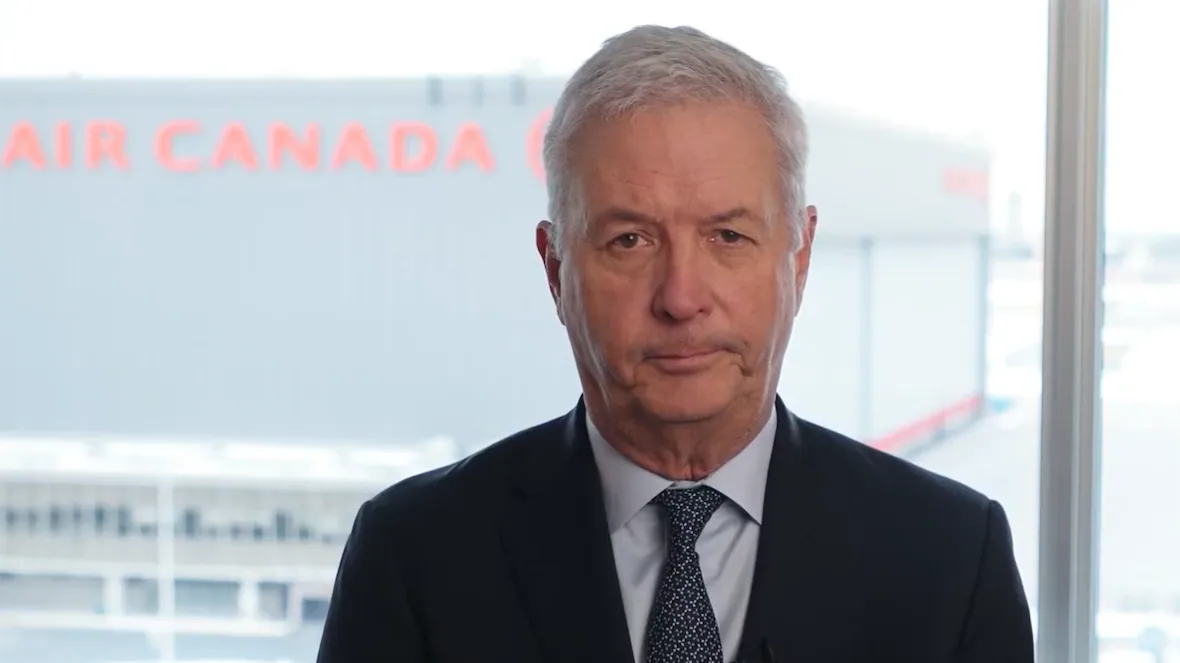
Air Canada CEO Michael Rousseau to retire after backlash. Image Credit: Air Canada/X
Air Canada CEO Michael Rousseau is set to step down by the end of the third quarter of 2026, a leadership transition that comes amid intense public and political backlash over his English-only condolence video following the fatal Air Canada Express crash at New York’s LaGuardia Airport. The controversy has quickly evolved from a communications misstep into a broader debate over language rights, corporate accountability, and leadership standards in bilingual Canada.
The airline confirmed on March 30 that Rousseau informed the board of his planned retirement and will continue to lead the company and remain on the board until the transition is complete. While Air Canada framed the move as part of a long-running succession plan, the timing has drawn major scrutiny because it follows days of mounting outrage in Quebec and across Canada over Rousseau’s failure to address grieving families in French after the deaths of two pilots.
Why Air Canada CEO Michael Rousseau Is Retiring in 2026
According to Air Canada’s official statement, the board said Rousseau will retire by the end of Q3 2026 after “nearly two decades” of leadership roles within the company, including serving as chief financial officer, deputy CEO and later chief executive. The airline also disclosed that an internal development process for potential successors has been underway for more than two years, while an external global search began in January 2026.
Importantly, Air Canada’s French-language release stated that the board will consider several performance criteria for the next leader, including the ability to communicate in French, a detail that underscores just how central the language controversy has become in the succession process.
The LaGuardia Crash That Triggered the Crisis
The public relations storm followed the tragic March 22, 2026 accident involving Air Canada Express Flight AC8646, operated by Jazz Aviation, which collided with a fire truck after landing at LaGuardia Airport in New York. Air Canada said the aircraft, a Mitsubishi CRJ900, was carrying 72 passengers and four crew members. The captain and first officer died in the crash, while 39 people were taken to hospital with varying injuries at the time of the update.
The two deceased pilots were later identified in reports as Antoine Forest and Mackenzie Gunther, and aviation observers praised their actions for helping save passengers’ lives during the emergency. That made the tone and language of the airline’s public response especially sensitive.
English-Only Condolence Video Sparks Outrage in Quebec
In the days after the crash, Air Canada released a four-minute condolence video featuring Rousseau. But the CEO reportedly used only two French words, “bonjour” and “merci”, while delivering the message largely in English. Although French subtitles were included, the decision triggered a wave of anger because Air Canada is headquartered in Montréal and is subject to Canada’s Official Languages Act, which requires service in both English and French. The airline’s own public communications policies also emphasise bilingual communication.
The backlash intensified because one of the deceased pilots, Antoine Forest, was from French-speaking Quebec, and many passengers on the flight were also reported to be francophone. For many critics, the issue was not simply about fluency, it was about respect, empathy, and cultural responsibility during a moment of national mourning.
READ ALSO
Mark Carney, Quebec Leaders and Public Pressure Mount
The fallout quickly reached the highest levels of government. Canadian Prime Minister Mark Carney said he was “extremely disappointed” by Rousseau’s unilingual message, arguing it reflected a lack of compassion. Quebec Premier François Legault also said Rousseau should step down if he could not speak French, later welcoming the retirement announcement and insisting the next CEO should be fluent in French as a matter of respect for employees and customers in Quebec.
The controversy also sparked formal complaints. By March 27, the Office of the Commissioner of Official Languages had reportedly received more than 2,000 complaints, according to reporting cited by The Guardian. Quebec lawmakers overwhelmingly passed a motion calling for Rousseau’s resignation, turning the matter into a major national flashpoint.
Michael Rousseau’s Apology and Renewed Scrutiny
Rousseau later issued a bilingual written apology, saying he was “deeply saddened” that his inability to speak French had diverted attention from the grief of the victims’ families and the resilience of Air Canada staff. He admitted that, despite taking lessons for years, he still could not express himself “adequately” in French and pledged to continue improving.
However, the apology reopened older criticism. In 2021, shortly after becoming CEO, Rousseau had faced backlash for speaking only English at a major event in Quebec. At the time, he said living in Montréal for years without needing French was a “testament” to the city, comments that critics never forgot. This latest incident revived questions about whether senior executives at national institutions should be held to higher bilingual standards.
What This Means for Air Canada’s Future
For Air Canada, the leadership transition now goes beyond a routine retirement. The company has made clear that the search for Rousseau’s successor is already active and that French-language communication ability will matter in evaluating candidates. That signals a likely shift in how the airline positions itself in relation to Quebec, bilingual federal expectations, and public trust.
With the airline still dealing with the aftermath of the LaGuardia tragedy, the next CEO will inherit a difficult brief: restore confidence, manage a sensitive safety narrative, and reassure both English- and French-speaking Canadians that the country’s flagship carrier understands the importance of compassionate, culturally aware leadership.
FAQ
1. Why is Air Canada CEO Michael Rousseau retiring?
Air Canada says Michael Rousseau will retire by the end of the third quarter of 2026 as part of a succession process the board says has been in development for more than two years. However, the announcement came just days after intense backlash over his English-only condolence video following the fatal LaGuardia crash, making the timing highly controversial.
2. Did Michael Rousseau resign or retire?
Officially, Air Canada described the move as a planned retirement, not an immediate resignation. Rousseau informed the board he will step down by the end of Q3 2026 and will remain CEO during the transition.
3. What caused the controversy around Michael Rousseau?
The controversy erupted after Rousseau delivered a condolence video after the fatal Air Canada Express crash at LaGuardia. He spoke almost entirely in English, using only two French words, despite Air Canada being based in Montréal and operating under bilingual obligations in Canada.
4. What happened in the Air Canada LaGuardia crash?
On March 22, 2026, Air Canada Express Flight AC8646, operated by Jazz Aviation, collided with a fire truck after landing at LaGuardia Airport in New York. The aircraft carried 72 passengers and four crew members. Two pilots died, and dozens of passengers were treated for injuries.
5. Who were the pilots killed in the Air Canada crash?
Reports identified the two pilots as Antoine Forest and Mackenzie Gunther. Their actions were widely praised for helping protect passengers during the incident.
6. Did Michael Rousseau apologise?
Yes. Rousseau issued a written statement in both English and French, saying he was deeply saddened that his inability to speak French had diverted attention from the victims and grieving families. He acknowledged that, despite years of lessons, he still could not communicate adequately in French.
7. Why is French such a major issue for Air Canada?
Air Canada is headquartered in Montréal and is subject to Canada’s Official Languages Act, which requires services in both English and French. Because of that, bilingual communication is not just a courtesy, it is part of the airline’s public and legal responsibilities.
8. What did Prime Minister Mark Carney say about Michael Rousseau?
Mark Carney said he was “extremely disappointed” by the English-only condolence message and suggested it showed a lack of compassion toward the victims and their families.
9. What did Quebec Premier François Legault say?
François Legault said Rousseau should step down if he could not speak French and later welcomed Air Canada’s retirement announcement. He also said the next CEO should be able to speak French as a sign of respect for Quebecers, employees and customers.
10. Is Air Canada already searching for a new CEO?
Yes. Air Canada said its board has been preparing for succession for more than two years, and an external global search began in January 2026. The board’s French-language release specifically noted that French communication ability will be part of the evaluation criteria.
11. Will the next Air Canada CEO need to speak French?
Air Canada has not formally said fluency is an absolute requirement, but its French-language statement says the board will assess candidates on multiple criteria, including the ability to communicate in French. That strongly suggests bilingualism will be a major factor.
12. Has Michael Rousseau faced criticism over French before?
Yes. In 2021, shortly after becoming CEO, he was criticised for speaking only English at a major event in Quebec. He later promised to improve his French, but the latest controversy reignited those earlier concerns.