

Abdullahi Sule says Leadership is Nigeria’s missing link as Nasarawa’s Governance rating jumps to 83.6%

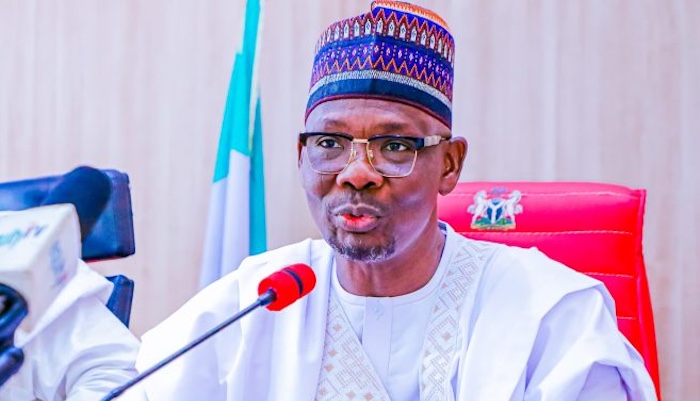
Abdullahi Sule
Nasarawa State Governor Abdullahi Sule has said that credible and visionary leadership remains the most important factor in helping Nigeria fully harness its vast mineral resources, as the Nigerian Institute of Public Relations (NIPR) invested him as a patron and highlighted a major rise in Nasarawa’s governance perception score.
Speaking in Abuja on Monday after the investiture ceremony, Sule argued that Nigeria’s mineral wealth can only translate into real economic value when leaders focus not just on extraction, but on local processing, value addition, and investor-friendly policies. His remarks come at a time when Nigeria is increasingly looking to diversify away from oil and build stronger non-oil revenue streams.
The event also drew attention to Nasarawa State’s governance profile after NIPR President Ike Neliaku disclosed that the state’s score in the institute’s governance perception index rose to 83.6 percent, a sharp improvement from earlier figures cited by the institute. The recognition positions Sule’s administration as one of the more closely watched subnational governments in conversations around leadership, governance, and resource development.
Abdullahi Sule Links Nigeria’s Mineral Future to Leadership Quality
Governor Abdullahi Sule used the Abuja platform to make a broader arguement about Nigeria’s mineral sector, stressing that natural resources alone are not enough to drive national prosperity. According to him, every state in the federation, including the Federal Capital Territory, possesses mineral resources that can be developed and processed locally before export.
That position is significant because it aligns with ongoing national debates around solid minerals development, especially in lithium, marble, and other high-demand resources. Sule said his administration has deliberately focused on attracting investors while also ensuring an environment that supports local beneficiation rather than raw export dependence.
By tying mineral wealth to leadership, the governor framed the issue as one of governance rather than geology. In practical terms, his message was that policy consistency, infrastructure, and institutional trust are what determine whether mineral resources become engines of development or missed opportunities.
READ ALSO
Obi + Kwankwaso = Trouble for Tinubu? Inside the alliance talks rocking 2027 race
Nasarawa’s Lithium and Local Processing Strategy Take Centre Stage
One of the strongest talking points from Sule’s remarks was his reference to Nasarawa’s growing profile in Nigeria’s lithium economy. He said the state hosts what he described as the largest lithium company in Nasarawa, underscoring the state’s rising relevance in the race for battery minerals and clean-energy supply chains.
Sule also cited marble as an example of what local value addition can look like, noting that marble used at the Abuja Airport and other locations was extracted from Nasarawa rocks and processed locally. That example was clearly intended to reinforce his administration’s arguement that resource extraction should create jobs, build local industry, and deepen domestic manufacturing capacity.
For investors and policy watchers, the message was straightforward: Nasarawa wants to be seen not just as a mineral-rich state, but as a processing and industrialisation hub in Nigeria’s solid minerals value chain.
NIPR Invests Abdullahi Sule as Patron Amid Praise for Governance Record
At the same event, the Nigerian Institute of Public Relations (NIPR) formally invested Abdullahi Sule as a patron, a move that symbolically linked the governor to the institute’s wider agenda of promoting leadership, professionalism, and national reputation management.
Sule described the honour as a call to greater service and said it represented progress in the national conversation about leadership. He added that Nigeria’s challenges in areas such as security, education, and power require not just political officeholders, but sincere and credible leadership across all sectors.
That framing broadened the scope of the event beyond ceremonial recognition. Instead of treating the investiture as a routine honour, Sule used it to push a narrative that Nigeria’s development crisis is fundamentally a leadership crisis, a theme likely to resonate strongly in political and governance discussions ahead of 2027.
Nasarawa Governance Perception Score Rises to 83.6%
Perhaps the most headline-grabbing statistic from the ceremony came from NIPR President Ike Neliaku, who said Nasarawa State posted an 83.6 percent score in the institute’s governance perception index.
According to Neliaku, the result reflects a substantial rise from earlier scores and represents one of the most notable improvements captured in the institute’s reputation perception framework. He said several governance pillars fell within the “excellent” band, including culture, social equity, communication, innovation, credibility, and leadership, while performance also scored strongly.
Neliaku further explained that the close range of scores across the governance pillars suggested a balanced perception of governance rather than isolated strengths. That matters politically because it allows the Sule administration to project an image of broad-based governance stability rather than one built on a single flagship achievement.
For a state seeking more investor confidence, such reputational data can be useful in shaping public perception, policy branding, and future development messaging.
Why Sule’s Message Matters in Nigeria’s Current Economic Climate
Sule’s intervention lands at a critical time for Nigeria. With pressure mounting on governments at all levels to generate jobs, attract capital, and reduce overreliance on crude oil, the solid minerals sector is increasingly being marketed as a strategic alternative.
By focusing on leadership, value addition, and local industrialisation, Sule positioned Nasarawa as a model for how states can plug into that national strategy. His comments also reflect a wider truth in Nigerian development discourse: resources do not create prosperity on their own, institutions do.
Whether Nasarawa can sustain that narrative will depend on measurable outcomes in investment, infrastructure, and industrial output. But for now, the Abuja event gave the governor a strong platform to present himself as a leader focused on resource-backed development and governance credibility.
FAQ
1. Who is Abdullahi Sule?
Abdullahi Sule is the governor of Nasarawa State, Nigeria. He is a prominent political figure known for his administration’s focus on investment, industrialisation, infrastructure, and the development of the state’s solid minerals sector, especially lithium and other natural resources.
2. Why is Abdullahi Sule trending in the news?
Abdullahi Sule is trending because he was recently invested as a patron of the Nigerian Institute of Public Relations (NIPR) in Abuja. During the event, he said strong leadership is essential for Nigeria to unlock its mineral wealth, and NIPR also announced that Nasarawa State scored 83.6% in its governance perception index.
3. What did Abdullahi Sule say about Nigeria’s mineral wealth?
Sule said Nigeria’s mineral resources can only deliver real economic benefits if leaders focus on proper management, local processing, and value addition rather than simply exporting raw materials. He argued that leadership quality is the deciding factor in whether mineral wealth becomes a national asset or a wasted opportunity.
4. What is the significance of Nasarawa in Nigeria’s mining sector?
Nasarawa State is increasingly seen as one of Nigeria’s most important states for solid minerals development, especially lithium, which is in high demand globally due to its use in batteries and clean energy technology. The state also has notable deposits of marble and other minerals, making it strategically important in Nigeria’s non-oil economic plans.
5. What is the NIPR governance perception score for Nasarawa State?
According to the Nigerian Institute of Public Relations (NIPR), Nasarawa State scored 83.6% in its governance perception index. The institute said this reflects a strong and balanced perception of governance across key pillars such as leadership, credibility, communication, innovation, and social equity.
6. Why did NIPR invest Abdullahi Sule as a patron?
NIPR invested Abdullahi Sule as a patron in recognition of what it described as his support for leadership development, professionalism, and public reputation-building. The institute also linked the honour to Nasarawa’s improved governance perception and Sule’s public messaging around credible leadership.
7. What does the 83.6% governance perception score mean?
The 83.6% score means that NIPR believes public perception of governance in Nasarawa is currently strong across multiple indicators. It suggests that the state is being viewed positively in areas such as leadership quality, innovation, communication, and public trust.
8. Is Abdullahi Sule focusing on local mineral processing in Nasarawa?
Yes. Sule said his administration supports local processing and value addition rather than raw mineral exports. He used examples such as marble extracted in Nasarawa and processed locally, arguing that this model creates more jobs and keeps more economic value within Nigeria.
9. Why is lithium in Nasarawa important?
Lithium is one of the world’s most sought-after minerals because it is used in electric vehicle batteries, energy storage systems, and clean energy technology. Nasarawa’s lithium potential makes the state important to Nigeria’s efforts to benefit from the global energy transition and attract new industrial investment.
10. How does this affect Nigeria’s economic diversification plans?
Sule’s comments support Nigeria’s broader push to reduce dependence on crude oil by expanding non-oil sectors, especially solid minerals. If states like Nasarawa successfully develop local processing industries, it could boost jobs, exports, manufacturing, and internally generated revenue.
11. What did Ike Neliaku say about Abdullahi Sule and Nasarawa?
NIPR President Ike Neliaku praised Sule’s leadership and said Nasarawa’s 83.6% governance perception score reflects one of the most notable improvements in the institute’s assessment framework. He said the state showed strong performance across several governance pillars.
12. Why is this story important ahead of future political debates in Nigeria?
This story matters because it strengthens Abdullahi Sule’s image as a governor associated with leadership, governance reform, and economic strategy. In Nigeria’s increasingly competitive political environment, public narratives around credibility, performance, and development outcomes often shape wider national relevance.