

6 Apps People Are Using in 2026 to Finally Eat Healthier Every Week

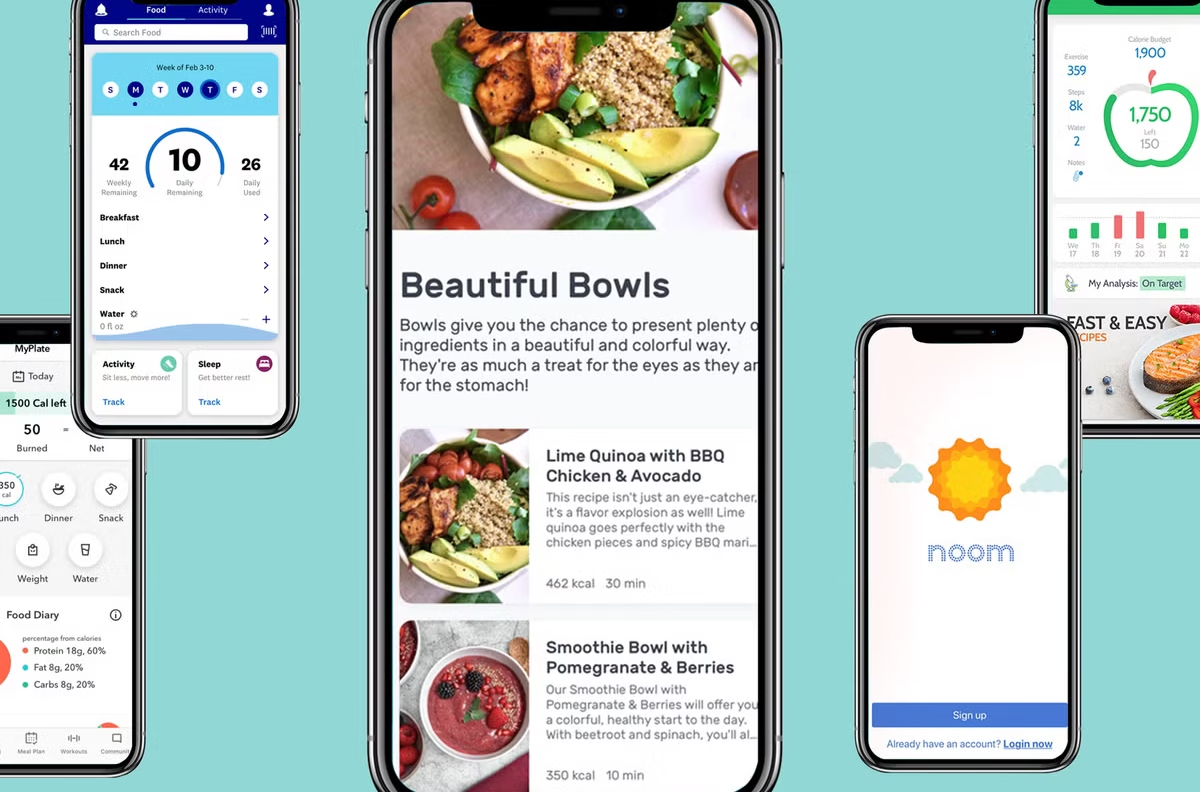
6 apps that can help you eat healthier every week
Eating healthier often sounds simple in theory: cook more, track portions, plan meals, and make better grocery choices. In reality, many people struggle with decision fatigue, busy schedules, inconsistent routines, and the sheer effort of figuring out what to eat every day.
That is why nutrition and meal-planning apps continue to grow in popularity. Instead of relying on willpower alone, more people are turning to digital tools that make healthy eating easier to organize, track, and repeat. From calorie counters and barcode scanners to recipe planners and grocery-list builders, the right app can remove friction from everyday food choices.
Recent 2026 reviews and user discussions show that the healthiest eating apps are no longer just about counting calories. Many now focus on meal planning, nutrient quality, habit-building, and convenience, which may be more sustainable for long-term results than rigid dieting alone. Apps like MyFitnessPal, Cronometer, YAZIO, Lifesum, and others continue to rank among the most talked-about options, while Reddit users frequently recommend tools that balance ease of use with realistic features.
Below are 6 apps that can help you eat healthier every week, based on recurring expert mentions, recent app comparisons, and user feedback.
1. MyFitnessPal Helps With Fast Food Logging and Everyday Awareness
MyFitnessPal remains one of the most recognizable nutrition apps because of its massive food database and flexible tracking system. Multiple 2026 reviews still rank it among the leading options for users who want easy access to restaurant meals, packaged foods, and basic macro tracking. Its biggest strength is convenience: many users can log meals quickly and build awareness around portions, calories, and eating patterns.
For people trying to eat healthier each week, that convenience matters. It can make it easier to notice hidden calories, improve protein intake, and stay more consistent with meal choices. However, some reviews and users note that certain advanced features are behind a paywall, and the crowd-sourced database can sometimes include inaccurate entries.
2. Cronometer Is a Strong Choice for Nutrient Quality, Not Just Calories
If MyFitnessPal is known for size, Cronometer is widely praised for precision.
Several 2026 comparisons describe Cronometer as one of the most accurate nutrition-tracking apps because it relies heavily on verified databases rather than large user-submitted entries. Reviews note that it tracks far more than calories, with detailed breakdowns for vitamins, minerals, amino acids, and other nutrients. That makes it especially useful for people who want to improve the quality of what they eat, not just the quantity.
Reddit users also frequently recommend Cronometer as a strong free option, especially for people who want more nutrition depth without paying immediately. Still, some users say it can feel overwhelming if they only want a simple, fast tracker.
3. YAZIO Makes Healthy Eating Feel Cleaner and More Structured
YAZIO has built a reputation as a simpler, more visually clean app for people who want structure without too much complexity.
Recent 2026 roundups describe YAZIO as a good fit for beginners, intermittent fasters, and users who want straightforward calorie and macro tracking with meal-planning support. It is often praised for its clean interface and guided daily workflow, which can make healthy eating feel less chaotic and more manageable.
For users trying to eat healthier weekly, YAZIO can help by making food logging less intimidating and offering recipe-oriented tools. Some users, however, report occasional database gaps or regional inconsistencies depending on where they live.
READ ALSO
9 Online Safety Rules Experts Say Everyone Should Follow to Avoid Scams and Cyber Threats
6 Warning Signs You Need a Digital Declutter Before Your Screen Habits Burn You Out
4. Lifesum Appeals to People Who Want Lifestyle Guidance, Not Just Tracking
Lifesum is often recommended for people who want a wellness-style experience instead of a purely data-heavy tracker.
Multiple 2026 app lists describe Lifesum as strong for guided plans, habit-building, and a more polished, motivational interface. It tends to attract users who prefer a broader healthy-lifestyle feel rather than obsessive number tracking. For many people, that can be a better long-term fit when the goal is simply to eat better every week, not to chase perfection.
That said, Reddit feedback is mixed. Some users still like it and credit it with helping them lose weight or stay consistent, while others say the app has declined due to ads, accuracy issues, or AI features they do not find helpful.
5. Mealime Can Simplify Weekly Meal Planning and Grocery Shopping
For many people, the biggest obstacle to healthier eating is not tracking, it is deciding what to cook.
That is where meal-planning apps like Mealime stand out. While the broader 2026 nutrition-app conversation often focuses on calorie trackers, recurring expert recommendations continue to favor meal-planning tools that generate recipes and grocery lists automatically because they reduce daily food decision fatigue. Mealime is commonly highlighted in “eat better” app lists for its focus on simple recipes, customized meal plans, and shopping convenience.
This makes it especially useful for busy people who want to cook more often, avoid takeout, and create healthier weekly structure without constantly guessing what to make.
6. Fooducate Can Help You Make Smarter Grocery Decisions
Not every healthy-eating app is about tracking meals. Some are more useful at the store.
Fooducate is often mentioned in healthy-eating app conversations because it focuses on helping users understand food quality through label scanning and product comparisons. Rather than only counting calories, apps in this category help users spot hidden sugars, overly processed ingredients, and marketing claims that can make grocery shopping confusing.
For people trying to improve weekly eating habits, this can be a practical advantage. Smarter grocery choices often lead to better meals at home without needing to micromanage every bite.
Why Healthy Eating Apps Work Better When They Reduce Friction
Experts increasingly note that the best nutrition apps are not necessarily the most advanced, they are the ones people can actually stick with.
For some users, that means a huge database and quick logging. For others, it means verified nutrition detail, weekly meal plans, grocery support, or a less stressful interface. Recent reviews and community feedback suggest that users are more likely to stay consistent when an app matches their real-life habits instead of forcing a complicated system.
The most effective healthy-eating app is often the one that removes the biggest barrier: confusion, time pressure, poor planning, or lack of awareness.
In the end, healthier eating every week is less about finding a perfect app and more about finding a tool that makes better choices easier to repeat.
FAQ
What are the best apps that can help you eat healthier every week?
Some of the most commonly recommended apps include MyFitnessPal, Cronometer, YAZIO, Lifesum, Mealime, and Fooducate. Each supports healthy eating in a different way, from meal planning to nutrient tracking.
Which app is best for healthy eating in 2026?
There is no single best app for everyone. MyFitnessPal is often chosen for its large food database, Cronometer for nutrient accuracy, YAZIO for simplicity, and Mealime for weekly meal planning. Recent 2026 reviews highlight different apps depending on the user’s goal.
Is MyFitnessPal good for healthy eating?
Yes, many users find MyFitnessPal helpful because it makes food logging easy and increases awareness around calories, portions, and macros. However, some advanced tools may require a paid plan, and some database entries can vary in accuracy.
Is Cronometer better than MyFitnessPal?
It depends on your goal. Cronometer is often considered better for detailed nutrient tracking and data accuracy, while MyFitnessPal is usually seen as easier for fast logging and broader food coverage.
What app is best for meal planning and grocery lists?
Apps like Mealime are often recommended for meal planning because they help generate weekly recipes and shopping lists, making it easier to cook healthier meals consistently.
Are healthy eating apps worth it?
They can be. Many people find that apps help reduce decision fatigue, improve grocery planning, build awareness of eating habits, and make healthy choices easier to repeat over time.
What is the best app for tracking nutrients, not just calories?
Cronometer is widely recognized in 2026 reviews for offering some of the deepest nutrient tracking, including vitamins and minerals beyond basic calorie counting.
Can meal-planning apps really help you eat better?
Yes. Meal-planning apps can help by reducing last-minute unhealthy choices, organizing grocery shopping, and making it easier to prepare balanced meals during the week.
What should beginners look for in a healthy eating app?
Beginners usually benefit most from simple logging, easy meal planning, clear food data, and low-friction design. Apps that feel too complicated are harder to stick with consistently.
Do I need to count calories to eat healthier?
Not always. Some people benefit from calorie awareness, but others improve their eating habits more effectively through meal planning, better grocery choices, balanced meals, and improved routine consistency.