

2025 hurricane season shocks scientists: No U.S. landfalls but record-breaking storms rage

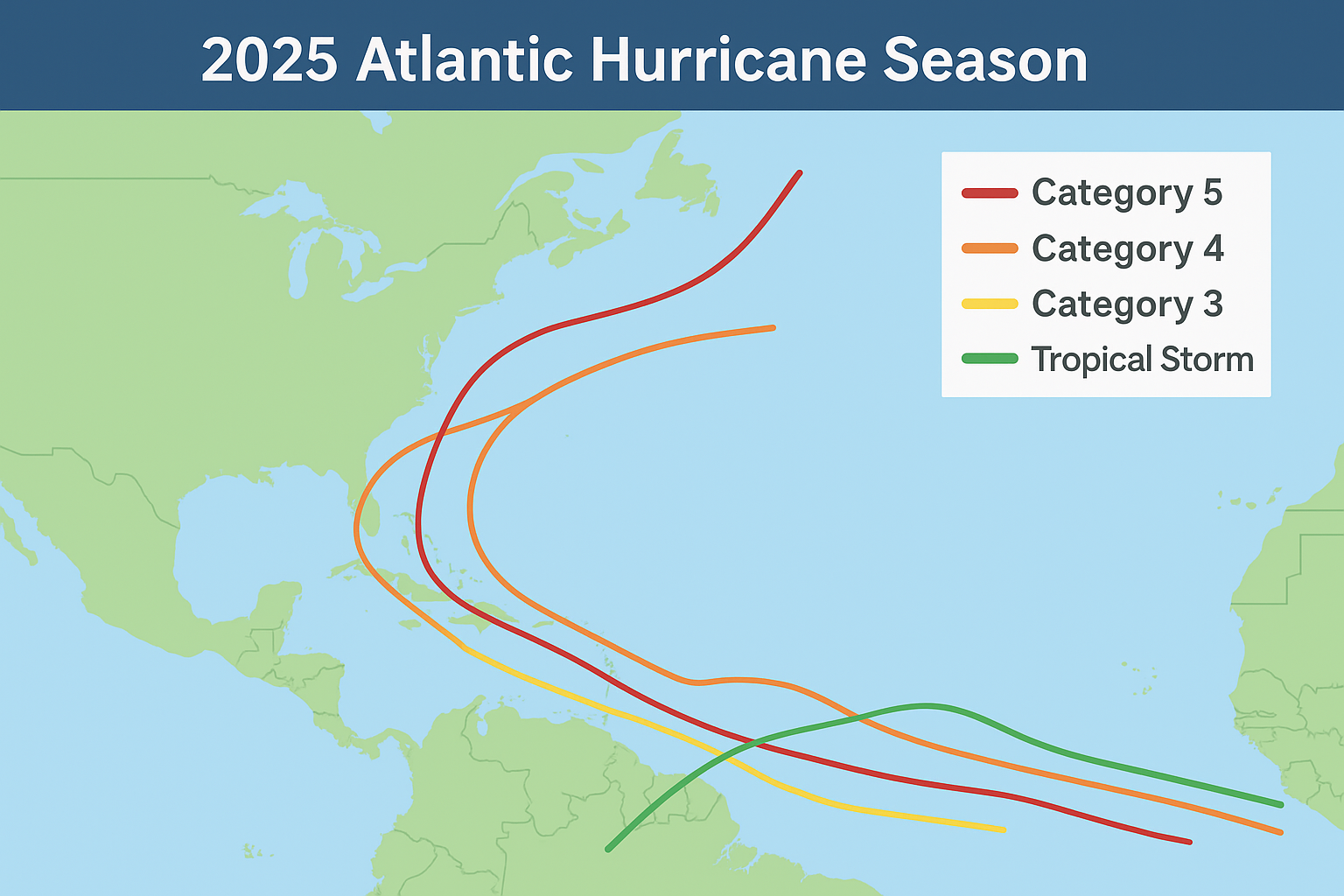
The 2025 Atlantic hurricane season, which officially concluded on November 30, will be remembered as a year of stark contrasts. While it marked the first time in a decade that no hurricanes struck the United States, the season was far from uneventful, producing some of the most intense storms in recent history.
Meteorologists initially forecasted an above-average season, predicting 13 to 19 named storms, six to 10 hurricanes, and three to five major hurricanes. The final tally, however, revealed 13 named storms, five hurricanes, and four major hurricanes—winds exceeding 111 mph. While the number of storms was slightly below expectations, the intensity of the major hurricanes made the season stand out.
One of the most notable features of the season was the unusually high proportion of Category 5 hurricanes. Traditionally, only a small fraction of storms reach this intensity, but in 2025, three storms achieved Category 5 status, tying for the second-highest number on record. Hurricanes Erin, Humberto, and the devastating Melissa all displayed rapid intensification, with Melissa reaching sustained winds of 185 mph, making it one of the strongest Atlantic hurricanes ever recorded at landfall.
While the U.S. was largely spared, Tropical Storm Chantal made landfall in South Carolina on July 6, bringing heavy rainfall and flash flooding across North Carolina and Virginia, claiming at least six lives. Coastal areas along the Outer Banks in North Carolina experienced erosion and structural damage from offshore storms and high tides, with at least 16 homes collapsing between September and October.
The Caribbean bore the brunt of the season’s fury. Hurricane Melissa, in late October, wreaked havoc across Jamaica, Cuba, and the Bahamas, leaving at least 90 dead. Its unprecedented power, fueled by unusually warm waters, highlighted the increasing threat of rapid intensification events—a trend scientists link to climate change.
Experts attribute the U.S.’s fortunate escape to a combination of meteorological factors. An anomalous trough along the East Coast and weaker Bermuda High steered storms away from land, while phenomena like the Fujiwhara effect—where two nearby cyclones rotate around a shared center—further influenced storm paths. Hurricanes Imelda and Humberto interacted in the Atlantic, ultimately diverting Imelda from the U.S. coastline.
Despite the absence of U.S. hurricane landfalls, the season’s energy was above average, measured by NOAA’s Accumulated Cyclone Energy (ACE) index at 133—108% of the seasonal norm. While the number of storms was moderate, the power and longevity of the hurricanes kept meteorologists on high alert.
The 2025 season also underscores how climate change is intensifying hurricanes. While the total number of storms may not increase significantly, warmer oceans and a heated atmosphere enhance the potential for extreme winds and rapid strengthening. Island nations like Jamaica remain particularly vulnerable, facing devastating consequences from high winds, storm surge, and torrential rainfall.
In the end, the 2025 Atlantic hurricane season was a reminder of nature’s unpredictability: a relatively quiet year for the U.S., but a season defined by ferocious storms, record-breaking winds, and critical lessons about resilience in the era of climate change.
FAQ
Q: How many hurricanes occurred in the 2025 Atlantic season?
A: There were five hurricanes, four of which were major hurricanes.
Q: Which hurricane was the most powerful in 2025?
A: Hurricane Melissa, with sustained winds of 185 mph, was the most powerful storm of the season.
Q: Did any hurricanes hit the United States in 2025?
A: No hurricane made landfall in the U.S. for the first time since 2015.
Q: How does climate change affect hurricane intensity?
A: Warmer oceans and a heated atmosphere fuel rapid intensification and stronger peak winds, making hurricanes more destructive.
Q: What is the Fujiwhara effect?
A: It’s a rare phenomenon where two nearby cyclones rotate around a shared center, affecting their paths.